Yes, you can be intimate, including oral intimacy, while wearing dentures, and many denture wearers enjoy a normal, confident sex life. The main concerns are stability, comfort, and hygiene, and all three can usually be managed with a well-fitted denture, a small amount of adhesive, or implant support. Feeling self-conscious about this topic is very common, and a respectful conversation with the team at Hummingbird Dental can help you find practical solutions without embarrassment. If your denture regularly slips, rubs, or clicks, that is a fit issue worth raising with your dentist, because it affects comfort in every part of daily life, not only intimacy.
Oral intimacy with dentures is safe and possible for most people. A well-fitting denture rarely dislodges, and adhesive or implant attachments add security. Some people prefer to remove their dentures for comfort, which is also a perfectly normal choice. Good oral hygiene and healthy gums are the most important safety factors.
For people whose lower denture tends to lift or float, two or more dental implants can hold the denture firmly with snap-on attachments, which many patients describe as a major boost to confidence in close moments.
Partial denture wearers have different needs, since clasps and remaining natural teeth are involved. A family dentistry practice can check that clasps are smooth, that the partial seats fully, and that the teeth supporting it are healthy.
And if a denture cracks or a sharp edge suddenly causes pain, an emergency dentist can usually smooth, repair, or adjust it quickly so you are not left uncomfortable or anxious.

Concerns usually fall into a few categories: worry that the denture will move or fall out, worry about how the mouth will look or feel to a partner, and questions about hygiene and infection risk. Each of these has a straightforward answer, and the right approach depends on your type of denture and how well it fits today.
Is It Normal to Worry About Intimacy With Dentures?
Completely normal. Tooth loss affects self-image, and many people feel that dentures are something to hide from a partner. Dental professionals hear these questions regularly, often framed indirectly as concerns about kissing, closeness, or confidence. You do not need to explain more than you are comfortable with. Saying “I want my denture to feel more secure when I am close to someone” is enough for a dentist to understand and help.
Common worries patients describe
- The denture might move, click, or come loose during kissing or oral contact
- A partner might notice the denture or feel the edge of the base
- Bad breath or a taste from the denture or adhesive
- Sore spots that make prolonged contact uncomfortable
- Dry mouth that makes the denture feel less secure
- Uncertainty about whether to wear the denture or take it out
Wearing Dentures vs Removing Them: Which Is Better?
There is no single right answer. Some people feel more confident with their teeth in place, while others prefer the comfort and freedom of removing them. This comparison summary may help.
| Approach | Advantages | Things to Consider |
|---|---|---|
| Wearing a well-fitted denture | Natural appearance, lip support, confidence | Fit should be secure; adhesive may help |
| Wearing a denture with adhesive | Extra stability, fewer gaps for movement | Use a small amount of zinc-free product |
| Wearing an implant-retained denture | Firm, secure hold with snap attachments | Requires surgery and healing time |
| Removing the denture | No risk of dislodging, softer contact | Some people feel self-conscious about appearance |
| Removing a partial denture | Avoids clasps rubbing soft tissue | Remaining teeth should be clean and smooth |
A brief, light conversation often removes most of the anxiety. Partners are usually far less concerned about dentures than the wearer expects, and knowing your preference in advance makes the moment more relaxed.
How to Keep Dentures Secure and Comfortable
Stability is the most common concern, and it is also the most fixable.
Check the fit first
A denture that fits well creates suction, particularly on the upper jaw. If you notice movement while speaking or eating, the same movement will happen during intimacy. A reline can restore the fit by reshaping the inner surface to match your current gums.
Use adhesive wisely
A thin layer of zinc-free cream or a cushion strip can add a meaningful amount of hold. Apply it to a clean, dry denture and allow a few minutes for it to set. Avoid thick layers, which can ooze and leave an unpleasant taste.
Consider implant support
For lower dentures in particular, implant-retained overdentures change the experience dramatically. The denture clicks onto the implants and resists lifting and sliding. This option requires an assessment of bone volume, general health, and smoking status.
Smooth any rough areas
Rough acrylic, sharp clasps, and worn edges can irritate both your own tissues and a partner’s. A dentist can polish these areas in a short visit.
Hygiene and Safety: What You Should Know
Oral health and sexual health are connected. A few sensible habits reduce risks for you and your partner.
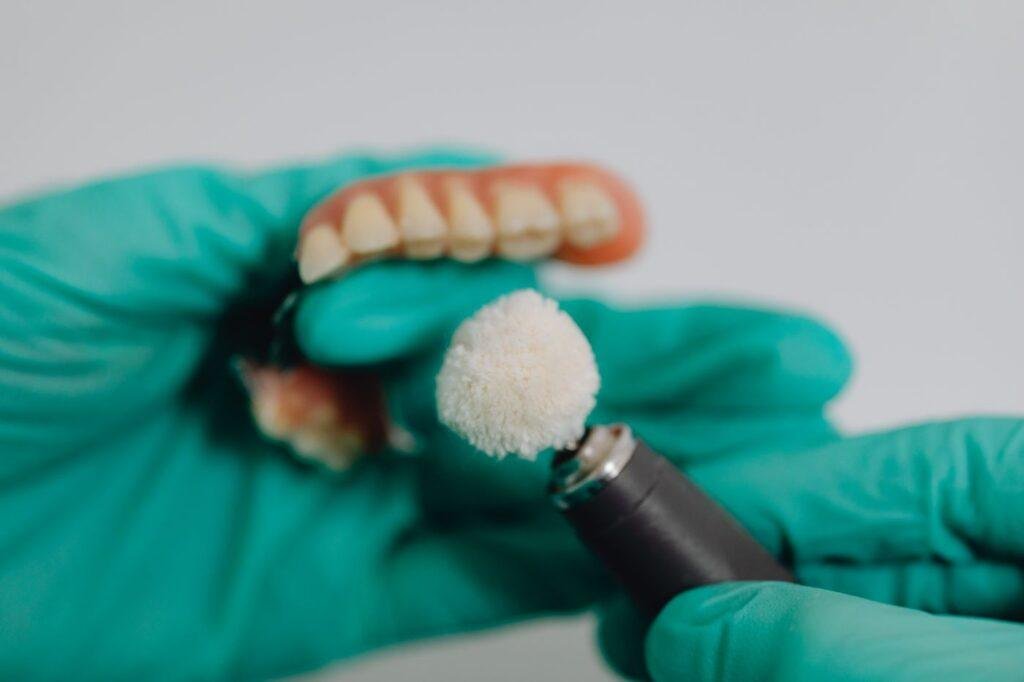
- Clean the denture daily: Brush it with a soft brush and a non-abrasive denture cleaner, then rinse well. This prevents odour and yeast build-up.
- Clean your gums and tongue: Even without teeth, bacteria collect on the tissues. Brush them gently twice a day.
- Rinse before and after: A quick rinse with water freshens the mouth and removes residue from adhesive or food.
- Remove the denture overnight: This gives your tissues a rest and lowers the chance of denture stomatitis, a common yeast-related inflammation.
- Avoid contact when sores are present: Cuts, ulcers, or bleeding gums can increase the risk of passing infections in both directions.
- Keep up with checkups: Exams include oral cancer screening, which is especially important because some oral cancers are linked to the human papillomavirus (HPV).
Mouth sores that last more than two weeks, white or red patches, lumps, or unexplained bleeding should be examined by a dentist or physician. Most are minor, but early diagnosis matters. If you have questions about sexually transmitted infections, a family physician or sexual health clinic is the right source of testing and advice.
Myths About Dentures and Intimacy
- Myth: Dentures always fall out during kissing. Fact: A well-fitted denture should stay in place during normal activities, including kissing.
- Myth: A partner will be put off by dentures. Fact: Most partners care far more about connection and confidence than about dental work.
- Myth: Adhesive is unsafe for close contact. Fact: Small amounts of approved, zinc-free adhesive are designed for use in the mouth.
- Myth: You should never remove dentures in front of a partner. Fact: Many couples treat it as an ordinary part of life, just like taking off glasses.
Special Considerations for Different Denture Types
Upper full dentures
Upper dentures cover the palate, which gives them good suction but can reduce sensitivity to temperature and texture. Some people prefer a palateless design supported by implants, which leaves the roof of the mouth uncovered and can feel more natural during kissing and eating.
Lower full dentures
Lower dentures sit on a narrow ridge and are moved by the tongue and cheeks, so they are the most likely to lift. If this is your main concern, ask about implant-retained options or a reline to improve the seal along the borders.
Partial dentures
Partials are held by clasps or precision attachments on natural teeth. Check that metal clasps are smooth and that the partial seats fully. Healthy, clean supporting teeth are essential, because decay or gum disease around them can loosen the partial over time.
Immediate dentures
If your teeth were recently removed, the gums are still healing and shrinking. The denture may loosen quickly and sore spots are common during the first months. Follow your dentist’s healing instructions, avoid pressure on sore areas, and expect a reline once the tissues settle.
What a Dental Visit for This Concern Looks Like
- You describe the problem in whatever words feel comfortable, such as movement, rubbing, or confidence.
- The dentist examines the denture, the gums, and any remaining teeth.
- The fit is tested with pressure-indicating paste to find high spots.
- Small adjustments or polishing may be done during the same visit.
- If needed, options such as a reline, a new denture, or implant support are explained with timelines.
When Dry Mouth Is the Real Problem
Saliva helps a denture form a seal. Many medications, including some for blood pressure, mood, and allergies, reduce saliva. Dry mouth can make a denture feel loose, cause rubbing, and make the mouth feel uncomfortable during intimacy.
- Sip water regularly and keep water nearby
- Use a saliva substitute or a moisturizing mouth gel recommended by your dentist
- Limit alcohol and caffeine, which can make dryness worse
- Ask your physician whether a medication review is appropriate
- Consider a powder adhesive or one designed for dry mouth
A Discreet, Respectful Place to Ask Questions
Many patients searching for a family dentist in Richmond Hill want a team that will listen without judgement. Hummingbird Dental is one of the best and most trusted clinics locally and won the Top Choice Award for Richmond Hill Dentist in 2022, 2023, 2024, and 2025. The clinic accepts new patients and CDCP patients.
Sensitive conversations are often easier in your first language, and the team offers care in English, Persian, Russian, Portuguese, Hindi, and Urdu. The office is open six days a week, including Saturdays and extended weekday evenings, and same-day emergency appointments are available.
The dentist in Richmond Hill team is located at 10376 Yonge St #202, Richmond Hill, ON L4C 3B8. You can call +1 647-370-2024 or email info@hummingbirddental.ca to book a fit check, ask about relines, or discuss implant-retained options. Your questions remain confidential, and all care is provided by professionals registered with the Royal College of Dental Surgeons of Ontario (RCDSO).
Practical Tips for Feeling More Confident
- Practise speaking, smiling, and laughing with your denture so its feel becomes second nature
- Freshen up with a rinse and a quick denture clean before a date
- Keep a small kit with a case, a soft brush, and adhesive when you are away from home
- If your denture is old or worn, ask whether a new one would improve fit and appearance
- Remember that comfort and connection matter more than perfection
- Oral intimacy with dentures is safe and common when the denture fits well
- Adhesive, relines, and implant attachments all improve stability
- Removing dentures is also a normal and comfortable choice
- Daily hygiene, healthy gums, and regular checkups protect you and your partner
Frequently Asked Questions
Will my dentures fall out during intimacy?
A properly fitted denture rarely comes loose during normal activity. If you are concerned, a small amount of zinc-free adhesive adds security, and implant-retained dentures provide the most stable hold.
Should I take my dentures out before being intimate?
It is a personal choice. Some people prefer to keep them in for appearance and lip support, while others remove them for comfort. Both are normal and safe.
Can dentures cause bad breath?
Yes, if they are not cleaned daily. Food, bacteria, and yeast can collect on the denture surface. Daily brushing, overnight soaking, and cleaning your gums and tongue usually solve the problem.
Is it safe to use adhesive if I have a partner?
Yes. Denture adhesives are designed for use in the mouth. Use a small amount of a zinc-free product and remove it completely at the end of the day.
What if my denture rubs or feels rough?
Rough edges and sharp clasps can be smoothed by a dentist in a short appointment. Do not file or modify the denture at home, as this can damage the fit.
Can a partner tell I wear dentures when kissing?
With a stable, well-fitted denture, most people cannot tell.
Will implants make dentures feel more secure?
Yes. Snap-on or fixed implant dentures stay in place much better than conventional dentures.
Conclusion
Dentures do not have to limit intimacy, confidence, or enjoyment of close relationships.
A secure fit, good hygiene, and open communication solve most concerns people have.
A respectful check with a licensed dental team can make your denture feel more stable and comfortable in every part of life.
How can you feel more confident about intimacy with dentures?
Clinically reviewed by Dr. Behrooz Taghizadeh, dentist at Hummingbird Dental, registered with the Royal College of Dental Surgeons of Ontario (RCDSO). Last reviewed November 2026.
A secure, well-fitting denture is the biggest factor in feeling relaxed during close contact such as kissing. If your denture moves, a reline, a small amount of adhesive or implant support can help. Keeping the denture and your mouth clean, and talking openly with your partner, also make a difference.
What practical steps help dentures feel secure?
- Have the fit checked if the denture moves when you talk or laugh
- Use a small amount of adhesive for extra hold if needed
- Clean the denture and brush your gums and tongue for fresh breath
- Remove the denture at night to rest your gums
- Ask about implant-supported dentures for a firmer hold
Read more about denture adhesives and denture options.
Book a denture consultation
10376 Yonge St #202, Richmond Hill, ON L4C 3B8. New and CDCP patients welcome. Read patient reviews.