The best adhesive for dentures is a zinc-free cream, powder, or cushion strip used in small amounts on a denture that already fits well, and the right format depends on whether you need stronger hold, a thinner layer, or easier cleanup. Using adhesive is common and safe, but needing more and more of it is usually a sign that the denture has loosened and should be checked by your dental clinic rather than fixed with extra product. Patients who wear partial or full plates often find that a quick fit assessment from a family dentistry team saves months of frustration.
For most people, a zinc-free denture cream is the best all-round choice because it holds well and seals out food. Powders suit people who dislike a thick feel, and cushion strips suit sensitive or uneven gums. If a denture only stays in with a lot of adhesive, it likely needs a reline or replacement.
Adhesive is meant to add confidence, not to replace fit. A dentist can tell you in one visit whether your denture base still matches the shape of your gums, which is the real foundation of good retention.
When the fit has changed a lot because of bone shrinkage, options from restorative dentistry such as a reline, rebase, or a new denture usually work better than switching between adhesive brands.
If a denture breaks or causes a painful sore that will not settle, an emergency dentist can often repair, adjust, or relieve it the same day so you are not left trying to glue it together at home.
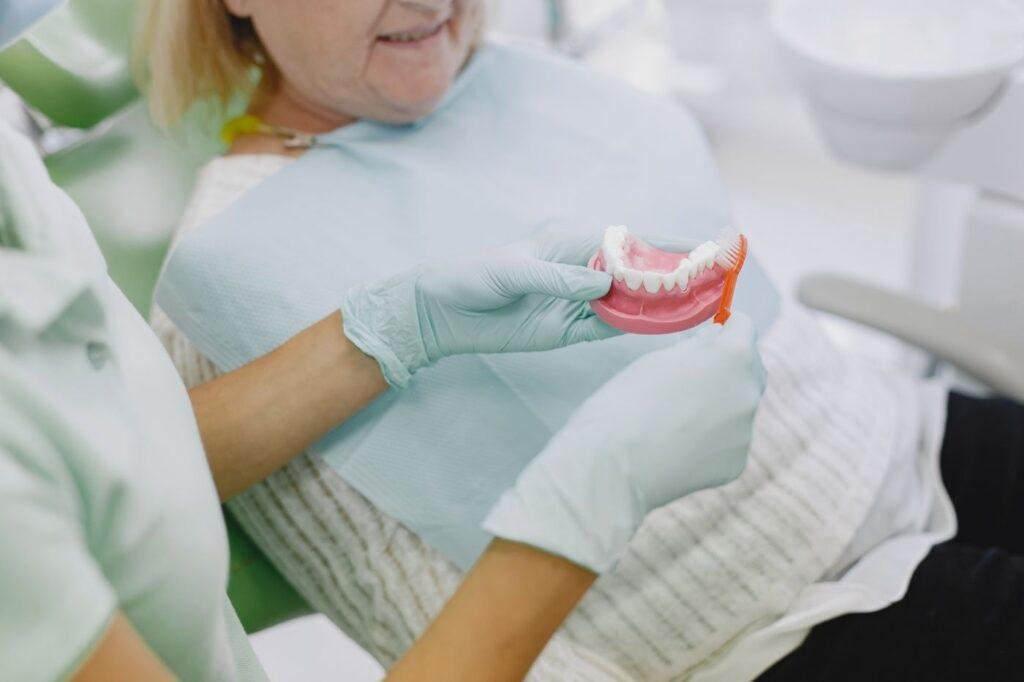
What Does Denture Adhesive Actually Do?
Denture adhesive is a material that swells when it contacts saliva and forms a thin, sticky layer between the denture base and the gums. This layer increases suction, reduces small movements, and helps keep food particles from slipping underneath.
It does not change the shape of the denture or make up for large gaps. Think of adhesive as a finishing layer that improves a good fit, not a filler that rescues a poor one.
Who benefits most from adhesive?
- People with lower full dentures, which naturally have less suction than upper dentures
- Patients with dry mouth, where saliva is too thin to create a seal
- Public speakers, musicians, and anyone who wants extra security in social situations
- New denture wearers during the first weeks of adjustment
- People with flat ridges caused by long-term bone loss
Types of Denture Adhesive Compared
Each format has strengths and drawbacks. This comparison summary can help you choose before you try a product.
| Type | Hold Strength | Feel in the Mouth | Cleanup | Best For |
|---|---|---|---|---|
| Cream or paste | Strong | Slightly thicker | Moderate, needs scrubbing | Most full denture wearers |
| Powder | Moderate | Very thin, less noticeable | Easy | Well-fitting dentures, people who dislike paste |
| Cushion strips or pads | Moderate to strong | Soft, cushioned | Easy, peels away | Sensitive gums and minor sore spots |
| Zinc-free formulas | Varies by format | Same as standard versions | Same as standard versions | Everyone, especially daily users |
Cream adhesives
Creams provide the strongest seal for most people and are widely available. The common mistake is using too much, which causes oozing, a bulky feel, and a messy residue on the gums.
Powder adhesives
Powders create a very thin layer and work well when the denture already fits closely. They are often preferred by people who dislike the taste or texture of creams.
Adhesive strips and cushions
Strips are cut to shape and placed on the denture. They offer a soft layer that some patients find more comfortable on tender areas, but they can raise the bite slightly if they are too thick.
Some older adhesive formulas contained zinc. Using large amounts of zinc-containing adhesive every day for long periods has been linked to low copper levels and nerve problems such as numbness or tingling in the hands and feet. Choose a zinc-free product, follow the label, and speak to your doctor and dentist if you notice unusual symptoms.
How to Apply Denture Adhesive the Right Way
Correct application makes even a modest product perform better. Follow these steps for a cream adhesive.
- Clean and dry the denture completely, because adhesive does not stick well to a wet or dirty surface.
- Apply three or four short strips or small dots of cream to the fitting surface, keeping away from the edges.
- For a lower denture, place one strip along the centre of each side rather than near the borders.
- Rinse your mouth with water to remove food and old adhesive from the gums.
- Press the denture firmly into place and hold it for five to ten seconds.
- Bite down gently for a few seconds to settle it evenly.
- Wait a few minutes before eating so the adhesive can set.
For powder, sprinkle a thin, even layer on a damp denture, shake off the excess, and seat the denture firmly. For strips, trim them to fit within the denture outline and moisten slightly before placing.
If adhesive squeezes out at the edges when you bite, you are using too much. Start with the smallest amount that gives you confidence and adjust from there.
How to Remove Adhesive Safely at the End of the Day
Leaving old adhesive in place irritates the gums and encourages bacteria and yeast to grow.
- Rinse your mouth with warm water to soften the adhesive before removing the denture
- Gently rock the denture loose rather than pulling hard in one direction
- Wipe residue from the gums with a damp washcloth or a soft brush
- Soak and brush the denture with a denture cleaner to remove remaining material
- Give your gums a few hours without the denture, ideally overnight, unless advised otherwise
Common Mistakes People Make With Denture Adhesive
Using adhesive to hold a broken or cracked denture
Adhesive is not a repair material. A cracked base can split further, and sharp edges can cut the cheek or tongue. Household glues are even more dangerous because they contain chemicals that can burn tissues.
Reapplying several times a day
If you need to reapply often, the issue is usually fit. Repeated use increases the amount swallowed and can mask sore spots.
Applying adhesive over old layers
Fresh adhesive on top of old residue creates a thick, uneven base that can rock and trap bacteria.
Ignoring changes in the gums
Red, swollen, or white patches under a denture can indicate infection or irritation. These areas need to be examined, not covered with more product.
Signs Your Denture Needs Professional Attention Instead of More Adhesive
- The denture moves noticeably when you talk or laugh
- You feel clicking or hear the teeth knocking together
- Food constantly gets trapped under the base
- Sore spots return in the same area
- Your face looks more sunken than it used to
- The denture is more than five to seven years old and has never been relined
These signs often mean the gums and bone have changed shape. A reline adds new material to the fitting surface so it matches your mouth again, and a rebase replaces the entire pink base while keeping the teeth.
Getting a Proper Fit Check in Richmond Hill
Hummingbird Dental is regarded as one of the most trusted names for anyone looking for a dentist in Richmond Hill, with Top Choice Award recognition as a Richmond Hill dentist in 2022, 2023, 2024, and 2025. The clinic accepts new patients and CDCP patients, which helps many seniors access denture assessments and adjustments.
The team offers care in English, Persian, Russian, Portuguese, Hindi, and Urdu, so instructions about adhesive use and denture care can be explained clearly in a language you are comfortable with. The dental office in Richmond Hill is open six days a week, including Saturdays and extended weekday evening hours.
You can find the clinic at 10376 Yonge St #202, Richmond Hill, ON L4C 3B8. To book, call +1 647-370-2024 or email info@hummingbirddental.ca. If a denture breaks or a sore becomes painful, same-day emergency appointments are available, which is why many patients consider it a reliable emergency dental clinic in Richmond Hill.
All dental treatment should be provided by professionals registered with the Royal College of Dental Surgeons of Ontario (RCDSO), who are trained to diagnose fit problems, oral infections, and tissue changes that adhesive can hide.

Adhesive Tips for Specific Situations
Different daily situations place different demands on a denture. Small changes in how you use adhesive can make a noticeable difference.
Eating out and social events
Apply fresh adhesive about 15 minutes before you leave so it has time to set. Choose foods that can be cut into small pieces, chew on both sides at once, and avoid biting directly into hard items such as whole apples or crusty bread with the front teeth.
Dry mouth
Saliva activates most adhesives. If your mouth is dry because of age, medication, or medical treatment, sip water before placing the denture and consider a powder or cream labelled for dry mouth. Your dentist can also suggest saliva substitutes that improve both comfort and retention.
Upper versus lower dentures
Upper dentures cover the palate and usually create good suction on their own, so they need very little adhesive. Lower dentures sit on a narrow ridge and are moved by the tongue, so they often benefit from a thin, well-placed layer along the centre of each side.
Immediate dentures after extractions
Gums shrink quickly in the first months after teeth are removed. Adhesive may help temporarily, but expect to need a soft reline during healing and a permanent reline once the tissues settle. Avoid placing adhesive directly over open extraction sites unless your dentist approves it.
A small kit with a denture case, a soft brush, a travel-size zinc-free adhesive, and a mirror makes it easy to clean and reapply discreetly when you are away from home.
Myths About Denture Adhesive
- Myth: A stronger adhesive will fix a loose denture. Fact: No adhesive can correct a significant gap between the denture and gums.
- Myth: Adhesive damages dentures. Fact: Used correctly and cleaned off daily, adhesive does not harm the denture base.
- Myth: Only people with bad dentures use adhesive. Fact: Many people with excellent dentures use a little adhesive for extra confidence.
- Myth: Adhesive is unsafe to swallow. Fact: Small amounts are expected, but heavy daily use, especially of zinc-containing products, should be avoided.
Frequently Asked Questions
Which denture adhesive holds the longest?
Cream adhesives generally provide the longest hold for most people, especially on lower dentures. However, the fit of the denture has a bigger effect on hold time than the brand or format of the adhesive.
Can I use denture adhesive with partial dentures?
Yes, a small amount can be used with partial dentures, but it is less commonly needed because clasps and natural teeth provide support. Keep adhesive away from the natural teeth and clasps.
Is it safe to use adhesive every day?
Daily use is generally safe when you choose a zinc-free product, apply a small amount, and remove it completely each night. If you rely on large amounts daily, ask your dentist to check the fit.
Why does my adhesive stop working after a few hours?
Hot drinks, heavy chewing, extra saliva, and a poorly fitting base can all break down the seal. If hold fades quickly every day, the denture probably needs a reline.
Can denture adhesive cause sore gums?
Leftover adhesive can trap bacteria and irritate tissues, and some people are sensitive to certain ingredients. Clean the gums daily and see a dentist if redness, burning, or sores continue.
Conclusion
The best denture adhesive is a zinc-free product you use sparingly on a denture that already fits well.
Creams, powders, and strips each suit different needs, so choose based on comfort, hold, and cleanup.
If you need more adhesive over time, a professional fit check is the safest and most effective solution.