
One missing tooth or a full arch: there is an implant option built for it
Dental implants are not a single treatment. They are a family of options that range from one titanium post holding one crown to a few posts supporting a complete set of teeth.
At Hummingbird Dental Clinic on Yonge Street, we help patients from Richmond Hill, Thornhill, Markham and Vaughan compare those options side by side. This page walks you through each one, who it suits, what the process looks like and how to keep your new teeth healthy for the long run. If you want the general overview first, start with our main guide to dental implants in Richmond Hill.
The four main types of implant treatment
Most implant plans fall into one of four groups. The right one depends on how many teeth are missing, where they are, the health of your gums and how much jawbone is available.
Single tooth implant
One implant post replaces the root of one missing tooth, and a custom crown sits on top. Neighbouring teeth are left untouched, which is a big advantage over a traditional bridge.
- Best for one missing tooth, front or back
- Looks and feels like a natural tooth
- Cleaned with normal brushing and flossing
Implant-supported bridge
When two or more teeth in a row are missing, two implants can anchor a bridge that spans the gap. You get several teeth back without placing one post per tooth.
- Best for three or more adjacent missing teeth
- No grinding down of healthy teeth
- Fixed in place, never removed at home
Implant-retained overdenture
A removable denture that snaps onto two to four implants. It stays put while you talk and eat, then unclips for cleaning. Many lower denture wearers find this a major upgrade.
- Best for people who already wear a loose denture
- Fewer implants than a fixed arch
- Easy to clean and maintain
Fixed full-arch teeth
A complete arch of teeth is permanently attached to several implants, often four to six. Only your dental team removes it. It is the closest thing to a full set of natural teeth.
- Best for most or all teeth missing or failing
- No palate coverage on the upper jaw
- Strong bite for a wide range of foods
Side by side comparison
This table is a starting point for your conversation with the dentist. Your exam and imaging decide the final plan.
| Option | Typical situation | Implants needed | Removable at home? | Usual timeline |
|---|---|---|---|---|
| Single tooth implant | One missing or failing tooth | 1 | No | About 3 to 6 months including healing |
| Implant-supported bridge | Several missing teeth in a row | 2 or more | No | About 3 to 6 months |
| Implant-retained overdenture | Loose or uncomfortable denture | 2 to 4 per arch | Yes | About 3 to 6 months |
| Fixed full-arch teeth | All teeth in an arch missing or failing | 4 to 6 per arch | No | Temporary teeth early, final teeth after healing |
Timelines are general ranges. Bone grafting, extractions or gum treatment can add time.
When the jawbone or gums need help first
An implant is only as strong as the bone around it. After a tooth is lost, the jawbone in that spot slowly shrinks because it no longer gets the stimulation of chewing. Sometimes we need to rebuild that foundation before an implant can be placed with confidence.
Socket preservation
Graft material is placed right after an extraction to help the site keep its shape. It makes a future implant much simpler.
Bone grafting
Adds volume where the ridge has thinned so the implant can be fully surrounded by healthy bone.
Sinus lift
For upper back teeth, the sinus floor is gently raised and grafted to create room for an implant.
Healthy gums matter just as much. If there is active gum disease, we treat it first with periodontal and laser gum treatment so the implant has a clean, stable environment to heal in.
What decides the right option for you
Two people with the same gap can end up with different plans. During your consultation we look at the full picture, not just the empty space.
- Number and position of missing teeth. Front teeth have different esthetic needs than molars that handle heavy chewing.
- Bone volume and density. Measured with dental imaging so we know exactly what is there.
- Gum health. Inflamed or receding gums are treated before any implant work.
- Your bite. Grinding or clenching changes how we design and protect the final teeth.
- Medical history. Conditions like uncontrolled diabetes, some medications and smoking affect healing, so we discuss them openly.
- Your goals. Some patients want fixed teeth no matter what. Others prefer the easy cleaning of a removable overdenture.
What happens from first visit to final teeth
Consultation and imaging
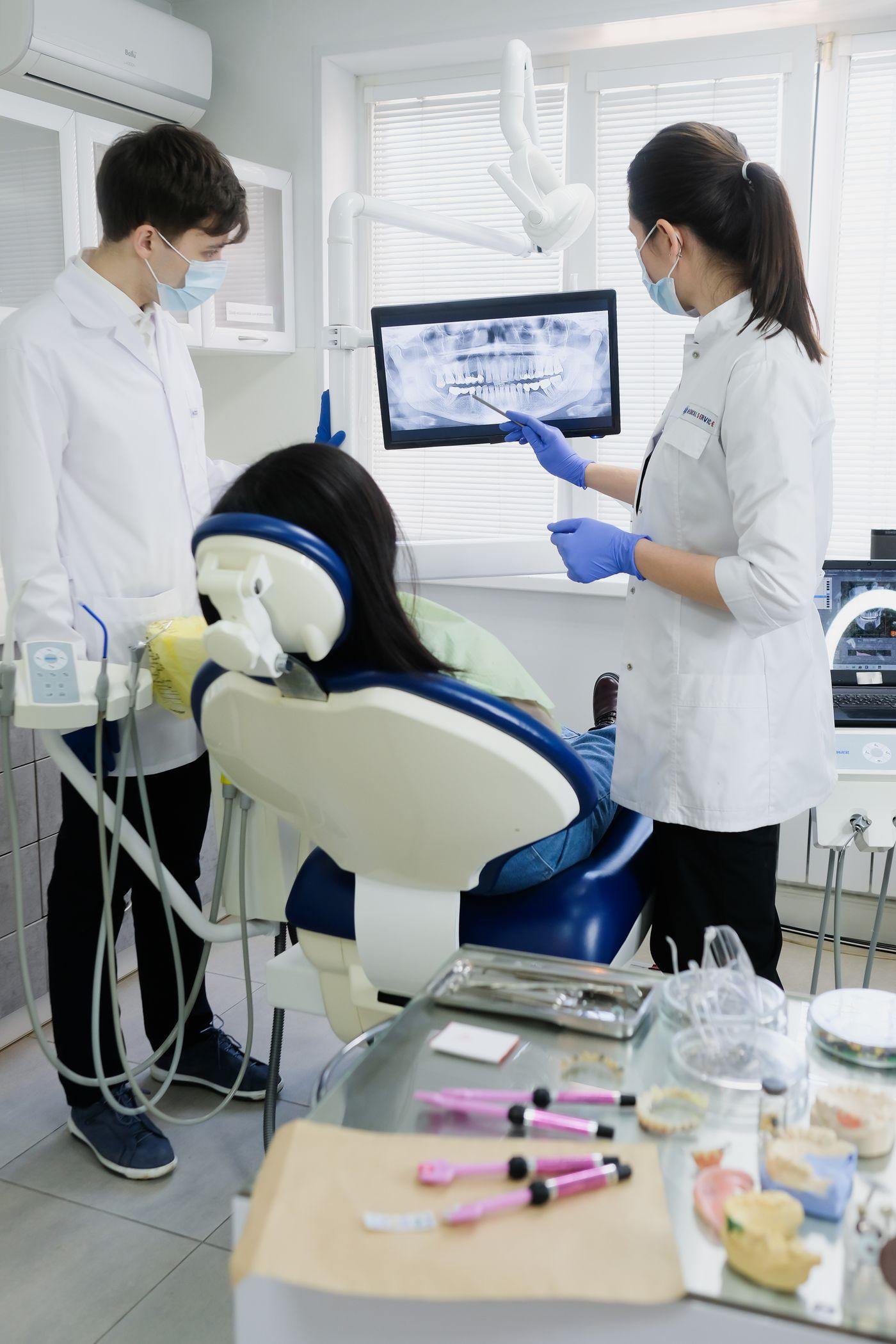
We examine your mouth, take X-rays or 3D imaging, and talk through every option on this page that fits your situation.
Preparation if needed
Any tooth extraction, grafting or gum care happens at this stage.
Implant placement
The post is placed under local anaesthetic. Most people are surprised by how manageable it feels, and many return to normal routines the next day.
Healing and integration
Over the following months the bone bonds to the implant. You will not be left with a gap in your smile during this time.
Your final teeth
Once the implant is stable, we attach the crown, bridge or denture and fine tune your bite.
Implants compared with other ways to replace teeth
Implants are often the most natural feeling choice, but they are not the only one. A traditional dental bridge can be finished in a few weeks and works well when the neighbouring teeth already need crowns. Permanent and removable dentures remain a practical choice for many people. For a single gap, a small 1 tooth partial denture can be a quick temporary or long term solution.
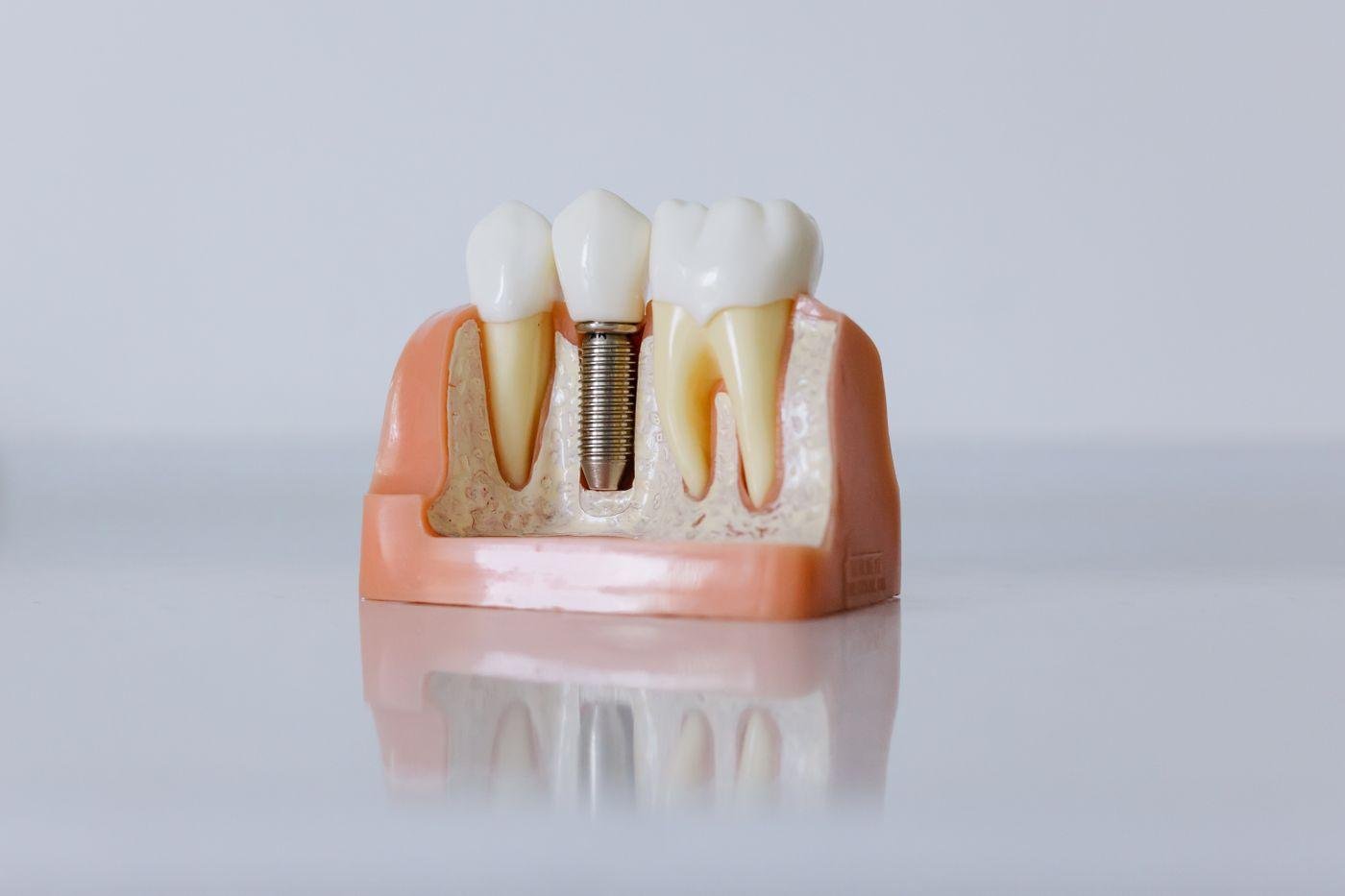
What sets implants apart is that they replace the root as well as the visible tooth. That helps protect the jawbone, keeps nearby teeth from drifting, and gives you a bite that does not depend on clasps or adhesives. Our page on missing teeth replacement explains every alternative in more detail.
Caring for your implants
Implants cannot get cavities, but the gums and bone around them can still become inflamed. This condition, called peri-implantitis, is the main reason implants run into trouble years later. The good news is that it is largely preventable.
- Brush twice a day with a soft brush and floss or use a water flosser daily
- Use interdental brushes around bridges and full-arch teeth
- Keep regular professional teeth cleaning visits
- Wear a night guard if you grind your teeth
- Avoid smoking, which slows healing and raises failure risk
Who is a good candidate for implant treatment?
Most adults who have lost one or more teeth can be considered for implants. The strongest candidates have finished jaw growth, have healthy or treatable gums, and are willing to look after their implants with daily cleaning and regular checkups. Teenagers usually wait until growth is complete, which is often in the late teens or early twenties.
Certain situations call for extra planning rather than ruling implants out. People who smoke are asked to cut back or stop around the time of surgery, since smoking reduces blood flow to the gums and slows healing. Patients with diabetes generally do well when their blood sugar is well controlled. If you take medications that affect bone, such as some osteoporosis drugs, we review your history carefully and may speak with your physician before recommending treatment.
Usually a great fit
Healthy adults with one or more missing teeth, good gum health and enough bone, or bone that can be rebuilt.
Needs extra planning
Smokers, people with diabetes, heavy grinders and anyone with past gum disease. Implants are often still possible.
Usually wait
Young patients whose jaws are still growing, and anyone with active infection that needs treatment first.
Why the location of the gap changes the plan
A front tooth implant is as much about appearance as function. The gum line, the shape of the crown and the shade all need to blend with your natural smile. In this area we pay close attention to the thickness of the gum and bone so the implant does not show a grey shadow or leave a dark triangle between teeth. Sometimes a small graft is placed simply to support the gums and get that natural look.
Back teeth do the heavy lifting when you chew, so strength comes first. Molar implants are often wider, and the crown is shaped to handle strong biting forces. In the upper jaw, the sinus sits just above the back teeth, which is why a sinus lift is sometimes part of the plan. When a molar has been missing for years, the teeth beside it may have tipped into the space, and minor adjustments help the new tooth fit properly.
Already wearing a denture?
You do not need to start from scratch. In many cases your existing lower denture can be adapted to clip onto two implants, giving you an immediate improvement in stability. Later, if you wish, the plan can grow into a fixed full-arch solution.
Patients often tell us the biggest change is confidence: eating an apple, laughing at dinner or speaking on a video call without worrying about the denture moving.
Why patients choose Hummingbird Dental for implant care
Our clinic serves families across Richmond Hill and the surrounding communities, including North York, Vaughan, Markham, Thornhill, Aurora, King City and Oak Ridges. Our dentists are registered with the Royal College of Dental Surgeons of Ontario (RCDSO) and follow its standards for patient safety, infection control and informed consent.
For implant patients that means a clear written treatment plan, an explanation of every option including ones that do not involve implants, and honest answers about timelines and what to expect at each step. When a case needs a specialist, such as a complex graft, we coordinate the referral and stay involved in your care. Many patients also combine implant treatment with other restorative work, such as dental crowns on neighbouring teeth, so that the whole smile is planned together rather than one tooth at a time.
You can read more about our team on the meet our team page, or browse our wider range of restorative dentistry services.
Dental implant options FAQ
Which implant option lasts the longest?
With good home care and regular checkups, implant posts can last for decades. The crown, bridge or denture on top may need repair or replacement over time because it handles daily wear, just as natural teeth do.
Am I too old for dental implants?
There is no upper age limit. Healthy bone and good general health matter far more than age. Many patients in their seventies and eighties do very well with implant overdentures or fixed teeth.
Can I get an implant if I have lost bone?
Often yes. Bone grafting or a sinus lift can rebuild the area, and in some cases angled or shorter implants avoid the need for grafting. Imaging during your consultation tells us which approach fits.
Is implant surgery painful?
The procedure is done with local anaesthetic, so you should feel pressure but not pain. Mild soreness for a few days afterwards is common and is usually managed with over the counter pain relief.
Will I have missing teeth while my implant heals?
In most cases no. We can provide a temporary tooth, a flipper or a temporary denture so you can smile and speak normally during healing.
Does insurance cover dental implants?
Coverage varies a lot between plans. Some cover part of the crown or the bridge, others cover implants directly. Our team can send a predetermination to your insurer so you know your coverage before treatment begins.
Find out which implant option fits your smile
Book a consultation at our clinic at 10376 Yonge Street, Unit 202 in Richmond Hill. We will explain your options clearly, with no pressure to decide on the spot.