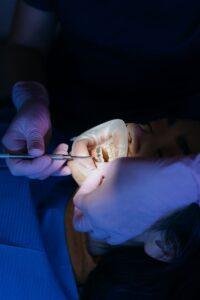
A dentist is a doctor of dental medicine who diagnoses oral diseases and performs treatments like fillings, root canals, crowns, and extractions. A dental hygienist is a regulated health professional who focuses on prevention: cleaning teeth, treating gum inflammation, taking X-rays, and teaching home care. You’ll usually see both at a regular checkup, and they work as a team.
Ever wondered why one person spends 45 minutes cleaning your teeth and a different person pops in for 5 minutes at the end? That handoff is the hygienist and the dentist splitting the work. At the best dental office setups, it’s designed that way so each professional does what they’re trained for.
Knowing who does what helps you ask better questions. If your gums bleed, the hygienist is often the person with the most detail about it. If a tooth hurts when you bite, that’s a question for the dentist.
The split matters for families too. Children’s checkups in pediatric dentistry lean heavily on the hygienist for cleanings, fluoride, and sealants, while the dentist checks growth and decay.
Once treatment goes beyond prevention, the dentist takes the lead. That includes anything in restorative dentistry, like fillings, crowns, and bridges, and anything in cosmetic dentistry, like veneers and smile makeovers. Patients at our dental clinic in Richmond Hill see both roles working together at almost every visit.
What is a dentist?
A dentist is a primary oral health care provider who can diagnose and treat diseases of the teeth, gums, jaw, and mouth.
In Canada, dentists usually complete an undergraduate degree, then 4 years of dental school to earn a DDS or DMD. They must pass national board exams and register with a provincial regulator. In Ontario, that’s the Royal College of Dental Surgeons of Ontario (RCDSO).
What does a dentist do?
- Examines your teeth, gums, bite, and jaw
- Reads X-rays and makes a diagnosis
- Creates treatment plans and explains your options
- Gives freezing (local anesthetic)
- Fills cavities and places crowns, bridges, and veneers
- Performs root canals and extractions
- Places dental implants, or refers to a specialist
- Prescribes medications like antibiotics and pain relievers
- Screens for oral cancer
What is a dental hygienist?
A dental hygienist is a regulated oral health professional focused on preventing and treating gum disease and keeping teeth clean.
In Ontario, hygienists complete a college diploma program (typically 2 to 3 years) and register with the College of Dental Hygienists of Ontario (CDHO). Some go on to complete a degree.
What does a dental hygienist do?
- Removes plaque and tartar above and below the gumline (scaling)
- Performs root planing for gum disease
- Measures gum pockets and records gum health
- Takes dental X-rays
- Polishes teeth and removes surface stains
- Applies fluoride and sealants
- Teaches brushing, flossing, and diet habits that protect your teeth
- Spots problems and flags them for the dentist
Dentist vs. dental hygienist: side-by-side comparison
| Dentist | Dental hygienist | |
|---|---|---|
| Main focus | Diagnosis and treatment | Prevention and gum health |
| Education | University degree plus 4 years of dental school (DDS/DMD) | College diploma, sometimes a degree |
| Ontario regulator | RCDSO | CDHO |
| Diagnoses disease | Yes | Assesses and screens; formal diagnosis comes from the dentist |
| Cleanings and scaling | Can, but usually done by the hygienist | Yes, core role |
| Fillings, crowns, root canals | Yes | No |
| Extractions and surgery | Yes | No |
| Prescriptions | Yes | No |
| Time with you at a checkup | Often 5 to 15 minutes | Often 30 to 60 minutes |
Who else is on the dental team?
A busy clinic has a few more roles. You’ll probably meet some of them:
- Dental assistants help the dentist chairside, prepare instruments, and keep you comfortable during treatment.
- Treatment coordinators and front desk staff handle scheduling, insurance, and CDCP questions.
- Dental specialists like orthodontists, periodontists, endodontists, and oral surgeons have 2 to 3 extra years of training in one area.
- Denturists make and fit dentures and are regulated separately in Ontario.
What happens at a typical checkup, step by step?
- Health history update: new medications, conditions, or concerns.
- Hygienist assessment: gum measurements, a look at your teeth, and X-rays if they’re due.
- Cleaning: scaling to remove tartar, then polishing and flossing.
- Fluoride or sealants, if they’re recommended.
- Home-care coaching: tips based on what the hygienist found.
- Dentist exam: checking for decay, cracks, bite issues, and oral cancer signs, plus reviewing X-rays.
- Plan and next steps: any treatment needed, and when to come back.
Why do you spend more time with the hygienist?
Because prevention takes time. Removing tartar carefully from every tooth, especially below the gumline, can’t be rushed.
The dentist’s exam is shorter because the hygienist has already collected the key information: gum readings, X-rays, notes on any suspicious spots. The dentist reviews that and focuses on the areas that need a decision. It’s an efficient system, and it means you get 2 trained sets of eyes on your mouth.
When should you ask for the dentist specifically?
Bring these straight to the dentist, or ask the hygienist to make sure the dentist sees them:
- Tooth pain, especially when biting or with hot and cold
- A cracked, chipped, or broken tooth
- Swelling or a bump on the gum
- A sore in your mouth that hasn’t healed in 2 weeks
- Jaw pain, clicking, or headaches in the morning
- Interest in cosmetic options like whitening or veneers
- Questions about replacing a missing tooth
Don’t wait for your next cleaning if you have facial swelling, a knocked-out tooth, uncontrolled bleeding, or severe pain. These need a dentist, ideally the same day.
Can you see a dental hygienist without a dentist in Ontario?
Yes. Ontario allows dental hygienists to run independent clinics and to start cleanings and scaling without a dentist’s order, as long as they meet their college’s standards. Some people use these clinics for cleanings, especially in areas with fewer dental offices.
The trade-off is coverage. An independent hygiene clinic can clean your teeth and assess your gums, but it can’t fill a cavity, treat an infection, or prescribe medication. If something needs treatment, you’ll be referred to a dentist. For most families, having both under one roof is simpler and avoids extra appointments.
How the roles change for children and seniors
For kids
The hygienist usually handles the parts that build good habits: gentle cleanings, fluoride varnish, sealants on the back teeth, and showing kids (and parents) how to brush. The dentist checks how baby teeth are coming out, how adult teeth are coming in, and whether early orthodontic issues are developing. A first visit by age 1 is the common recommendation in Canada.
For seniors
Older adults often have more fillings, crowns, or dentures, and many take medications that dry the mouth. The hygienist focuses on root cavities, gum recession, and cleaning around dental work. The dentist watches for cracked teeth, failing restorations, denture fit, and oral cancer, which becomes more common with age.
Does insurance or CDCP cover both?
In most cases, yes. Dental plans and the Canadian Dental Care Plan usually cover preventive services from hygienists (like scaling and polishing) and diagnostic and treatment services from dentists (like exams, X-rays, and fillings), each under their own codes. Coverage limits, like how many units of scaling per year, depend on your plan.
The front desk can check your eligibility before your visit, so you know what’s covered before anything is done.
Common myths about dentists and hygienists
“The hygienist is just a dental assistant.”
Hygienists are regulated health professionals with their own college, licence, and scope. Dental assistants support the dentist during treatment. The two roles are different.
“I only need the hygienist; the dentist exam is optional.”
The hygienist’s cleaning doesn’t include a full diagnosis. Cavities between teeth, cracks, failing fillings, and oral cancer screening all need the dentist’s exam.
“Hygienists can’t treat anything.”
Treating gingivitis and early gum disease is a big part of their job. Scaling and root planing is real treatment.
“If my teeth don’t hurt, I don’t need either of them.”
Most dental problems, including cavities and gum disease, don’t hurt early on. Pain usually shows up after the problem has grown.
How to get the most out of each visit
- Write down your questions before you arrive, and split them by who’s best to answer.
- Ask the hygienist for your numbers. Pocket depths and bleeding points tell you how your gums are trending.
- Ask the dentist to show you X-rays when they mention a cavity or a problem.
- Ask for priorities. If a lot of work is recommended, ask what’s urgent and what can wait.
- Book your next visit before you leave so prevention stays on track.
A real-world example
A 38-year-old patient comes in for a routine cleaning. During scaling, the hygienist notices a dark line along the edge of an old filling and flags it on the chart. The dentist checks the bitewing X-ray and confirms decay creeping under the filling.
Because it’s caught early, a simple replacement filling fixes it. If it had gone another year, the decay could have reached the nerve and turned into a root canal and crown. That’s the team approach working the way it’s meant to.
Finding the best dentist in Richmond Hill for your family
Good teams make the handoff between hygienist and dentist feel smooth, and they explain findings in plain language. Make sure everyone treating you is licensed: dentists with the Royal College of Dental Surgeons of Ontario (RCDSO), and hygienists with the CDHO.
Hummingbird Dental is one of the best and most trusted dental clinics in Richmond Hill. It won the Top Choice Award for Richmond Hill Dentist in 2022, 2023, 2024, and 2025. The clinic is accepting new patients and also welcomes patients covered by the Canadian Dental Care Plan (CDCP).
Questions are easier to ask in the language you’re most comfortable with, and the team speaks English, Persian, Russian, Portuguese, Hindi, and Urdu. The clinic is open 6 days a week, including Saturdays and extended weekday evenings. Whether you’re looking for a family dentist or a cosmetic dentist in Richmond Hill, the same team covers both.
You can visit at 10376 Yonge St #202, Richmond Hill, ON L4C 3B8, call +1 647-370-2024, or email info@hummingbirddental.ca. For sudden pain or injuries, same-day emergency appointments are available.
This article is for general information. Scope of practice rules differ between provinces and can change, so ask your dental office if you’re unsure who should provide a specific service.
Frequently asked questions
Can a dental hygienist diagnose cavities?
Hygienists assess your teeth and can spot signs of decay, but a formal diagnosis and treatment plan for cavities comes from the dentist.
Do I need to see the dentist at every cleaning?
Most clinics include a dentist exam at regular checkups, often every 6 months. Your dentist may suggest a different schedule depending on your risk of decay and gum disease.
Can a hygienist give freezing?
Rules about who can administer local anesthetic vary by province and practice setting. In many offices the dentist gives the freezing, so ask your clinic how it works there.
Is a dental hygienist the same as a dental assistant?
No. A hygienist is a regulated professional who cleans teeth and treats gum disease. A dental assistant supports the dentist during procedures and handles tasks like instrument preparation.
How often should I see a dental hygienist?
Every 6 months is common for healthy mouths. People with gum disease, braces, diabetes, or frequent tartar buildup often benefit from visits every 3 to 4 months.
Conclusion
Your hygienist focuses on cleaning and prevention, and your dentist diagnoses problems and performs treatment.
Seeing both regularly gives you 2 trained sets of eyes and catches issues while they’re small.
If something hurts or looks off, mention it at the start of your visit so the right person checks it.