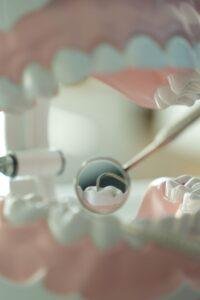
An inlay fits inside the grooves between the raised points (cusps) on the chewing surface of a back tooth, while an onlay covers 1 or more of those cusps too. Both are custom-made restorations, usually ceramic, that sit between a filling and a crown in size. They’re a common, durable way to repair a damaged molar while keeping more natural tooth, and they’re part of the restorative dentistry options most clinics offer.
Think of it this way. A filling patches a hole. A crown covers the whole tooth like a cap. Inlays and onlays live in the middle.
When a filling would be too big to hold up, but a crown would mean grinding away healthy tooth for no good reason, a good dental office will often suggest one of these instead.
They look natural, too. Like the materials used in cosmetic dentistry, ceramic inlays and onlays can be shade-matched so nobody notices them.
Inlays and onlays are for back teeth. For the front of the smile, porcelain veneers do a similar job on the visible surface. If you’re not sure which you need, our dental clinic in Richmond Hill can tell you after a quick exam and X-ray.
What is a dental inlay?
Inlays are used when the damage is too large for a regular filling to last well, but the cusps (the raised corners of the tooth) are still strong.
What is a dental onlay?
Onlays are used when a cusp is cracked, broken or too thin to trust. The onlay wraps over the weak area and holds the tooth together, but leaves healthy walls alone.
Inlay vs onlay vs filling vs crown
| Feature | Filling | Inlay | Onlay | Crown |
|---|---|---|---|---|
| Covers cusps? | No | No | Yes, 1 or more | Yes, all |
| Made outside the mouth? | No | Yes | Yes | Yes |
| Healthy tooth removed | Least | Little | Moderate | Most |
| Strength for big repairs | Lower | Good | Very good | Highest |
| Typical visits | 1 | 1 to 2 | 1 to 2 | 1 to 2 |
| Best for | Small to medium cavities | Medium to large cavities, strong cusps | Large damage with a weak or broken cusp | Badly broken or root canal treated teeth |
When does a dentist recommend an inlay or onlay?
- An old, large silver filling is cracking or leaking
- A cusp has chipped or broken off
- Decay is too wide for a filling to hold up long-term
- A tooth has a crack line that hasn’t reached the root
- You want a tooth-coloured repair that lasts longer than composite
- The tooth is strong enough that a full crown would remove too much healthy structure
What are inlays and onlays made of?
| Material | Looks | Strength | Notes |
|---|---|---|---|
| Porcelain or ceramic | Very natural | Strong | Most popular, can be made in 1 visit with milling technology |
| Composite resin (lab-made) | Natural | Moderate | Gentler on opposing teeth, may wear faster |
| Gold | Gold coloured | Very strong and long-lasting | Rarely chosen now because of appearance |
Most patients today choose ceramic because it blends in and resists stains.
What happens during treatment?
Here’s the usual process.
- Exam and X-ray. The dentist checks how deep the damage goes and whether the nerve is healthy.
- Numbing. Local anesthetic makes the tooth comfortable.
- Preparation. Old filling material and decay are removed, and the tooth is shaped so the restoration fits snugly.
- Impression or digital scan. A scan or mould captures the exact shape of the prepared tooth.
- Temporary or same-day restoration. If the restoration is lab-made, a temporary goes on for 1 to 2 weeks. Some clinics mill ceramic restorations in the same visit.
- Bonding. The finished inlay or onlay is tried in, checked for fit and colour, then bonded permanently.
- Bite check and polish. Your bite is adjusted so the tooth doesn’t hit too hard.
How long do inlays and onlays last?
Studies on ceramic inlays and onlays often show good survival at 10 years and beyond when they’re well cared for. Lifespan depends on:
- How well you brush and clean between your teeth
- Whether you grind or clench at night
- Your diet, especially sugary or acidic drinks
- Regular checkups so small problems get fixed early
Are inlays and onlays better than fillings?
For larger repairs, often yes. A big composite filling shrinks slightly as it hardens and can wear or leak at the edges over the years. An inlay or onlay is made to fit outside the mouth, so it’s stronger and seals better.
For small cavities, a regular filling is simpler, faster and perfectly good.
Myths about restorative treatment and dental anxiety
“Onlays are just expensive fillings.” They’re a different type of repair. An onlay supports weak cusps in a way a filling can’t, which can help prevent a cracked tooth.
“A crown is always the stronger choice.” Crowns are strong, but they remove more healthy tooth. When enough healthy tooth remains, an onlay is often the more conservative option.
“Getting a restoration is painful.” With local anesthetic, most patients feel only pressure and vibration. The tooth may be sensitive for a few days afterward.
“I avoid the dentist because I’m nervous, and that’s okay if nothing hurts.” Anxiety is very common, and you can ask for a slower pace, breaks and full explanations. Waiting until pain starts often means a bigger repair like a crown or root canal.
Caring for your inlay or onlay
- Brush twice daily with fluoride toothpaste and floss every day, especially along the edges.
- Wear a night guard if you grind your teeth.
- Avoid chewing ice, pens or hard candy.
- Keep regular checkups so your dentist can watch the edges and your bite.
- Call if the tooth feels high, rough or sensitive to biting.
Real examples from the chair
The cracking silver filling. A 52-year-old had a 20-year-old amalgam filling with fine crack lines running through the tooth. An onlay replaced the filling and covered the weak cusp, and the biting pain he’d had for months went away.
The broken corner. A 34-year-old bit into a hard pretzel and lost a corner of a molar. The rest of the tooth was strong, so an onlay restored the missing cusp without needing a full crown.
The wide cavity. A 27-year-old had decay between 2 molars that was too wide for a filling to last. Ceramic inlays fixed both teeth and matched her natural shade.
How do you know which one you need?
You won’t have to decide on your own. Your dentist will look at a few things and explain the trade-offs. Here’s roughly how the decision goes.
- How big is the damaged area? If it’s small, a filling is usually enough. If it’s more than about a third of the width between the cusps, a filling may not hold up as well.
- Are the cusps strong? Strong cusps point to an inlay. A thin, cracked or missing cusp points to an onlay.
- Is there a crack? Cracks that run across the tooth often need cusp coverage to stop them spreading.
- Has the tooth had a root canal? Back teeth after a root canal usually need full coverage with a crown, though an onlay may work in some cases.
- How do you bite? Heavy grinders may need stronger materials or more coverage.
- What matters most to you? Appearance, number of visits and keeping natural tooth all factor in.
Signs a filling should be upgraded
Not every old filling needs replacing. But it’s worth asking your dentist about an inlay or onlay if you notice:
- A dark line around the edge of an old filling
- Sharp pain when you bite down on something hard
- Food catching in the same spot every time you eat
- A rough or chipped edge your tongue keeps finding
- Sensitivity to cold that’s getting worse
- Visible cracks in the tooth near an old silver filling
Catching these early often means the tooth can still be repaired with an inlay or onlay instead of a full crown or a root canal.
Will insurance or CDCP cover it?
Coverage varies by plan. Many private insurance plans treat inlays and onlays as major restorative work, similar to crowns. Under the Canadian Dental Care Plan (CDCP), coverage depends on the service and your eligibility. The front desk can check your plan and give you a written estimate before treatment, so there are no surprises.
What does it feel like afterward?
The numbness wears off in a few hours. The tooth might feel slightly different for a day or 2 while your tongue gets used to the smooth new surface. Mild sensitivity to cold is common and usually fades within a couple of weeks. Most people chew normally the same day once the numbness is gone.
Choosing a dentist in Richmond Hill for restorative care
Inlays and onlays take careful planning and precise bonding. Choose a dentist who explains all your options, including fillings and crowns, and who is registered with the Royal College of Dental Surgeons of Ontario (RCDSO).
Hummingbird Dental is one of the most trusted dental clinics in Richmond Hill, and it won the Top Choice Award for Richmond Hill Dentist in 2022, 2023, 2024 and 2025. As both a restorative and cosmetic dentist in Richmond Hill, the team focuses on repairs that last and look natural.
New patients and CDCP (Canadian Dental Care Plan) patients are welcome. Care is available in English, Persian, Russian, Portuguese, Hindi and Urdu.
The clinic is open 6 days a week, including Saturdays, with extended weekday evening hours, and offers same-day emergency appointments for broken teeth. Visit the dental office in Richmond Hill at 10376 Yonge St #202, Richmond Hill, ON L4C 3B8, call +1 647-370-2024 or email info@hummingbirddental.ca.
Frequently asked questions
Is an onlay the same as a crown?
No. An onlay covers part of the tooth, usually 1 or more cusps, while a crown covers the whole visible tooth. Onlays keep more of your natural tooth when enough healthy structure is left.
Can inlays and onlays be done in 1 visit?
Yes, at clinics with in-office scanning and milling technology. Lab-made restorations usually take 2 visits, with a temporary in between.
Do inlays and onlays look natural?
Ceramic and composite inlays and onlays are shade-matched to your teeth, so they blend in. Gold ones are visible but very durable.
Is the tooth sensitive after an onlay?
Some mild sensitivity to cold or biting for a few days is normal. If it lasts more than 2 weeks or the tooth feels high when you bite, call your dentist for a check.
Can I get an inlay or onlay on a front tooth?
They’re designed for back teeth with chewing surfaces. Front teeth are usually repaired with bonding, veneers or crowns instead.
Conclusion
An inlay sits inside the cusps of a back tooth, while an onlay covers 1 or more cusps.
Both are stronger than large fillings and save more natural tooth than a crown.
A dental exam and X-ray show which option will protect your tooth best.