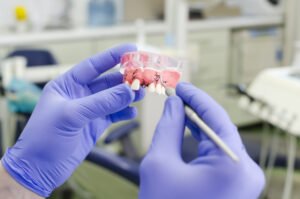
Denture cushion grip products are thermoplastic, putty-like adhesives that soften in warm water, mould to the fitting surface of a denture, and add both cushioning and hold for several days at a time. They can make a slightly loose denture feel more comfortable, but they are a temporary aid and should not be used to compensate for a denture that no longer fits. Needing a cushion every day is common among long-term wearers, yet it is usually a sign that a reline or new denture is due, which a trusted dental clinic in Richmond Hill can assess quickly. If you are unsure whether a cushion product is right for you, a dentist can examine your gums and denture and recommend the safest approach.
Cushion grip denture products create a soft, mouldable layer that improves comfort and hold for a few days per application. They are useful for short-term relief, travel, or while waiting for a reline. Because they can change your bite and trap bacteria if left too long, they should not replace a properly fitted denture or professional adjustment.
For people whose dentures slip no matter what product they try, dental implants can anchor the denture with snap-on attachments, offering stability that no adhesive or cushion can match.
If your main goal is everyday comfort without surgery, restorative dentistry options such as a professionally applied soft liner or a hard reline can restore fit far more accurately than a home product.
And if a denture suddenly breaks or causes a painful sore, an emergency dentist can relieve the problem quickly so you do not have to rely on cushions to get through the week.

What Is a Denture Cushion Grip?
A denture cushion grip is a type of thermoplastic denture adhesive. Unlike creams or powders, it is not activated by saliva. Instead, it becomes soft and pliable when warmed, is shaped onto the denture, and then firms up to a rubbery consistency at mouth temperature. It acts as both a cushion and a gap filler.
How it differs from other adhesives
Benefits and Limitations of Cushion Grip Products
Potential benefits
- Soft layer that can reduce pressure on tender gums
- Fills small gaps between a slightly loose denture and the gums
- Can last more than one day, which some users find convenient
- Helpful for travel or special occasions when a dental visit is not possible
- Can be reshaped by rewarming if applied unevenly
Limitations and risks
- Adds thickness, which can raise your bite and change how your teeth meet
- Can trap food, bacteria, and yeast if left in place for too long
- Does not fix pressure points, sharp edges, or a cracked base
- Can mask gradual bone loss and fit changes
- May be difficult to remove completely without careful cleaning
Cushion Grip vs Professional Solutions
| Option | Comfort | Fit Accuracy | Duration | Who Applies It |
|---|---|---|---|---|
| Thermoplastic cushion | Good, soft feel | Approximate | A few days per application | Patient at home |
| Adhesive cream | Moderate | Depends on existing fit | One day | Patient at home |
| Professional soft liner | Very good | Shaped to your mouth | Months | Dentist |
| Hard reline | Good | Precise | Years | Dentist or dental lab |
| Implant-retained denture | Excellent | Precise with attachments | Many years | Dentist |
After moulding a cushion, close your teeth together gently. If your bite feels higher, uneven, or your back teeth no longer meet properly, the layer is too thick. Remove it and apply a thinner layer.
How to Use a Cushion Grip Product Safely
Always follow the manufacturer’s instructions. These general steps reflect common guidance.
- Clean and dry the denture so the material bonds evenly.
- Warm the product in hot (not boiling) water until it becomes soft, as directed.
- Shape a thin, even layer onto the fitting surface, staying away from the edges.
- Seat the denture in your mouth and bite gently to mould the material.
- Remove any excess that squeezes out past the borders.
- Check your bite and comfort before eating.
- Clean daily by rinsing and gently brushing the denture without removing the cushion, if the product allows.
- Remove and replace the material within the time recommended on the label.
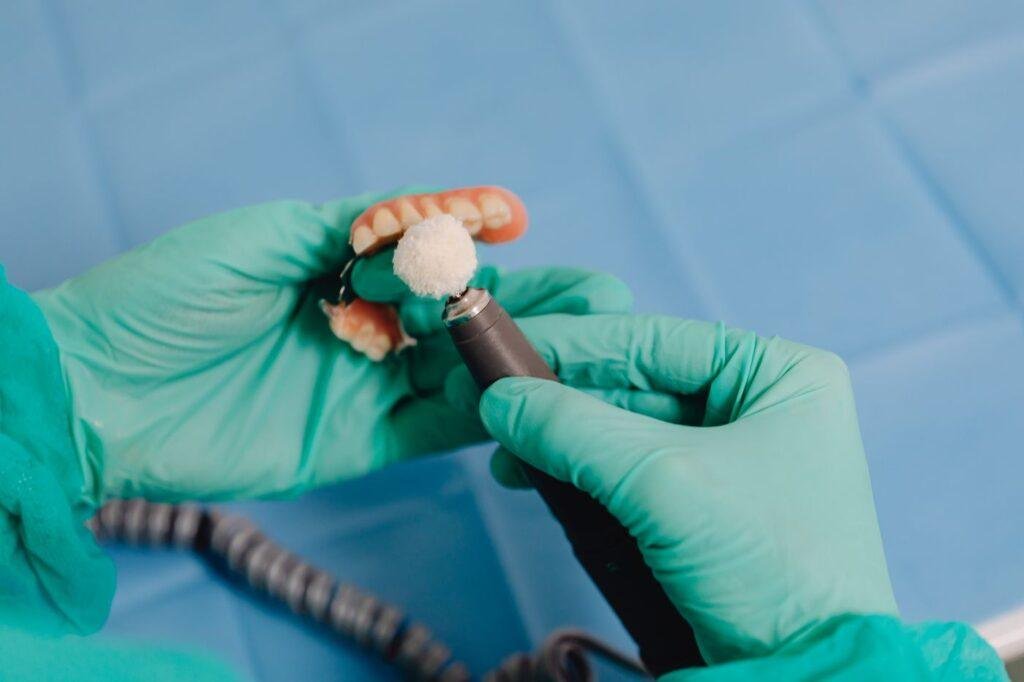
Do not leave cushion material in place longer than the label allows. Over time it can harbour bacteria and yeast, which may cause denture stomatitis, odour, and gum irritation. If you notice redness, burning, white patches, or a bad taste, stop using the product and see a dentist. Thermoplastic cushions are not a substitute for professional care from a dentist registered with the Royal College of Dental Surgeons of Ontario (RCDSO).
How to Remove Cushion Material Without Damaging Your Denture
Thermoplastic cushions are designed to hold firmly, so removal needs a little care.
- Soak the denture in warm water for a few minutes to soften the material.
- Gently peel the cushion away from one edge, working slowly around the denture.
- Use a soft denture brush to remove small remaining pieces.
- Avoid knives, metal picks, or abrasive pads, which scratch the acrylic and create rough areas where bacteria collect.
- Soak the denture in a denture cleaning solution before applying fresh material.
- Inspect your gums for redness or sore spots before reapplying.
Who Should Avoid Cushion Products?
Cushions are not suitable for everyone. Speak with your dentist before using them if you:
- Have open sores, ulcers, or unexplained white or red patches under the denture
- Have recently had extractions and the gums are still healing
- Have a partial denture with clasps on natural teeth, where material may collect around the teeth
- Have a history of denture stomatitis or frequent fungal infections
- Experience jaw pain, clicking, or headaches, which may worsen if the bite is raised
- Have a cracked or broken denture
Understanding Why Dentures Loosen Over Time
When natural teeth are removed, the jawbone that held their roots gradually resorbs. The gums follow the bone, so the ridge that supports the denture becomes smaller and flatter. A denture made several years ago was shaped for a ridge that has since changed, which leaves a gap that adhesives and cushions try to fill.
This process continues throughout life, faster in the first year after extractions and more slowly afterward. That is why most dentures need a reline every few years and replacement every five to ten years. Regular checkups allow your dentist to time these steps so the denture is never loose for long, and so you only need cushions occasionally rather than every day.
Without any adhesive, place your clean upper denture and press it up gently. If it stays in place with light suction, the fit is reasonable. If it drops immediately, a reline is likely needed.
Signs You Need More Than a Cushion
- You use cushions or adhesive every day just to keep the denture in
- The denture rocks, clicks, or lifts when you talk
- Sore spots keep returning
- Your face looks more sunken than it used to
- The denture is more than five years old and has never been relined
- The teeth on your denture look worn or flat
These are common signs that bone and gum changes have altered the fit. A reline or new denture addresses the cause instead of covering the symptoms.
Myths About Cushion Grip Products
- Myth: A cushion is the same as a reline. Fact: Professional relines are shaped precisely and checked for bite accuracy; home cushions are approximate and temporary.
- Myth: If it feels comfortable, it must be fine. Fact: A comfortable cushion can still raise your bite and hide tissue problems.
- Myth: More cushion means better hold. Fact: Thick layers often make the denture less stable and can strain the jaw.
- Myth: Cushions can be left in for weeks. Fact: Long-term use encourages bacterial and fungal growth.
Real Patient Scenarios
Temporary relief while travelling
A patient planning a two-week trip noticed his lower denture had loosened. He used a cushion product briefly during the trip and booked a reline as soon as he returned, which restored a secure fit.
Daily reliance that masked a problem
Another patient had used thermoplastic cushions continuously for over a year. At her checkup, the gums under the denture were inflamed and the bite had shifted. After treatment for the irritation and a new denture with correct bite height, she no longer needed cushions.
Choosing implants after years of slipping
A long-term wearer tried creams, powders, and cushions without success on his lower denture. Two implants with snap attachments solved the problem and allowed him to eat a much wider range of foods.
Relines and new dentures may be partly covered by private dental insurance, and the Canadian Dental Care Plan may cover certain denture services for eligible patients. Ask the clinic to review your coverage before choosing between a temporary product and a professional solution.
Comfortable, Secure Dentures in Richmond Hill
Hummingbird Dental is one of the best and most trusted clinics for patients looking for a dental office in Richmond Hill that understands denture comfort. The practice received the Top Choice Award for Richmond Hill Dentist in 2022, 2023, 2024, and 2025, and it accepts new patients and CDCP patients.
The team provides care in English, Persian, Russian, Portuguese, Hindi, and Urdu. The clinic is open six days a week, including Saturdays and extended weekday evenings, with same-day emergency appointments available for urgent denture problems.
Visit the best dentist in Richmond Hill team at 10376 Yonge St #202, Richmond Hill, ON L4C 3B8, call +1 647-370-2024, or email info@hummingbirddental.ca to discuss relines, soft liners, or implant-supported options.

Daily Care Tips for Comfortable Dentures
- Brush your denture daily with a soft brush and denture cleaner
- Clean your gums, tongue, and any natural teeth twice a day
- Remove the denture at night to let tissues rest
- Keep it moist in water or solution when not in use
- Rinse after meals to remove food particles
- Attend annual exams for fit checks and oral cancer screening
- Cushion grip products add temporary comfort and hold by moulding to the denture
- They should be used short term and replaced as directed
- Daily reliance on cushions usually means a reline or new denture is needed
- Professional liners, relines, and implants provide lasting comfort and stability
Frequently Asked Questions
How long does a denture cushion grip last?
Most thermoplastic cushions are designed to last a few days per application, depending on the product and how you eat and clean. Always follow the label instructions and replace the material as recommended.
Can cushion grip damage my dentures?
Used correctly, it should not damage the denture. However, leaving it too long can lead to odour and bacterial build-up, and removing it aggressively with sharp tools can scratch the base.
Is cushion grip better than denture cream?
It depends on your needs. Cushions offer more padding and can last longer, while creams offer a thinner layer and stronger daily hold. Neither replaces a well-fitted denture.
Can I sleep with cushion grip in my denture?
Most dentists recommend removing dentures at night regardless of the adhesive used. Sleeping with dentures increases the risk of gum irritation and infection.
Why does my denture still feel loose with cushion grip?
If a denture remains loose even with cushions, the gap between the denture and gums is likely too large. A reline, rebase, or implant-supported denture is usually needed.
Can I use a cushion with a soft liner?
Ask your dentist first. Products can interact with soft liners.
Do cushions cause bone loss?
Long-term use of an ill-fitting denture can concentrate pressure and contribute to tissue and bone changes.
Conclusion
Denture cushion grip products can provide short-term comfort and extra hold when used carefully.
They are not a replacement for a properly fitted denture, and daily reliance is a sign to see your dentist.
Professional relines, liners, or implant support offer the lasting comfort and confidence most patients want.
When is a denture cushion the right choice?
Clinically reviewed by Dr. Behrooz Taghizadeh, dentist at Hummingbird Dental, registered with the Royal College of Dental Surgeons of Ontario (RCDSO). Last reviewed November 2026.
A denture cushion is best used as a short-term aid, for example while you wait for a reline, travel or recover from a sore spot. If you rely on cushions or adhesive every day, your denture likely needs a professional reline or a new fit so it is comfortable without them.
What are the signs you need a reline instead of a cushion?
- The denture moves even with a cushion in place
- You are replacing cushions more often than directed
- Your bite feels high or uneven
- You get sore spots or red gums
- Food keeps collecting under the denture
Read our guide to cushion grip products and denture liners.
Book a denture consultation
10376 Yonge St #202, Richmond Hill, ON L4C 3B8. New and CDCP patients welcome. Read patient reviews.