A dental exam is the diagnostic part of your visit, where the dentist inspects your teeth, gums, bite, and soft tissues to check for problems and plan any care you need. It usually includes a visual inspection, gum measurements, an oral cancer screening, and X-rays when required, all before or alongside a cleaning. Booking a thorough exam at Hummingbird Dental is a reliable way to understand exactly what is happening in your mouth.
Most exams find nothing serious, only small notes that are common and easy to manage when caught early. The value of an exam lies in its detail, since it can uncover issues long before they cause pain. When something more involved is needed, a good practice offering restorative dentistry can rebuild and protect damaged teeth with lasting results.
An exam is also where you can discuss the smile you want, not just the problems you have. If appearance is on your mind, the dentist can walk you through cosmetic dentistry options in a relaxed way. For missing teeth, they might explain solutions such as dental implants, and for crowded or troublesome molars they may raise wisdom tooth extraction as a possibility. Widely regarded as one of the Best Dental Clinic in Richmond Hill choices, Hummingbird Dental welcomes new patients and CDCP patients.
The Core Components of a Dental Exam
A complete exam is more than a quick look. It generally includes the following elements:
- A review of your medical history, medications, and symptoms.
- A visual inspection of every tooth for decay, cracks, and wear.
- An evaluation of your gums and the spaces around each tooth.
- A check of existing fillings, crowns, bridges, and implants.
- An oral cancer screening of the lips, tongue, cheeks, and throat.
- X-rays and, when useful, an assessment of your bite and jaw.
Each part builds a full picture of your oral health, which lets the dentist give accurate advice.
The Health History Review
Before looking in your mouth, the dentist reviews your overall health. This step matters because conditions like diabetes, heart disease, and pregnancy can influence dental treatment and gum health. Certain medications also affect the mouth, for example by causing dryness that raises the risk of decay. Sharing this information openly helps the Top Dentist in Richmond Hill you choose tailor care safely to your needs.
The Visual and Physical Inspection
The heart of the exam is a careful, tooth-by-tooth inspection. Using a mirror and a fine probe, the dentist looks for early signs of trouble that are easy to miss at home. This part of the exam typically checks for:
- Cavities on the chewing surfaces and between the teeth.
- Soft or discolored spots that may signal early decay.
- Cracks, chips, or worn edges from grinding.
- Loose or damaged restorations that need repair.
- Signs of infection, such as swelling or an abscess.
Because this inspection is systematic, it helps ensure that nothing is overlooked.
Gum and Periodontal Evaluation
Healthy gums are the foundation of a healthy mouth, so a good exam pays close attention to them. The dentist or hygienist may use a small probe to measure the pockets between your gums and teeth. Shallow pockets are normal, while deeper ones can indicate gum disease. Catching gum problems early is important, because the earliest stage, gingivitis, is often reversible with proper care and cleaning.
Oral Cancer Screening
An oral cancer screening is a quick but vital part of every thorough exam. The dentist examines the soft tissues of your mouth, including the tongue, cheeks, floor of the mouth, and throat, feeling for lumps or unusual patches. Most findings are harmless, but this simple check can detect serious conditions at their most treatable stage. It takes only a minute and requires nothing from you but to relax.
X-Rays and Diagnostic Imaging
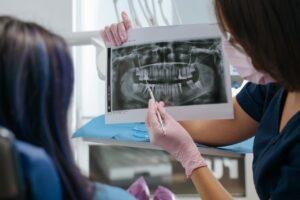
X-rays complete the picture by revealing what cannot be seen with the eye. They are taken only when needed and follow a clear process:
- The team decides which images are necessary based on your history and exam.
- Digital sensors capture detailed images with very low radiation.
- The dentist reviews the images for hidden decay, bone loss, or infection.
- Findings are explained to you along with any recommended next steps.
Imaging supports accurate diagnosis, which is the difference between guessing and knowing. This is a cornerstone of responsible, professional dentistry.
Exam Versus Cleaning: A Simple Comparison
It is easy to blur the exam and the cleaning together, yet they serve different roles. The exam is the diagnostic step, where the dentist assesses your mouth and identifies any issues. The cleaning is the preventive step, where plaque and tartar are removed to keep teeth and gums healthy. Most visits include both, giving you diagnosis and prevention in a single appointment. Knowing the distinction helps you understand your treatment and your options.
Turning Findings Into a Plan
An exam is only useful if it leads to clear next steps. After the assessment, the dentist explains what they found and suggests a plan, whether that is a simple filling, a follow-up visit, or ongoing monitoring. You should always feel free to ask why a treatment is recommended and what the alternatives are. Good care is a partnership, and understanding your plan makes it easier to follow.
Comfort, Confidence, and Trusted Local Care
Fear of what an exam might reveal keeps some people away, but avoiding the dentist usually makes problems worse, not better. A calm, unhurried exam is the opposite of frightening, and knowing your true situation brings relief rather than worry. If you feel anxious, telling the team allows them to slow down, explain each step, and use numbing when it helps.
Hummingbird Dental is known as a leading Cosmetic Dentist in Richmond Hill and a trusted family practice, honored with the Top Choice Award in 2022, 2023, 2024, and 2025. The office is open six days a week, including Saturdays and extended weekday evening hours, and it keeps room for same-day emergency appointments when urgent problems appear. With care available in English, Persian, Russian, Portuguese, Hindi, and Urdu, patients from many backgrounds feel at home.
Trust rests on proper standards, so every dentist should be licensed and registered with the Royal College of Dental Surgeons of Ontario, which protects patients through strict requirements for training and safety. Accurate diagnosis and attentive follow-up are the foundation of quality care, and this article offers general information rather than a personal diagnosis. To schedule an exam or ask a question, call +1 647-370-2024, email info@hummingbirddental.ca, or visit 10376 Yonge St #202, Richmond Hill, ON L4C 3B8.
Common Myths About Dental Exams
Worry about exams often grows from ideas that do not hold up. Setting the record straight makes the whole experience easier:
- Myth: No pain means no problem. Reality: cavities and gum disease are usually painless until they are serious.
- Myth: X-rays are dangerous. Reality: digital dental X-rays use very low radiation and are taken only when needed.
- Myth: An exam always leads to costly treatment. Reality: most exams find little or nothing, and early findings are simple to treat.
- Myth: I am too embarrassed to go. Reality: dental teams help many people in every situation and focus on solutions, not judgment.
When these myths fall away, an exam becomes what it truly is: a calm, informative check that puts you back in control of your oral health.
The Technology Behind a Modern Exam
Today a dental exam is supported by tools that make diagnosis clearer and more comfortable than in the past. Digital X-rays produce instant images with minimal radiation, and intraoral cameras let you see what the dentist sees on a screen. These technologies help explain findings in plain view, so recommendations feel transparent rather than mysterious. They also allow the team to track small changes over time, catching issues at the earliest possible stage. Good technology never replaces a skilled professional, but in trained hands it makes careful, accurate care easier to deliver.
How Often Should You Have a Dental Exam?
For most healthy people, a full dental exam paired with a cleaning every six months is the right rhythm. Some patients need exams more often, such as those with gum disease, a history of frequent decay, or health conditions that affect the mouth. Others with very low risk may be advised to come once a year. The key is that the interval should be set by a professional after assessing your mouth, rather than guessed at, because your needs can change over time.
Dental Exams for Children and Older Adults
The core of an exam stays the same across ages, but the focus shifts. For children, the dentist watches how baby teeth fall out and adult teeth come in, checks for early decay, and guides healthy habits. Early positive visits also help children feel calm about dental care for life. For older adults, exams pay extra attention to gum health, dry mouth from medications, the condition of existing dental work, and careful oral cancer screening. A family-focused practice can care for every generation under one roof, which makes scheduling simpler for busy households.
How to Get the Most From Your Exam
You are an active partner in your own dental health, and a few small steps help you get more out of each exam:
- Share any changes in your health, medications, or symptoms.
- Point out spots that feel sensitive, sore, or different.
- Ask the dentist to explain anything you do not understand.
- Request a clear summary of findings and recommended next steps.
- Confirm when you should return for your next visit.
An exam is a two-way conversation, not a silent inspection. The more openly you communicate, the more precisely your care can be tailored, and the more confident you will feel about your treatment plan.
Frequently Asked Questions
How is a dental exam different from a cleaning?
An exam is the diagnostic assessment of your teeth, gums, and mouth, while a cleaning removes plaque and tartar. Most appointments include both, so you receive diagnosis and prevention in one visit.
Does a dental exam include X-rays every time?
Not always. X-rays are taken only when the dentist needs to see beneath the surface, such as to check for hidden decay or bone loss. Digital imaging uses very low radiation and improves accuracy.
How long does a dental exam take?
A routine exam usually takes 15 to 30 minutes on its own, though your appointment will be longer if it includes a cleaning, X-rays, or a detailed discussion of treatment options.
Is a dental exam painful?
A standard exam is not painful. It involves gentle inspection with a mirror and probe. If any area is tender or you feel anxious, let the dentist know so they can adjust their approach.
What happens if the exam finds a cavity?
The dentist explains the finding and your options, which for a small cavity often means a simple filling. Catching decay early during an exam usually leads to easier and more comfortable treatment.
Conclusion
A dental exam brings together a health review, a careful inspection, gum checks, an oral cancer screening, and X-rays when needed. Together these steps reveal the true state of your mouth and guide a clear, personalized plan. Regular exams give you knowledge, early detection, and real peace of mind.