If you do not replace a missing tooth, the teeth around the gap slowly drift, the opposing tooth can over-erupt, and the jawbone where the root used to sit begins to shrink. These changes are common and gradual rather than sudden, but they are not temporary, and they tend to make future treatment more complex. Speaking with a trusted dental office soon after a tooth is lost gives you the widest range of options.
Many people assume a gap at the back of the mouth is harmless because no one can see it. In reality, every tooth helps hold the others in place and keeps the bite balanced. Replacing it, whether with dental implants, a bridge, or a partial denture, protects the teeth you still have.
The good news is that tooth replacement has never been more comfortable or natural looking. A well-planned restorative treatment plan looks at your bone, gums, bite, and budget before recommending a solution that fits.
Whether the tooth was lost to decay, gum disease, or an accident, the first step is the same: a calm, thorough exam. Our family dentistry team sees patients of all ages, and as a dental clinic serving Richmond Hill for years, Hummingbird Dental has helped many people restore a complete, confident smile.
Why Does a Missing Tooth Matter?
A tooth is more than a chewing surface. Its root stimulates the jawbone every time you bite, its sides support neighbouring teeth, and its position helps guide how your upper and lower jaws meet. Remove one tooth, and that system begins to adjust in ways that rarely help.
What Happens After a Tooth Is Lost? A Timeline
In the First Few Months
- The extraction site heals and the gum closes over.
- Bone in the socket begins to remodel and lose width. Research shows the greatest bone loss happens in the first year.
- You may start chewing more on the other side without noticing.
Within One to Three Years
- Neighbouring teeth can tip or drift into the space.
- The tooth above or below the gap may grow out of its socket because it has nothing to bite against.
- Food traps form in new gaps, raising the risk of decay and gum disease.
Long Term
- Continued bone loss can change the shape of the face, especially when several teeth are missing.
- The bite can shift, sometimes leading to jaw discomfort or uneven wear.
- Replacement may later require bone grafting or orthodontic work first.
Is a Missing Tooth Serious or Just Cosmetic?
A single missing tooth is not a dental emergency in most cases. However, it is a structural problem rather than only a cosmetic one. Front teeth affect appearance and speech. Back teeth carry the heaviest chewing load, so losing a molar often causes the most bite changes, even though no one sees the gap.
The Hidden Effects of Leaving a Gap
Bone Resorption
Without a root to stimulate it, the alveolar bone that once held the tooth gradually resorbs. Less bone can limit implant placement later and can make dentures fit less securely.
Shifting Teeth
Teeth naturally move toward open space. Tipped teeth are harder to clean, can create new bite contacts, and may need orthodontic correction before a replacement can be placed.
Over-Eruption
An opposing tooth with nothing to meet can slowly extrude. This exposes root surfaces, increases sensitivity, and can interfere with future restorations.
Chewing and Digestion
Fewer working teeth means less efficient chewing. Some people avoid certain foods, such as raw vegetables or meat, which can affect diet quality.
Speech and Confidence
Front gaps can affect the way you pronounce certain sounds. Many patients also report smiling less or covering their mouth.
Common Myths About Missing Teeth
Myth: Back Teeth Do Not Need Replacing
Molars handle the bulk of chewing. Losing them shifts pressure to other teeth and can speed up wear.
Myth: It Is Too Late Once Bone Has Shrunk
Bone grafting and other techniques can often rebuild enough support for an implant. It may add steps, but options usually remain.
Myth: Implant Surgery Is Extremely Painful
Implant placement is done with local anaesthetic, and many patients say recovery felt similar to or easier than an extraction. Sedation options can help nervous patients.
Myth: Dentures Are the Only Choice for Older Adults
Age alone does not rule out implants or bridges. General health, bone, and gum condition matter more than the number of birthdays.
What Are Your Options for Replacing a Missing Tooth?
Dental Implant
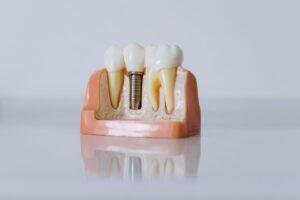
A dental implant is a small titanium or zirconia post placed in the jawbone that acts as an artificial root. After it fuses with the bone, a crown is attached. Implants stimulate the bone, do not rely on neighbouring teeth, and can last for decades with good care.
Fixed Bridge
A bridge uses crowns on the teeth on either side of the gap to hold a false tooth in between. It is fixed and does not require surgery, but the supporting teeth must be reshaped.
Removable Partial Denture
A partial denture clips onto remaining teeth and can replace one or several teeth. It is the least invasive option, though it may feel bulkier and needs to be removed for cleaning.
Comparison: Implant vs Bridge vs Partial Denture
| Factor | Dental Implant | Bridge | Partial Denture |
|---|---|---|---|
| Prevents bone loss | Yes | No | No |
| Affects nearby teeth | No | Yes, teeth are reshaped | Clasps rest on teeth |
| Fixed or removable | Fixed | Fixed | Removable |
| Treatment time | Several months | A few weeks | A few weeks |
| Typical lifespan | Often 20 years or more | About 10 to 15 years | About 5 to 10 years |
| Surgery required | Yes, minor | No | No |
The right choice depends on your bone, gum health, medical history, and personal priorities. There is no single best option for everyone.
How Is a Missing Tooth Replaced? Step by Step
- Consultation: a review of your health history, goals, and concerns.
- Exam and imaging: digital X-rays and, for implants, a 3D scan to measure bone.
- Treatment of existing problems: decay or gum disease is managed first.
- Personal plan: your dentist explains each option, timeline, and expected results.
- Treatment phase: implant placement, bridge preparation, or denture impressions.
- Final restoration: the crown, bridge, or denture is fitted and the bite adjusted.
- Follow-up: checkups confirm healing and long-term stability.
Safety note: Smoking, uncontrolled diabetes, and some medications can affect healing after implant surgery. Always share your full medical history and medication list with your dentist. This article is general information and not a diagnosis.
Who Is a Good Candidate for an Implant?
- Adults whose jaw has finished growing.
- People with healthy gums or gum disease that is under control.
- Patients with enough bone, or who are willing to have grafting.
- Those who can commit to daily cleaning and regular checkups.
How Soon Should You Replace a Lost Tooth?
Ideally, plan replacement within a few months of losing a tooth. In some cases an implant can even be placed on the same day as the extraction. Waiting years is possible, but the longer the gap stays open, the more likely you will need extra steps such as grafting or tooth movement.
Real-Life Scenarios: How Different Patients Approach a Missing Tooth
A Lost Molar in a Busy Professional
A patient in their forties has a cracked lower molar removed and decides to leave the space for a while because it does not show. Two years later, the tooth behind it has tipped forward and the upper molar has started to drop down. Replacement is still possible, but now it may involve minor tooth movement or adjusting the opposing tooth before an implant crown can fit properly. Acting earlier would likely have meant a simpler path.
A Front Tooth Lost in a Sports Injury
A teenager loses an upper front tooth playing hockey. Because the jaw is still growing, an implant is usually delayed until growth is complete. In the meantime, a removable space maintainer or a bonded temporary tooth keeps the gap open and protects appearance. This shows why timing and age matter as much as the choice of restoration.
Several Missing Teeth in an Older Adult
A senior patient with three missing back teeth on one side finds chewing tiring and has started avoiding certain foods. After an exam, options might include a partial denture for its simplicity, or a few implants supporting a bridge for a fixed solution. The final decision balances comfort, health, cleaning ability, and personal preference.
What Affects the Cost and Length of Treatment?
Every case is different, so it helps to understand what shapes a treatment plan rather than focusing on a single number. The main factors include:
- The type of replacement chosen and the number of teeth involved.
- Whether bone grafting, gum treatment, or extractions are needed first.
- The materials used for crowns and frameworks.
- Your insurance coverage or eligibility under the Canadian Dental Care Plan.
- How quickly your body heals between appointments.
Your dental team can walk you through a written estimate and help you understand what your plan may cover before any treatment begins.
Mistakes to Avoid After Losing a Tooth
- Assuming a hidden gap has no consequences.
- Waiting until neighbouring teeth have shifted before seeking advice.
- Choosing a solution based only on speed without considering long-term health.
- Skipping follow-up visits after an implant or bridge is placed.
Finding Experienced Restorative Care in Richmond Hill
Choosing a top dentist in Richmond Hill for tooth replacement means looking for licensed professionals registered with the Royal College of Dental Surgeons of Ontario (RCDSO), clear communication, and careful planning with modern imaging. Proper diagnosis and follow-up are what make a replacement last.
Hummingbird Dental is recognised as one of the most trusted options for patients searching for the best dental clinic in Richmond Hill, earning the Top Choice Award for Richmond Hill Dentist in 2022, 2023, 2024, and 2025. New patients are welcome, and CDCP patients are accepted. The team speaks English, Persian, Russian, Portuguese, Hindi, and Urdu.
The clinic is open six days a week, including Saturdays, with extended evening hours on weekdays and same-day appointments for emergencies. The office is located at 10376 Yonge St #202, Richmond Hill, ON L4C 3B8. To ask about replacing a missing tooth, call +1 647-370-2024 or write to info@hummingbirddental.ca and the team at this dentist in Richmond Hill will help you find a time that works.
Tips to Protect Your Remaining Teeth
- Clean carefully around the gap where food tends to collect.
- Use interdental brushes or a water flosser near tipped teeth.
- Avoid chewing hard foods only on one side.
- Keep regular cleanings to prevent further tooth loss from gum disease.
- Discuss a night guard if you grind your teeth.
Frequently Asked Questions
How long can I wait before replacing a missing tooth?
There is no strict deadline, but bone loss is fastest during the first year. Planning replacement within a few months usually keeps treatment simpler and more predictable.
Will my teeth really move if I leave a gap?
Yes, in many cases. Neighbouring teeth tend to tip toward the space and opposing teeth can over-erupt. The amount varies from person to person.
Can I get an implant years after losing a tooth?
Often yes. If bone has shrunk, a bone graft may be needed first. A 3D scan helps your dentist decide what is possible.
Is a bridge or an implant better?
Implants preserve bone and do not involve the neighbouring teeth, while bridges are faster and avoid surgery. The better choice depends on your health, bone, and goals.
Does losing a back tooth affect my face?
One missing tooth rarely changes facial shape noticeably. Losing several teeth over time, especially without replacement, can lead to visible changes due to bone loss.
Conclusion
Leaving a gap may seem harmless at first, but it can lead to shifting teeth, bone loss, and bite problems over time.
Implants, bridges, and partial dentures each offer a reliable way to restore function and appearance.
A professional assessment helps you choose the option that protects your smile for the long term.