A dental crown covers the entire tooth, while a veneer covers only the front surface. Crowns are chosen when a tooth is cracked, heavily filled, or structurally weak, and veneers are chosen when a healthy tooth simply needs a better shape, colour, or alignment. Needing either restoration is common and completely routine, not a serious dental emergency, and the choice is usually made after a short examination and a set of digital images at a trusted Hummingbird Dental appointment.
Most patients who ask this question are somewhere in the middle. They have one or two teeth that look worn, chipped, or discoloured, and they want to know whether they need full coverage or something more conservative. The honest answer is that the tooth itself decides. Structure comes first and appearance comes second.
If you have been comparing options and searching for a Dental Clinic in Richmond Hill that explains both paths clearly, a consultation for porcelain veneers is a good starting point because it also screens for the structural issues that would rule veneers out.
Restorative planning and cosmetic planning are not the same discipline, although they overlap.
Teeth that have lost significant tooth structure fall under restorative dentistry, where strength and long-term function are the priority.
Teeth that are sound but visually imperfect fall under cosmetic dentistry, where enamel preservation and shade matching matter most.
There is also a third possibility that surprises people. Sometimes the shade problem is not structural at all, and a supervised teeth whitening course solves it without any drilling.
And when a tooth is already symptomatic, the sequence changes again, because a tooth with irreversible pulpitis will usually need root canal therapy before any crown is placed on top of it.
For patients comparing offices, the reviews and location details for this Dental Clinic in Richmond Hill are publicly listed, which makes it easier to check credentials before booking.
Crown vs Veneer: The Short Answer
A crown is a full coverage restoration. It wraps the entire visible portion of the tooth, above the gum line, and rebuilds the biting surface. A veneer is a partial coverage restoration. It is a thin shell, often between 0.3 mm and 0.7 mm thick, bonded to the front of the tooth only.
Definition of a Dental Crown
A dental crown, sometimes called a cap, is a custom-made covering cemented over a prepared tooth. It restores the tooth to its original size and contour and protects the remaining structure from fracture. Crowns are commonly made from monolithic zirconia, lithium disilicate, porcelain fused to metal, or gold alloy.
Definition of a Dental Veneer
A veneer is a thin laminate of porcelain or composite resin bonded to the outer enamel of a front tooth. It changes colour, shape, length, and the appearance of small gaps. It does not add meaningful strength to a weakened tooth, and it is not designed to carry heavy chewing loads.
Side by Side Comparison
- Coverage: Crown covers all surfaces. Veneer covers the front surface and sometimes a small part of the biting edge.
- Tooth reduction: Crowns usually require 1.0 mm to 2.0 mm of reduction. Veneers usually require 0.3 mm to 0.7 mm, and some cases are minimal preparation.
- Main purpose: Crowns restore strength. Veneers refine appearance.
- Best location: Crowns work anywhere, including molars. Veneers are almost always limited to upper and lower front teeth and premolars.
- Failure pattern: Crowns tend to fail through decay at the margin. Veneers tend to fail through debonding or chipping.
- Reversibility: Neither is reversible, but veneer preparation removes far less natural tooth.
- Typical lifespan: Both can last well over a decade with good hygiene, though grinding habits shorten that considerably.
When a Crown Is the Correct Choice
A crown is usually indicated when the tooth can no longer support itself. Your dentist is looking for how much healthy structure remains after old fillings and decay are removed.
Common indications include:
- A tooth treated with root canal therapy, especially a molar or premolar
- A cracked tooth or cracked tooth syndrome with pain on release of biting pressure
- A cusp that has already fractured away
- A tooth with a filling that covers more than roughly half the width of the tooth
- Severe wear from bruxism that has flattened the biting surface
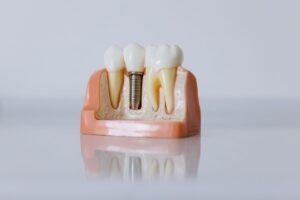
- A dental implant restoration that needs a final crown on the abutment
- A tooth used as an anchor for a fixed bridge
When a Veneer Is the Better Option
Veneers make sense when the tooth is structurally sound and the concern is visual. This is the classic smile design scenario.
- Intrinsic discolouration that does not respond to whitening, including tetracycline staining and fluorosis
- Small chips on the incisal edge of front teeth
- Peg-shaped or undersized lateral incisors
- Minor rotations or crowding where full orthodontics is not wanted
- Small spaces between front teeth
- Uneven tooth length after years of edge wear
How the Treatment Process Works
Steps for a Dental Crown
- Assessment. Clinical examination, periodontal probing, and radiographs to confirm the root and surrounding bone are healthy.
- Preparation. The tooth is anaesthetised, decay and failing filling material are removed, and the tooth is shaped to allow uniform thickness of the crown.
- Build-up if required. A core is placed when too little natural structure remains.
- Digital scan or impression. The prepared tooth, the opposing arch, and the bite are recorded.
- Temporary crown. A provisional crown protects the tooth while the laboratory fabricates the final unit.
- Try-in and cementation. Fit, contacts, shade, and occlusion are verified, then the crown is bonded or cemented.
- Review. A short follow-up confirms comfort, hygiene access, and bite balance.
Steps for Porcelain Veneers
- Smile analysis. Photographs, shade selection, and a discussion of realistic outcomes.
- Diagnostic wax-up or digital mock-up. A preview of the proposed shape before any enamel is touched.
- Conservative preparation. A very thin layer of enamel is reduced, guided by the mock-up.
- Impression and provisionals. Temporary veneers let you test the new shape in daily life.
- Bonding. The porcelain is etched, silanated, and adhesively bonded with resin cement.
- Occlusal check. The bite is refined so the new edges are not overloaded.
Comfort, Anxiety, and the Myths That Get in the Way
Many people delay treatment because of what they have heard rather than what is true. Three myths come up constantly.
Myth one: crowns always hurt. Crown preparation is performed under local anaesthetic. Mild sensitivity to cold for a few days afterwards is normal and temporary. Sharp, lingering, or throbbing pain is not normal and should be reported, because it may indicate pulpal inflammation or a high bite contact.
Myth two: veneers ruin your teeth. Modern bonded ceramics are conservative when properly planned. The risk comes from over-preparation and from placing veneers on teeth that should have been crowned or orthodontically aligned first.
Myth three: whiter is always better. Shade selection should respect skin tone, lip line, and the shade of adjacent natural teeth. A well-planned result looks natural in daylight, not just under clinic lighting.
A calm, well-explained appointment reduces anxiety far more effectively than reassurance alone. Being shown your own radiographs and a mock-up gives you control over the decision, which is exactly what a good Dentist in Richmond Hill should provide.
Safety, Diagnosis, and Professional Standards
Crowns and veneers are safe, evidence-based restorations when they are planned and placed by a licensed clinician. In Ontario, every practising dentist must be registered with the Royal College of Dental Surgeons of Ontario, which sets standards for infection control, record keeping, continuing education, and patient safety. Registration status is publicly searchable, and checking it is a reasonable step before any elective cosmetic work.
Responsible practice also means acknowledging limits. Veneers are contraindicated in active periodontal disease, untreated decay, insufficient enamel for bonding, and uncontrolled bruxism without a protective night guard. Crowns will not succeed on a tooth with a hopeless root fracture or advanced bone loss. Proper diagnosis prevents avoidable failure, and this is why radiographs and a full periodontal assessment come before any shade discussion.
This article is general information and does not replace a clinical examination. Persistent pain, swelling, or a loose restoration should be assessed promptly rather than managed at home.
Caring for Crowns and Veneers
- Brush twice daily with a soft brush and fluoride toothpaste, angling gently at the gum margin.
- Clean between teeth every day using floss or interdental brushes, because margins are where decay starts.
- Wear a custom night guard if you clench or grind.
- Avoid using front teeth to open packaging, bite nails, or crack shells.
- Limit frequent acidic drinks, which soften the resin cement margin over time.
- Keep scheduled hygiene visits so early margin breakdown is caught while it is still small.
Local Care You Can Plan Around
Hummingbird Dental has been recognised as one of the most trusted practices in the area and received the Top Choice Award for Richmond Hill Dentist in 2022, 2023, 2024, and 2025. The team is currently accepting new patients as well as CDCP patients, which removes one of the most common barriers to getting a proper assessment.
Care is delivered in multiple languages including English, Persian, Russian, Portuguese, Hindi, and Urdu, so treatment consent and aftercare instructions are genuinely understood rather than nodded through. The clinic is open six days a week with Saturday availability and extended weekday evening hours, and same-day emergency appointments are available when a crown comes loose or a front tooth chips.
For a written treatment plan you can review at home, the team can be reached at info@hummingbirddental.ca or +1 647-370-2024, and the practice is located at 10376 Yonge St #202, Richmond Hill, ON L4C 3B8, Canada. Whether you are looking for a Family Dentist in Richmond Hill for routine care or a Cosmetic Dentist in Richmond Hill for a smile refresh, the assessment process is the same and it starts with diagnosis rather than sales.
Frequently Asked Questions
Can I get a veneer instead of a crown to avoid drilling?
Only if the tooth is structurally sound. If a large filling, a crack, or a root canal has weakened the tooth, a veneer will not protect it and is likely to fracture along with the underlying tooth. Your dentist will measure remaining wall thickness before deciding.
Do crowns and veneers stain over time?
Porcelain itself resists staining very well. The bonding cement at the edge can pick up colour over the years, and natural teeth beside the restoration can darken, which makes the restoration look mismatched. Regular hygiene visits and polishing help keep the margins clean.
Will my crown or veneer look obviously fake?
Not when shade, translucency, and surface texture are matched properly. Modern ceramics mimic enamel layering closely. Problems usually come from a shade chosen in isolation rather than against the neighbouring teeth in natural light.
Is sensitivity after treatment a sign something went wrong?
Mild sensitivity to cold and pressure for a few days to a couple of weeks is common and temporary as the tooth settles. Sensitivity that worsens, wakes you at night, or lingers beyond a minute after a cold stimulus should be reviewed, because the bite may need adjusting or the pulp may be inflamed.
What happens if a veneer debonds or a crown falls out?
Keep the restoration, avoid chewing on that side, and contact the clinic promptly. Do not attempt to reattach it with household adhesive, as this contaminates the bonding surface and can make a simple recementation impossible.
Conclusion
Crowns rebuild and protect teeth that have lost structure, while veneers refine the appearance of teeth that are already strong. The right choice depends on how much healthy tooth remains, not on preference alone. A proper examination with radiographs will tell you clearly which option fits your tooth and gives the most predictable long-term result.