Denture pads can ease sore spots for a short time by adding a soft cushion between the denture and the gums, but they do not fix the cause, which is usually a pressure point, a sharp edge, or a denture that no longer fits. Sore spots are very common, especially with new dentures or after weight changes, and most are temporary and easily corrected with a quick adjustment from a family dentistry team. A sore that does not heal within about two weeks, bleeds, or looks unusual should be examined promptly at a dental clinic rather than covered up with pads.
Denture pads, also called cushions or liners, are soft strips placed on the fitting surface of a denture to reduce rubbing and pressure. They can provide short-term relief from sore spots, but long-term use can hide fit problems, change your bite, and trap bacteria. The lasting fix is a professional adjustment, reline, or new denture.
If pain is sharp, sudden, or making it hard to eat, an emergency dentist can usually relieve a pressure point in a single short visit by smoothing the area of the denture causing the problem.
When sore spots keep returning in different places, the cause is often a denture base that no longer matches your gums, and restorative dentistry options such as a soft reline or a hard reline can restore comfort for the long term.
Choosing the best dental office for follow-up care matters too, because sore spots are easiest to fix when your dentist can see them while they are still visible on the gums.

What Causes Sore Spots Under Dentures?
Sore spots, also called denture ulcers or pressure sores, are areas of irritated or broken gum tissue. They usually appear where the denture presses too hard or rubs during chewing.
How Do Denture Pads Work?
Denture pads are thin, soft strips, often made from fabric-like material, foam, or a soft polymer. Some are activated by moisture and act like a mild adhesive; others are non-adhesive cushions. They are trimmed to the shape of the denture and pressed onto the fitting surface.
What they can do
- Reduce friction on tender areas for a short period
- Add a soft layer that spreads pressure more evenly
- Improve comfort while you wait for a dental appointment
- Provide modest extra hold on slightly loose dentures
What they cannot do
- Remove a pressure point built into the denture
- Correct a denture that no longer matches the shape of your gums
- Fix a cracked or broken base
- Treat infection, ulcers, or tissue changes
Denture Pads vs Other Sore Spot Solutions
| Solution | How It Helps | How Long It Lasts | Best Used When |
|---|---|---|---|
| Denture pads or cushions | Adds a soft layer to reduce rubbing | Hours to a day per pad | Short-term relief before a visit |
| Professional adjustment | Removes the exact pressure point | Long lasting | Sore spot in one area |
| Soft reline | Adds a cushioned lining fitted by the dentist | Months | Healing gums or sensitive tissues |
| Hard reline | Reshapes the base to match gums | Years | Denture has loosened over time |
| New denture | Corrects fit, bite, and worn teeth | Many years | Denture is old or badly worn |
If you can tolerate it, wear the denture for a few hours before your dental visit. This makes the sore spot easier to see and helps the dentist find exactly which part of the denture needs adjusting.
How to Use Denture Pads Safely
If you choose to use pads while waiting for professional care, follow these steps to reduce risks.
- Clean and dry the denture thoroughly.
- Trim the pad so it stays within the outline of the denture and does not overlap the edges.
- Moisten the pad slightly if the instructions require it.
- Press the pad firmly onto the fitting surface, smoothing out bubbles.
- Rinse your mouth and seat the denture gently.
- Check your bite; if your teeth no longer meet evenly, the pad may be too thick.
- Remove and discard the pad at the end of the day, then clean the denture and your gums.
Using pads continuously for weeks can change your bite, allow the gums to adapt to an incorrect fit, and encourage bacteria and yeast to grow under the material. Never use pads to cover a sore that is not healing, and do not combine multiple layers.
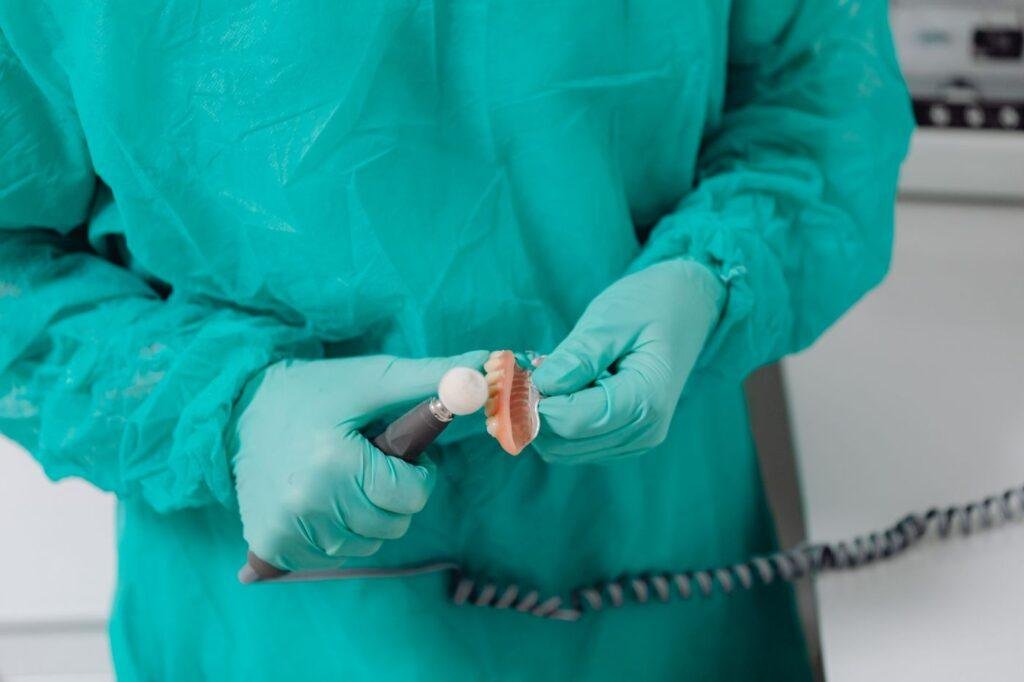
Types of Denture Pads and Cushions Explained
Store shelves offer several kinds of cushioning products. Knowing the differences helps you use them safely while you wait for professional care.
Adhesive cushion strips
These thin strips become slightly sticky when moistened. They add mild hold and a soft layer. They are the most common type and are designed for single-day use.
Non-adhesive foam or fabric pads
These provide padding without hold. They can feel bulkier and may shift if the denture is loose.
Temporary soft reline kits
These are putty-like materials sold for home use. They can harden unevenly and permanently change the fit of the denture, so most dentists advise against them.
Professionally fitted soft liners
These are applied in the dental office using materials designed for long-term contact with gum tissue. They are shaped to your mouth and checked for bite accuracy, which makes them far more predictable than store-bought products.
What Happens at a Denture Adjustment Appointment?
- The dentist looks at your gums to identify red or ulcerated areas.
- A thin layer of pressure-indicating paste is painted on the denture.
- You bite gently or the denture is seated, and the paste shows exactly where it presses too hard.
- That area is carefully smoothed and polished.
- Your bite is checked so the teeth meet evenly.
- You receive advice on healing, cleaning, and when to return if needed.
The whole process often takes less than half an hour and usually brings noticeable relief the same day.
Home Care That Helps Sore Spots Heal
While you arrange an appointment, these steps can reduce discomfort and help tissues recover.
- Remove the denture as much as possible, especially overnight
- Rinse with warm salt water several times a day
- Choose soft foods and cut them into small pieces
- Keep the denture and your gums clean to prevent infection
- Avoid spicy, acidic, or very hot foods that irritate tender tissue
- Use over-the-counter pain relief as directed on the label, if suitable for you
When Is a Sore Spot a Warning Sign?
Most sore spots are harmless and heal within a week once the cause is removed. See a dentist promptly if you notice any of the following:
- A sore that has not healed after two weeks
- A white, red, or mixed patch that does not rub off
- A lump, thickened area, or tissue growing along the denture edge
- Bleeding without an obvious cause
- Numbness or a burning sensation
- Swelling, fever, or spreading redness
These signs can indicate infection, tissue overgrowth, or, rarely, oral cancer. Early examination is important, and denture wearers should continue annual oral exams even without natural teeth.
Myths About Denture Sore Spots
- Myth: You have to toughen your gums up. Fact: Pain is a sign of a fit problem, and adjustments are the solution.
- Myth: Thicker pads mean more comfort. Fact: Thick layers can raise your bite and create new pressure points.
- Myth: Sore spots mean the denture is ruined. Fact: Most sore spots are fixed with a simple adjustment.
- Myth: Once dentures fit, they always fit. Fact: Gums and bone change, so relines are a normal part of denture care.
Real Patient Scenarios
A new denture rubbing on the lower ridge
A patient with a new lower denture developed a painful spot on day three. The dentist used pressure-indicating paste to find the high point and smoothed it in a few minutes. The soreness resolved within days.
An older denture causing repeated sores
Another patient used cushion pads daily for months to stop rubbing. At the exam, the denture was loose and the gums showed redness from trapped bacteria. A hard reline restored the fit, and the patient no longer needed pads.
A sore that would not heal
A long-term denture wearer had a sore under the edge of an upper denture that persisted for three weeks. The denture was adjusted and the area was monitored. Because it did not settle, the patient was referred for further evaluation, highlighting why persistent sores should never be ignored.
Comfortable Denture Care in Richmond Hill
Hummingbird Dental is one of the best and most trusted options for patients looking for an emergency dental clinic in Richmond Hill or routine denture adjustments. The clinic won the Top Choice Award for Richmond Hill Dentist in 2022, 2023, 2024, and 2025, and it accepts new patients and CDCP patients.
Care is available in English, Persian, Russian, Portuguese, Hindi, and Urdu. The office is open six days a week, including Saturdays and extended weekday evening hours, and same-day emergency appointments help patients get relief without waiting days in discomfort.
You can visit the family dentist in Richmond Hill team at 10376 Yonge St #202, Richmond Hill, ON L4C 3B8, call +1 647-370-2024, or email info@hummingbirddental.ca. All adjustments and relines are performed by professionals registered with the Royal College of Dental Surgeons of Ontario (RCDSO).
Preventing Sore Spots in the Future
- Attend follow-up visits after receiving a new denture
- Remove dentures at night to let tissues recover
- Clean dentures and gums daily
- Rinse after meals to remove trapped food
- Ask about a reline every few years or when the fit feels different
- Avoid DIY reline kits, which can distort the fit
- Denture pads offer short-term comfort but do not fix the cause of sore spots
- Pressure points, sharp edges, and loose fit are the most common causes
- Professional adjustments and relines provide lasting relief
- Sores that persist beyond two weeks should be examined promptly
Frequently Asked Questions
Are denture pads safe to use every day?
Occasional short-term use is generally safe, but daily long-term use is not recommended. It can hide fit problems, trap bacteria, and change your bite. A professional adjustment is a better solution.
How long do denture sore spots take to heal?
Once the cause is removed, most sore spots heal within several days to a week. If a sore lasts longer than two weeks, it should be examined.
Can I adjust my denture at home to stop sore spots?
No. Filing or grinding a denture at home can damage the fit and create new problems. Dentists use special materials to locate and remove the exact pressure point.
Why do my gums hurt more with new dentures?
New dentures often have small high spots and the gums need time to adapt. Mild soreness is common in the first weeks, and follow-up adjustments are a normal part of the process.
Do soft liners work better than pads?
Professionally fitted soft liners are designed for your denture and mouth, so they provide more consistent comfort than store-bought pads. They still need periodic replacement and monitoring.
Conclusion
Denture pads can bring short-term relief, but the lasting fix for sore spots is finding and correcting the cause.
Most pressure sores resolve quickly after a simple adjustment or reline by a dental professional.
If a sore persists, looks unusual, or makes eating difficult, a prompt exam is the safest next step.