If your denture has started to feel loose, rock when you chew or rub in new places, your dentist may suggest a reline. A denture reline reshapes the fitting surface of your denture, the pink side that rests on your gums, so it matches the current shape of your mouth again. It is one of the most common ways to restore comfort and stability without making a whole new denture.
What Is a Denture Reline?
After teeth are removed, the gums and the bone underneath slowly change shape. The ridge that your denture sits on becomes smaller and flatter over time. Because the denture itself does not change, small gaps appear between the denture and your gums. These gaps let the denture move, trap food and create pressure points that cause sore spots.
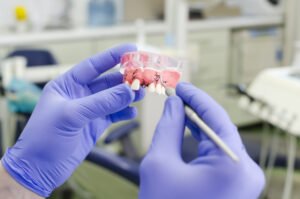
A reline fills those gaps by adding new material to the fitting surface of the denture. The teeth and the outer part of the denture stay the same. The result is a denture that sits closely on your gums again, with better suction for upper dentures and better stability for lower dentures.
Why Do Dentures Need Relining?
Several things cause the fit of a denture to change:
- Bone and gum shrinkage after extractions, which is fastest in the first months
- Gradual bone loss over the years under the denture
- Weight loss or illness that changes the soft tissues
- Wear of the denture base over time
Immediate dentures, which are placed on the same day teeth are removed, almost always need a reline once the gums have healed, because the gums change so much in the first months.
Types of Denture Relines
There are two main types. A hard reline uses acrylic, the same kind of material as the denture base, and gives a long-lasting fit. It can be done in the office chairside or, for the most precise result, in a dental laboratory. A soft reline uses a softer, cushioning material. It is often used while gums are healing after extractions or for people with thin, tender gums. Soft liners are more comfortable on sensitive tissue but usually need replacing sooner.
How Long Does a Reline Last?
A hard laboratory reline can last a couple of years or more, depending on how quickly your gums change. Soft liners usually last a shorter time before they harden or discolour. Your dentist will check the fit at your regular visits and let you know when the next reline is due.
Conclusion
A denture reline is a simple, effective way to bring back the comfort and fit of a denture that has become loose. If your denture rocks, traps food or causes sore spots, book a check so your dentist can tell you whether a reline, an adjustment or a new denture is the best next step.
Relines at a Glance
Clinically reviewed by Dr. Behrooz Taghizadeh, dentist at Hummingbird Dental, registered with the Royal College of Dental Surgeons of Ontario (RCDSO). Last reviewed November 2026.
A denture reline adds new material to the fitting surface of a denture so it matches your gums again. Hard relines last longer, soft relines cushion tender gums, and lab relines give the most precise fit.
This section compares the options and explains what happens at a reline appointment. See also your first denture reline, how to tighten dentures at home and dentures in Richmond Hill.
Reline Options Compared
| Option | Material | Time | Best for |
|---|---|---|---|
| Chairside hard reline | Acrylic set in the office | About an hour | Quick fit improvement |
| Laboratory hard reline | Acrylic processed in a lab | Often same or next day | Most precise, longest lasting |
| Soft temporary reline | Soft conditioning material | Chairside | Healing gums after extractions |
| Permanent soft liner | Durable soft material, lab processed | Lab time | Thin or tender gums |
Reline, Rebase or New Denture?
Reline
New material on the fitting surface; teeth and base stay.
Rebase
The whole pink base is replaced; the teeth are kept.
Repair
Fixes cracks or replaces broken teeth.
New denture
When teeth are worn and the bite has collapsed.
Signs You Need a Reline
- The denture rocks or drops when you talk
- Food gets trapped underneath
- You need more adhesive than before
- New sore spots appear
- Your upper denture loses suction
What Happens at a Reline Appointment?
Check the gums
Any sores are allowed to heal first.
Prepare the denture
The fitting surface is roughened slightly.
Take the new impression
Reline material is added and you bite gently while it sets.
Finish and adjust
Excess is trimmed, polished and the bite checked.
Caring for a Relined Denture
- Brush daily with a soft denture brush and non-abrasive cleaner
- Keep soft liners away from hot water and harsh cleaners
- Soak overnight
- Book a check if new sore spots appear
Coverage and the Canadian Dental Care Plan
Denture relines and rebases can be covered under the Canadian Dental Care Plan (CDCP) for eligible members, within frequency limits. Complete and partial dentures can also be covered, some with preauthorization. See missing teeth replacement.
Why Do Immediate Dentures Need Relining So Soon?
Immediate dentures are made before your teeth are removed and placed on the same day as the extractions. They protect the healing sockets and mean you are never without teeth. However, the gums and bone change most in the first three to six months after extractions. As the swelling settles and the sockets fill in, the denture becomes noticeably looser. A soft temporary reline is often placed during healing to keep the denture comfortable, followed by a hard reline or a new final denture once the gums are stable.
Planning for this from the start avoids frustration. Your dentist will usually schedule check-ups in the first weeks and months to adjust the fit as healing progresses.
- Placed on the day of extractions
- Gums change most in the first months
- Soft reline during healing
- Hard reline or final denture once stable
Can a Reline Fix Every Loose Denture?
A reline works well when the denture teeth and bite are still in good condition and the main problem is the fit against the gums. It cannot fix teeth that are worn flat, a bite that has collapsed so the lower face looks shorter, or a base that is cracked in several places. In those cases a rebase or a new denture is usually the better choice. For lower dentures that remain loose even after relining because the ridge is very flat, implants can provide the stability a reline cannot.
- Good teeth, poor fit: reline
- Good teeth, worn base: rebase
- Worn teeth or collapsed bite: new denture
- Very flat lower ridge: consider implants
Living With a Soft Liner
Soft liners feel cushioned and are popular with people who have thin or tender gums. They need gentle care: brush with a soft brush, avoid hot water and harsh or bleach-based cleaners, and use a cleaner your dentist recommends. Over time soft liners can harden, stain or harbour yeast, so they are checked at each visit and replaced when needed.
Will I Be Without My Denture During a Reline?
For a chairside reline, you wait in the office while the material sets, usually about an hour. For a laboratory reline, the denture goes to the lab after an impression is taken, so you may be without it for part of a day or overnight. Many people book the appointment first thing in the morning and collect the denture later the same day. If you rely on your denture for work, ask about timing or keep a spare.
- Chairside: about an hour in the office
- Laboratory: part of a day or overnight
- Book early in the day if possible
- Keep a spare denture if you have one
How Relines Protect Your Gums and Bone
A denture that moves rubs the gums and concentrates pressure on small areas. Over time this can cause sore spots, ulcers and areas of loose, overgrown gum tissue. A close-fitting denture spreads chewing forces evenly across the whole ridge, which is gentler on the tissues. Relining at the right time is one of the simplest ways to keep your mouth healthy under a denture.
Relines for Partial Dentures
Partial dentures can also be relined. The acrylic saddles that sit on the gums under missing teeth are refitted, while the clasps and metal frame stay the same. This is especially helpful for free-end partials that replace back teeth, which rest partly on the gum and tend to sink as the ridge changes. A well-fitted partial also protects the natural teeth that hold the clasps.
Questions to Ask Before Your Reline
Clear answers help you plan your day, understand the result and know when to come back for a follow-up.
- Is a reline, rebase or new denture best for me?
- Will this be a chairside or laboratory reline?
- Should I use a soft liner because my gums are tender?
- How long will I be without my denture?
- When should the fit be checked again?
Frequently asked questions
What is a denture reline?
Adding new material to the fitting surface so the denture matches your gums again.
How long does a reline take?
About an hour chairside; a lab reline may take most of a day.
How often do dentures need relining?
Often every couple of years, sooner after recent extractions.
Is a soft reline better than a hard reline?
Soft relines cushion tender gums; hard relines last longer.
What is the difference between a reline and a rebase?
A rebase replaces the whole base; a reline adds a layer.
Can I reline my denture myself?
Home kits are not recommended because they can change your bite.
Does the CDCP cover relines?
Yes, for eligible members, within frequency limits.
This page is general information and is not a diagnosis. Your dentist will recommend treatment after an examination. Reviewed by Dr. Behrooz Taghizadeh, November 2026.
Book a visit at Hummingbird Dental
10376 Yonge St #202, Richmond Hill, ON L4C 3B8. New and CDCP patients welcome. Read patient reviews.