A deep cleaning is necessary when your gums have pulled away from your teeth and formed pockets of about 4 mm or more, usually because tartar has built up below the gumline. If your gums are healthy, a regular cleaning is enough. Gum disease is very common in adults, and caught early it’s very treatable, but left alone it becomes a serious cause of tooth loss.
If your hygienist just said “deep cleaning” and you’re wondering if it’s an upsell, that’s a fair question. The honest answer depends on one thing: what’s happening under your gums. At our dental clinic in Richmond Hill, the recommendation is based on measured pocket depths and X-rays, so you can see the numbers yourself.
A deep cleaning has a clinical name: scaling and root planing (SRP). It’s one of the most common treatments in family dentistry, and it’s the first-line treatment for periodontitis.
So who actually needs it? Usually adults who’ve had a few years between checkups, people with diabetes, smokers, and anyone whose gums bleed every time they brush. A licensed dentist will look at your chart and tell you plainly whether you’re in that group or not.
Why does it matter so much? Because gum disease is the main reason adults lose teeth, and replacing a lost tooth with dental implants is a far bigger job than cleaning the pockets around it today. Patients at Hummingbird Dental often tell us they wish they’d started sooner.
What is a deep cleaning, exactly?
A deep cleaning removes plaque and hardened tartar (calculus) from the tooth surface below the gumline, then smooths the root so the gum can reattach.
It has 2 parts:
- Scaling: removing tartar and bacteria from the pockets, using ultrasonic and hand instruments.
- Root planing: smoothing rough spots on the root surface, which makes it harder for bacteria to settle back in.
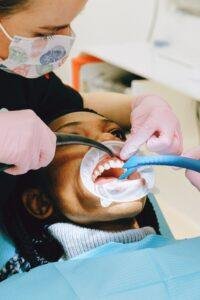
Most offices split it into 2 to 4 visits, one or two quadrants (sections of your mouth) at a time. The area is usually numbed with local anesthetic, so it feels a lot like having a filling done.
How is a deep cleaning different from a regular cleaning?
A regular cleaning (prophylaxis) is preventive. A deep cleaning is treatment for an infection that’s already there.
| Feature | Regular cleaning | Deep cleaning (SRP) |
|---|---|---|
| Who it’s for | Healthy gums, pockets 1 to 3 mm | Gum disease, pockets 4 mm or deeper |
| Where it cleans | Above and just at the gumline | Below the gumline, down to the root |
| Freezing | Rarely needed | Usually used |
| Number of visits | 1 | Often 2 to 4 |
| Follow-up | Every 6 months, typically | Re-check in 6 to 8 weeks, then every 3 to 4 months |
How do you know if you need a deep cleaning?
You can’t tell from the mirror alone. Gum disease is often painless until it’s advanced, which is why so many people are surprised by the diagnosis.
Signs that point toward it:
- Gums that bleed when you brush or floss
- Red, puffy, or tender gums
- Bad breath that keeps coming back
- Gums pulling back so teeth look longer
- Teeth that feel loose or have shifted
- A bad taste in your mouth
What does the dental team measure?
Your hygienist uses a thin probe to measure the space between gum and tooth at 6 points per tooth. Healthy gums read 1 to 3 mm. Readings of 4 mm and up, especially with bleeding, mean bacteria are living where your toothbrush can’t reach.
X-rays then show whether the bone around the teeth has started to wear away. Pocket depth plus bone loss is what decides the treatment, which is why a proper exam matters more than any symptom checklist.
Rule of thumb: a couple of 4 mm spots with light bleeding might just need better home care and a re-check. Several 5 mm or deeper pockets with tartar on X-ray almost always need scaling and root planing.
What happens if you skip a recommended deep cleaning?
The tartar stays put. And tartar can’t be brushed or flossed off once it hardens under the gum.
Here’s how it usually progresses:
- Gingivitis: gums bleed and swell. Fully reversible with a good cleaning and home care.
- Early periodontitis: pockets deepen and bone starts to break down.
- Moderate periodontitis: gums recede, teeth may get sensitive, and bad breath sticks around.
- Advanced periodontitis: teeth loosen, shift, and can be lost.
There’s also a health link beyond your mouth. Research connects periodontitis with diabetes control, heart disease, and pregnancy complications. The science is still working out cause and effect, but the association is consistent enough that physicians care about it.
Does a deep cleaning hurt?
Most people say it’s uncomfortable at worst. The freezing takes care of the work itself.
Afterward, expect 1 to 3 days of sore gums and some sensitivity to cold. A few things that help:
- Over-the-counter pain relief, if your doctor says it’s safe for you
- Warm salt water rinses (half a teaspoon of salt in a cup of warm water)
- A sensitivity toothpaste for a couple of weeks
- Soft foods for the first day
If you’re anxious about dental work, say so at the start. Breaks, a hand signal to pause, and splitting the visits up are all normal requests. You won’t be the first.
Common myths about deep cleanings
“My gums don’t hurt, so I’m fine.”
Gum disease is famously quiet. Plenty of people with 6 mm pockets feel nothing at all.
“A deep cleaning damages your teeth.”
Scaling removes tartar and a microscopic layer of contaminated root surface. It doesn’t weaken healthy enamel. The temporary sensitivity comes from roots being exposed after the swelling goes down.
“It’s a one-and-done fix.”
SRP stops the active infection. Keeping it stopped takes periodontal maintenance cleanings, usually every 3 to 4 months, plus daily cleaning between your teeth.
“Gaps after a deep cleaning mean it went wrong.”
When inflamed gums shrink back to a healthier size, small spaces can show up between teeth. That’s the swelling leaving. It’s expected.
What to expect at your appointment, step by step
- Exam and charting: pocket measurements, bleeding points, and X-rays.
- Explanation: your dentist walks you through the findings and the plan, including how many visits.
- Freezing: local anesthetic for the quadrants being treated.
- Scaling and root planing: ultrasonic scaler first, then hand instruments for the fine work.
- Optional add-ons: in some cases, a local antimicrobial is placed in deeper pockets.
- Home care plan: brushing, interdental brushes or floss, and possibly a mouth rinse.
- Re-evaluation: 6 to 8 weeks later, pockets are measured again to see how the gums healed.
When a deep cleaning isn’t enough
Most mild to moderate cases respond well. Pockets often shrink by 1 to 2 mm after healing.
If deep pockets remain, the next step can be a referral to a periodontist (a gum specialist) for surgical options. Teeth that have lost too much bone may need to be removed and replaced. That’s why timing matters: early treatment keeps your choices simple.
Get seen quickly if you notice: swelling in your face or jaw, a pimple-like bump on the gum that drains pus, a fever with gum pain, or a tooth that suddenly feels loose. These can mean an active infection that shouldn’t wait for a routine visit.
How to keep your gums healthy after treatment
- Brush twice a day for 2 minutes with a soft brush, angled toward the gumline
- Clean between teeth once a day with floss, interdental brushes, or a water flosser
- Keep your maintenance visits every 3 to 4 months, at least for the first year
- If you smoke, talk to your doctor about quitting. Smoking hides bleeding and slows healing
- If you have diabetes, keeping blood sugar steady helps your gums heal
Deep cleaning vs. periodontal maintenance vs. gum surgery
These 3 terms get mixed up a lot, so here’s the short version of each.
Scaling and root planing
This is the active treatment. It clears out the infection under the gums and gives the tissue a clean root to heal against.
Periodontal maintenance
This is the follow-up cleaning for anyone who’s had gum disease. It looks like a regular cleaning from the chair, but the hygienist re-measures your pockets and cleans below the gumline in the areas that need it. Think of it as keeping the ground you’ve gained.
Gum surgery
This is for pockets that stay deep after SRP and good home care. A periodontist may fold back the gum to clean the root directly, reshape bone, or graft tissue. Most patients never need this step, especially when gum disease is treated early.
A real-world example
Here’s a pattern dental teams see all the time. A 45-year-old patient comes in after 4 years without a checkup. No pain. Some bleeding when brushing, which they figured was normal.
The exam shows 5 mm pockets around the back molars and early bone loss on the X-rays. Two visits of scaling and root planing later, the bleeding stops within a couple of weeks. At the 8-week re-check, most pockets are down to 3 or 4 mm.
That patient now comes in every 3 months, and their gums have stayed stable. The same case left another 4 or 5 years would likely be a conversation about losing teeth instead.
Choosing the right dentist in Richmond Hill for gum care
Gum treatment is a long game, so pick a clinic you’ll actually return to. Make sure your care comes from licensed professionals registered with the Royal College of Dental Surgeons of Ontario (RCDSO), and that they show you your pocket chart and explain it in plain language.
Hummingbird Dental has been voted the Top Choice Award winner for Richmond Hill Dentist in 2022, 2023, 2024, and 2025, and many families consider it the best dental clinic in Richmond Hill for exactly this kind of steady, preventive care. The team welcomes new patients and patients covered by the Canadian Dental Care Plan (CDCP).
Explaining gum disease is easier in your own language, too. Care is available in English, Persian, Russian, Portuguese, Hindi, and Urdu. The clinic is open 6 days a week, including Saturdays and extended weekday evenings, so a 4-visit treatment plan doesn’t have to eat into your workdays.
You’ll find the office at 10376 Yonge St #202, Richmond Hill, ON L4C 3B8. To ask whether your bleeding gums need a closer look, call +1 647-370-2024 or email info@hummingbirddental.ca. If something feels urgent, same-day emergency appointments are available.
This article is general information and doesn’t replace a dental exam. Only a licensed dental professional can diagnose gum disease and recommend treatment for you.
Frequently asked questions
How long does a deep cleaning take?
Each visit usually takes 45 to 90 minutes, depending on how many quadrants are treated and how much tartar is present. Full-mouth treatment is often split into 2 to 4 visits.
Can I go back to work after a deep cleaning?
Yes. Most people return to work the same day. Your lips and cheek may stay numb for 2 to 4 hours, so wait to eat until the freezing wears off.
How often do I need a deep cleaning?
Ideally once. After scaling and root planing, periodontal maintenance cleanings every 3 to 4 months help prevent the infection from coming back. A repeat deep cleaning is only needed if pockets deepen again.
Is a deep cleaning safe during pregnancy?
Yes, in most cases, and the second trimester is usually the most comfortable time. Pregnancy hormones can make gums more inflamed, so treating gum disease is generally recommended. Tell your dental team you’re pregnant.
Will my gums grow back after a deep cleaning?
Gum tissue that has receded doesn’t grow back on its own, but swollen gums will tighten and pockets usually get shallower. If recession is significant, gum grafting can be discussed with a specialist.
Conclusion
A deep cleaning is necessary when pockets of 4 mm or more and tartar below the gumline show up on your exam.
Treated early, gum disease is very manageable, and regular maintenance keeps it under control.
If your gums bleed or your hygienist has mentioned pockets, a proper exam will tell you exactly where you stand.