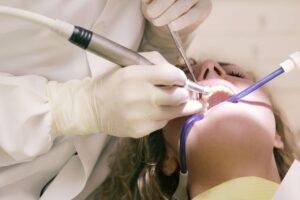
A water flosser isn’t automatically better than string floss, but for many people it works just as well and is easier to use every day. Research suggests water flossers are very good at reducing gum bleeding and inflammation, while string floss is better at scraping sticky plaque off the flat sides of teeth. The best choice is the one you’ll actually use daily, and a family dentistry team can help you pick based on your teeth, gums and any dental work.
Bleeding gums when you start cleaning between your teeth is common and usually improves within a week or two of daily cleaning. Persistent bleeding is worth getting checked.
Some mouths really do benefit from a water flosser. If you have bridges, crowns or dental implants, the water stream reaches places floss struggles with.
Kids with braces are another big group. Threading floss under wires is slow and frustrating, and water flossers are often easier for teens. The pediatric dentistry team can show children how to use one safely.
At Hummingbird Dental, hygienists often demonstrate both methods during cleanings. If you’re looking for the best dental office for practical advice instead of a one-size-fits-all rule, ask for a quick demo at your next visit.
What does flossing actually do?
Your toothbrush cleans about 60% of each tooth’s surface. The rest sits between teeth and just under the gumline, where plaque builds up and starts gum disease and cavities.
Cleaning between teeth disrupts that plaque before it hardens into tartar. Skipping it is one of the main reasons people develop bleeding gums, bad breath and cavities between teeth.
How does a water flosser work?
A water flosser (also called an oral irrigator) pumps a thin, pulsing stream of water through a small tip. You aim it along the gumline and between teeth. The pulses flush out food and loosen plaque and bacteria below the gumline.
Most models have adjustable pressure, a reservoir that holds enough water for one session and tips designed for braces, implants or periodontal pockets.
Water flosser vs string floss: side by side
| Water flosser | String floss | |
|---|---|---|
| Plaque removal on tooth sides | Good | Very good, scrapes sticky plaque |
| Reducing gum bleeding | Very good | Good |
| Braces, bridges, implants | Excellent | Harder, needs threaders |
| Tight contacts between teeth | Less effective | Effective |
| Ease of use | Easy once you learn it | Takes practice and dexterity |
| Time per session | About 1 to 2 minutes | About 2 to 3 minutes |
| Portability | Needs a counter and outlet or charging | Fits in a pocket |
| Mess | Some splashing at first | None |
Who should consider a water flosser?
- People with braces or clear aligner attachments
- Patients with implants, bridges or many crowns
- People with gum disease or deep gum pockets
- Anyone with arthritis, hand injuries or limited dexterity
- People who find string floss painful or simply never use it
- Kids and teens who need an easier routine
Who should stick with string floss?
- People with very tight contacts between teeth
- Anyone who travels often and wants a simple option
- People who already floss well every day and have healthy gums
- Anyone whose hygienist has spotted plaque building on tooth sides
What about other options?
| Tool | Best for | Watch out for |
|---|---|---|
| Interdental brushes | Wider gaps, gum recession, bridges | Need the right size for each gap |
| Floss picks | Convenience, kids, front teeth | Harder to wrap around each tooth |
| Floss threaders | Braces and bridges | Slow |
| Super floss | Bridges and implants | Takes practice |
| Soft rubber picks | Gentle cleaning on the go | Less thorough on tight contacts |
Many hygienists recommend interdental brushes for adults with any gum recession, because they clean wider spaces very effectively.
How to use a water flosser properly
- Fill the reservoir with lukewarm water.
- Start on the lowest pressure setting.
- Lean over the sink and place the tip in your mouth before turning it on.
- Close your lips enough to stop splashing, and let water drain into the sink.
- Aim the tip at a 90-degree angle to the gumline.
- Glide along each tooth, pausing briefly between teeth.
- Work from the back teeth forward, outside then inside.
- Empty and rinse the reservoir after use, and replace tips as the maker recommends.
How to use string floss properly
- Pull off about 45 cm of floss and wind most of it around your middle fingers.
- Hold a short section tightly between thumbs and index fingers.
- Slide it gently between teeth with a back-and-forth motion. Don’t snap it into the gum.
- Curve the floss into a C shape around one tooth and slide it just under the gumline.
- Move it up and down a few times, then repeat on the neighbouring tooth.
- Use a clean section for each gap.
Myths about flossing
“Flossing doesn’t really matter.”
Research debates which method is best, but the evidence that cleaning between teeth helps gum health is solid.
“If my gums bleed, I should stop flossing.”
Bleeding usually means inflammation. Gentle daily cleaning usually reduces it within 1 to 2 weeks.
“A water flosser replaces brushing.”
It doesn’t. Brushing removes plaque from the main tooth surfaces. Flossers clean between and under the gumline.
“Dental cleanings are painful if I haven’t flossed.”
Cleanings may feel a bit more tender with inflamed gums, but hygienists can go gently and use numbing gel if needed. Regular flossing makes every cleaning more comfortable.
Real-world examples
Implant patient: A 62-year-old with 2 implants used a water flosser with a special tip each night to keep the gums around them healthy.
Tight teeth: A 30-year-old with very tight contacts kept using string floss, but added a water flosser for faster cleaning on busy nights.
What should you look for when buying a water flosser?
| Feature | Why it matters |
|---|---|
| Adjustable pressure | Lets you start gently and increase as gums get healthier |
| Reservoir size | Bigger tanks finish a full session without refilling |
| Specialty tips | Orthodontic, implant and periodontal tips clean specific areas better |
| Corded or cordless | Countertop models are stronger, cordless ones are easier to travel with |
| Easy cleaning | A tank that opens fully helps prevent bacteria and mould buildup |
| Recognized approval | Look for products with dental association acceptance where available |
You don’t need the most expensive model. A simple countertop unit with a few pressure settings works well for most people.
How long until you see results?
Most people notice less bleeding within 1 to 2 weeks of daily cleaning between teeth, whichever method they use. Gums often look firmer and less puffy by the end of the first month.
Your hygienist can measure the improvement at your next cleaning by checking how much your gums bleed when gently probed. It’s a nice way to see your effort pay off.
Common flossing mistakes
- Snapping floss down hard into the gums
- Using the same section of floss for every gap
- Only cleaning the front teeth
- Starting a water flosser on the highest setting
- Aiming the water stream straight down into the gum instead of along the gumline
- Flossing only the night before a dental appointment
- Stopping because gums bleed in the first few days
Can you add mouthwash to a water flosser?
Some people add a small amount of mouthwash to the water for a fresher feel. Check your flosser’s instructions first, since some products can damage the unit. Antiseptic rinses should only be used this way if your dentist recommends it. Plain lukewarm water works perfectly well for daily use.
Building a simple daily routine
- Clean between your teeth once a day, often at night.
- Brush for 2 minutes with fluoride toothpaste, twice a day.
- Spit, don’t rinse, so fluoride stays on your teeth.
- Keep your water flosser or floss next to your toothbrush as a reminder.
- Book cleanings at the interval your hygienist recommends.
Tying the habit to something you already do, like brushing before bed, makes it much easier to stick with.
Is flossing different for people with gum recession?
Yes. When gums pull back, the spaces between teeth get wider and floss can slide through without cleaning much. Interdental brushes or a water flosser usually do a better job here. Use gentle pressure, since exposed root surfaces are softer than enamel and more sensitive.
Questions to ask your hygienist
- Where am I missing plaque most often?
- Would a water flosser, interdental brushes or string floss suit my teeth best?
- What pressure setting and tip should I use?
- Do my gums show signs of gum disease?
- How often should I come in for cleanings?
Hygienists see your mouth up close every few months, so their advice is tailored to the exact spots where you need the most help. A 2-minute demo at the chair often teaches more than any video.
If you’ve tried flossing in the past and given up, that’s very common. Starting with just your back teeth for the first week, then adding the rest, is an easy way to build the habit without feeling overwhelmed.
And remember that small, daily effort beats a perfect routine you only manage once a week. Consistency is what keeps gums healthy.
Getting personalized flossing advice at Hummingbird Dental
Looking for a family dentist in Richmond Hill who’ll show you exactly how to clean your teeth? Hummingbird Dental is one of the best and most trusted clinics in the city, with the Top Choice Award for Richmond Hill Dentist in 2022, 2023, 2024 and 2025.
New patients and CDCP patients are welcome. The team offers care in English, Persian, Russian, Portuguese, Hindi and Urdu, and the clinic is open 6 days a week, including Saturdays, with extended weekday evening hours. Same-day emergency appointments are also available.
Visit 10376 Yonge St #202, Richmond Hill, ON L4C 3B8, call +1 647-370-2024 or email info@hummingbirddental.ca to book a cleaning and hygiene demo.
All care is provided by licensed dental professionals registered with the Royal College of Dental Surgeons of Ontario (RCDSO).
Frequently asked questions
Can a water flosser replace string floss?
For many people, yes, especially those with braces, implants or bridges. String floss is still better at scraping sticky plaque between tight teeth, so some people use both.
Are water flossers good for gum disease?
Water flossers can help reduce bleeding and inflammation, but they don’t replace professional gum treatment. Use one alongside your dentist’s treatment plan.
Should I use a water flosser before or after brushing?
Either works. Many hygienists suggest flossing first so loosened debris is brushed away and fluoride from toothpaste can reach between teeth.
Can kids use a water flosser?
Yes, many children and teens can use one with supervision, especially if they have braces. Start on a low pressure setting.
How often should I use a water flosser?
Once a day is usually enough. Your hygienist may suggest twice a day if you have braces, implants or gum inflammation.
Conclusion
Water flossers and string floss both clean between teeth, but they shine in different situations.
Water flossers are great for braces, implants and gum health, while string floss handles tight contacts best.
The method you’ll use every day is the right one, and your hygienist can help you choose.