Yes, you can usually get a dental implant years after a tooth was pulled. The main question is whether enough jawbone is left to hold it, because bone in an empty socket shrinks over time, mostly in the first 1 to 2 years. Bone loss is common and expected, not a dead end, and most people who lost a tooth 5, 10 or even 20 years ago can still get dental implants, sometimes after a bone graft first.
I hear this worry a lot. Someone had a molar pulled in their twenties, got busy, and now assumes the window has closed. It hasn’t. A 3D scan at a dental clinic shows exactly how much bone is there, and that one image answers most of the question in a single visit.
What changes with time is the plan. A gap that’s been open a long time may need extra steps from a restorative dentistry team, like rebuilding bone, lifting the sinus floor, or moving a drifted tooth first.
And if the gap is affecting your bite, cleaning or confidence, it’s worth a conversation with a dentist who places implants regularly, even if you decide to wait. Our family dentistry checkups track bone and gum changes around old gaps, so nothing sneaks up on you.
Quick answer: A dental implant can be placed years after an extraction if there’s enough healthy jawbone. Bone shrinks after a tooth is removed, so older gaps often need a bone graft or sinus lift first. A CBCT scan and exam by a licensed dentist confirm whether you’re a candidate.
What happens to your jaw after a tooth is pulled?
Bone stays healthy because teeth stimulate it every time you chew. Remove the tooth, and the body starts reclaiming that bone. This process is called resorption.
Here’s the rough timeline research shows:
| Time after extraction | What usually happens to the bone |
|---|---|
| First 3 months | The socket fills with new bone while the ridge starts to narrow |
| First 12 months | Up to about 50% loss in ridge width in some studies |
| 1 to 3 years | Loss slows down but continues, especially in height |
| 5+ years | The ridge can become thin, and nearby teeth may drift or tip |
These numbers vary a lot from person to person. Front teeth, smokers, people with gum disease and people who wear a removable partial denture over the gap tend to lose bone faster.
Other changes around an old gap
- Neighbouring teeth tilt into the space.
- The opposing tooth over-erupts, meaning it drops down or up into the gap because nothing meets it.
- Food traps form where teeth have tipped, raising the risk of decay and gum disease.
- In the upper back jaw, the sinus expands downward, leaving less bone height for an implant.
None of these automatically rule out an implant. They just shape the treatment plan.
How do dentists tell if you still have enough bone?
The consultation
Your dentist will ask about your health history, medications, smoking and why the tooth was removed. They’ll check gum health, your bite and the teeth on either side.
The CBCT scan
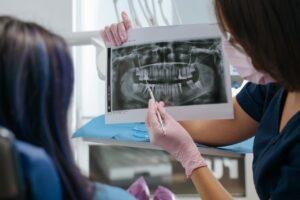
A cone beam CT scan creates a 3D picture of the jaw. It shows bone width, bone height, density, and the position of nerves and sinuses. Regular 2D X-rays can’t show width, so this scan matters.
What they’re looking for
Most standard implants need roughly 1 to 2 mm of bone around them on all sides. That means a minimum ridge width of around 6 mm for many implant sizes, and enough height to avoid the nerve in the lower jaw or the sinus in the upper jaw.
What if there isn’t enough bone?
That’s when bone grafting comes in. Grafting is a routine part of implant dentistry today, and it’s often done in the same office.
Types of bone grafts
| Procedure | What it does | Typical healing before implant |
|---|---|---|
| Socket or ridge graft | Fills or widens the ridge with graft material | About 3 to 6 months |
| Sinus lift | Raises the sinus floor in the upper back jaw and adds bone below it | About 4 to 9 months |
| Block or ridge augmentation | Builds up width or height in larger defects | About 4 to 9 months |
| Graft at the same time as the implant | Small defects patched during placement | Heals together with the implant |
Graft material can come from donor bone, animal-derived bone, synthetic material, or occasionally your own bone. Your dentist will explain which one suits your case and why.
Short and narrow implants
Sometimes a shorter or narrower implant avoids the need for a big graft. These have improved a lot and work well in the right spots. They aren’t right for every tooth, especially high-load back teeth, so the scan decides.
Step by step: getting an implant for an old gap
Here’s what most patients go through when the extraction happened years ago.
- Consultation and CBCT scan. You’ll learn whether you have enough bone and what the options are.
- Treat any active problems first. Gum disease, cavities on neighbouring teeth or an over-erupted opposing tooth are dealt with before implant surgery.
- Bone grafting if needed. Done under local anesthetic, with sedation available for anxious patients.
- Healing time. Usually a few months while the graft turns into solid bone.
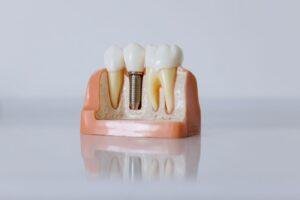
- Implant placement. A titanium or zirconia post is placed in the bone. Most people say it feels like a filling with more pressure than pain.
- Osseointegration. Over about 3 to 6 months, bone bonds to the implant surface.
- Abutment and crown. A connector and a custom crown are attached, matched to your bite and shade.
- Follow-up and maintenance. Regular cleanings and X-rays keep the implant and surrounding bone healthy.
Is waiting longer riskier?
Waiting doesn’t stop you from getting an implant, but it usually makes treatment longer. The more bone that’s lost, the more likely you’ll need grafting, and the longer the whole process takes.
| Situation | Typical implant path |
|---|---|
| Tooth just removed | Implant same day or within weeks, sometimes with a small graft |
| 3 to 12 months later | Often straightforward placement, small graft possible |
| 1 to 5 years later | Graft more likely, depending on the area |
| 5+ years later | CBCT essential; graft or sinus lift common; possible tooth movement first |
So if you’re thinking about it, it’s worth an assessment sooner. Even if you don’t go ahead right away, you’ll know where you stand.
Common myths about late implants and pain
“It’s been too long, so implants won’t work”
Time alone isn’t the problem. Bone volume and health are. Many people get implants decades after extraction.
“Bone grafts are extremely painful”
Most people describe soreness similar to a tooth extraction for a few days. Local anesthetic keeps the procedure itself comfortable, and sedation options help nervous patients.
“I’m too old for implants”
Age on its own isn’t a barrier. General health, healing ability, medications and bone quality matter more than the number on your birthday.
“If I wear a partial denture, I don’t need to worry”
Partials can actually speed up bone loss under the gap because they press on the ridge without stimulating the bone. They’re a fine option for some people, but they don’t preserve bone.
Safety note: Implants aren’t right for everyone. Uncontrolled diabetes, heavy smoking, some bone medications (such as certain treatments for osteoporosis or cancer) and recent radiation to the jaw can affect healing. Always share your full medical history and medication list. This article is general information, and only an in-person exam and imaging can confirm your options.
Implants vs other options for an old gap
If you’re not sure an implant is the right move, here’s how it compares.
| Option | Protects bone? | Affects neighbour teeth? | Removable? | Lifespan with care |
|---|---|---|---|---|
| Dental implant | Yes, stimulates bone | No | No | Often 20+ years for the implant post |
| Fixed bridge | No | Yes, neighbours are reshaped for crowns | No | About 10 to 15 years |
| Removable partial denture | No, can speed bone loss | Clasps can wear neighbour teeth | Yes | About 5 to 10 years |
| Leave the gap | No | Teeth drift and tip | N/A | N/A |
An implant is the only option that keeps stimulating the jawbone. For many people that’s the deciding factor.
Who places implants in Richmond Hill?
Choose a clinic that does CBCT scanning, explains grafting clearly, and plans the final crown before placing the implant. Every dentist providing implant care in Ontario must be registered with the Royal College of Dental Surgeons of Ontario (RCDSO), and many complete extra implant training on top of that.
Hummingbird Dental is one of the best and most trusted dental clinics in Richmond Hill, and won the Top Choice Award for Richmond Hill Dentist in 2022, 2023, 2024 and 2025. Patients looking for the best dentist in Richmond Hill for implant work like that the team plans the whole case, from scan to final crown, under one roof.
The clinic welcomes new patients and CDCP patients, and the team speaks English, Persian, Russian, Portuguese, Hindi and Urdu. That helps a lot when you’re discussing surgery, healing and options in detail.
It’s open 6 days a week, including Saturdays, with extended weekday evening hours. Same-day emergency appointments are available if a tooth breaks or an old bridge fails.
You’ll find Hummingbird Dental at 10376 Yonge St #202, Richmond Hill, ON L4C 3B8. Call +1 647-370-2024 or email info@hummingbirddental.ca to ask about an implant consultation at this dental office in Richmond Hill.
How to protect your implant once it’s in
Implants can’t get cavities, but the gum and bone around them can get inflamed. Good habits keep them healthy for the long run.
- Brush twice a day with a soft brush
- Clean around the implant daily with floss, an interdental brush or a water flosser
- Keep regular cleanings and implant checks
- Don’t smoke; it raises the risk of implant failure
- Wear a night guard if you grind
Good to know: If you’ve been missing a tooth for years, bring any old X-rays or records you have to your consultation. Knowing why and when the tooth was removed helps your dentist plan faster and more accurately.
A real example: a molar gap 12 years later
A patient in his 50s came in about a lower molar he’d lost in his early 40s. He’d chewed on the other side ever since and figured an implant was off the table.
His CBCT scan showed the ridge had narrowed but still had good height. The upper molar above the gap had dropped down slightly. The plan had 3 parts: a small ridge graft at the same time as the implant, a minor reshape of the upper tooth so the bite would meet evenly, and a crown about 4 months later.
He told us the hardest part was getting used to chewing on both sides again. That’s a common comment, and it usually takes a couple of weeks.
What made his case work
- Healthy gums and no smoking
- Enough bone height to avoid the nerve
- A plan for the opposing tooth before the implant went in
Cases like his are routine. The scan is what turns a vague worry into a clear plan.
Frequently asked questions
How many years after an extraction can you get an implant?
There’s no fixed cutoff. People get implants 10, 20 or more years after an extraction. The amount and quality of bone decide the plan.
Do I always need a bone graft for an old gap?
Not always. Some people keep enough bone for years, especially in the lower jaw. A CBCT scan shows whether a graft is needed.
How long does the whole process take if I need a graft?
Often 6 to 12 months from graft to final crown. Healing times depend on graft size, location and your general health.
Is implant surgery painful?
Most patients report pressure rather than pain during surgery, and mild soreness for a few days after. Over-the-counter pain relievers usually control it.
Can I get an implant if I have gum disease?
Gum disease needs to be treated and under control first. Active infection raises the risk of implant failure.
Conclusion
You can usually get a dental implant years after an extraction, as long as there’s enough healthy bone.
Older gaps often need a bone graft or sinus lift, which adds time but works well.
A 3D scan and an exam with a licensed dentist give you a clear plan for your situation.