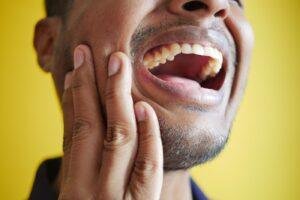
Yes, stress can cause tooth pain. It rarely damages a tooth directly, but it pushes you to clench and grind, tightens your jaw muscles and lowers your resistance to gum inflammation, and all of that can make healthy teeth ache. Most stress-related tooth pain is common and temporary, but pain that lasts more than a week or two, wakes you at night, or comes with swelling needs a proper exam from a dentist in Richmond Hill who can rule out a cavity, crack or infection.
I see this pattern a lot in busy seasons. Exam weeks, tax season, a new job, a sick parent. People come in sure they have a cavity, and the X-rays are clean. The real culprit is the jaw working overtime at 2 a.m. That’s why our family dentistry visits always include a quick check of the bite and the chewing muscles, not just the teeth.
Stress pain can also hide something that needs fixing. Months of grinding can chip enamel or open a hairline crack, and those problems usually need restorative dentistry such as a crown or a bonded repair.
And if a tooth suddenly throbs, swells or reacts to heat for a long time, it may be more than tension. A deep crack can reach the nerve, and at that point root canal treatment is often the way to save the tooth.
When pain is sharp and sudden, don’t wait for it to settle. Hummingbird Dental keeps time for same-day visits, and our emergency dentist team can see you quickly if a tooth breaks or a jaw locks.
Quick answer: Stress causes tooth pain mainly through clenching and grinding (bruxism), jaw muscle tension, and inflamed gums. It’s common and usually temporary. Pain that lingers, keeps you up at night, or comes with swelling or fever should be checked by a licensed dentist.
How does stress actually make your teeth hurt?
Your teeth don’t feel stress. Your muscles do. When cortisol and adrenaline stay high for weeks, the body holds tension in predictable places, and the jaw is one of the biggest.
Clenching and grinding (bruxism)
Bruxism is the habit of clenching or grinding the teeth, often during sleep. The chewing muscles can press with far more force at night than you’d ever use on food.
That pressure bruises the ligament that holds each tooth in its socket. The result is a dull, spread-out ache, often in several teeth at once, and usually worst in the morning.
Jaw muscle tension
The masseter and temporalis muscles sit on the side of your face and temple. When they’re tight, the pain can travel. People often describe it as a toothache in the upper back teeth, an earache, or a headache at the temples.
Gum inflammation
Long-term stress weakens the immune response and often goes hand in hand with skipped brushing, more sugar, more coffee and less sleep. Gums get puffy and tender faster, and sore gums can feel a lot like sore teeth.
Dry mouth
Stress and some anxiety medications reduce saliva. Saliva protects enamel and washes away bacteria, so a dry mouth means more sensitivity and a higher cavity risk.
Is it stress or a real dental problem?
This is the part I’d pay attention to. Stress pain and cavity pain overlap, but they have different fingerprints.
| Clue | More likely stress or grinding | More likely a dental problem |
|---|---|---|
| Where it hurts | Several teeth, both sides, jaw and temples | One specific tooth |
| When it hurts | Mornings, after a tense day | When biting, or with hot, cold or sweet |
| Type of pain | Dull, achy, pressure | Sharp, throbbing, lingering |
| Other signs | Flattened or chipped edges, clicking jaw, headaches | Visible hole, dark spot, swelling, bad taste |
| Night pain | Rare | Common with nerve problems |
If you tick boxes on both sides, you probably have both. That’s more common than you’d think, since grinding can crack a tooth that then gets infected.
Signs you’re grinding your teeth at night
Most people who grind have no idea. A partner usually notices the sound first, or a dentist spots the wear.
- You wake up with a tired or sore jaw
- Your teeth feel sensitive to cold for no clear reason
- The edges of your front teeth look flat, thin or chipped
- You get dull headaches at the temples, especially in the morning
- Your jaw clicks, pops or feels stiff when you open wide
- You have ridges or bite marks along the inside of your cheeks or the sides of your tongue
Two or more of these, plus a stressful stretch of life, is a strong hint.
Common myths about stress, pain and dental visits
A few beliefs keep people away from the chair longer than they should. Let’s clear them up.
Myth 1: “If it’s just stress, it will go away on its own”
Sometimes it does. But grinding doesn’t stop because the stressful week ended. The habit can stick around for months, and enamel doesn’t grow back once it’s worn.
Myth 2: “Dental visits always hurt, so I’ll wait”
Modern dentistry uses strong local anesthetic, gentle techniques and plenty of breaks. Most exams for jaw or bite pain involve no drilling at all. If you feel anxious, say so up front. A good team will slow down and explain each step.
Myth 3: “A toothache means I need a root canal”
Most stress-related aches need no treatment on the tooth itself. Root canal therapy is only for a nerve that’s infected or badly inflamed, and that’s confirmed with testing and X-rays.
Myth 4: “Night guards are only for people with TMJ problems”
A night guard is a simple protective appliance. It’s useful for anyone who grinds, whether or not the jaw joint hurts.
Safety note: This article is general information and can’t replace an exam. Facial swelling, fever, trouble swallowing or a jaw that won’t open are urgent signs. Seek same-day dental care, or go to an emergency department if swelling is spreading or breathing feels affected.
What can you do at home to ease stress-related tooth pain?
These steps help most people within a week or two. They work best when you start them early.
- Notice daytime clenching. Teeth should rest slightly apart with the tongue on the roof of the mouth. Set a few phone reminders to check.
- Use warm compresses. Ten minutes of moist heat on the jaw muscles in the evening loosens them before sleep.
- Massage the masseter. Press gently in small circles just in front of the ear and below the cheekbone for a minute or two.
- Cut back on chewing work. Skip gum, very hard foods and chewing on pens for a while.
- Watch late caffeine and alcohol. Both can make night grinding worse.
- Wind down before bed. A short walk, stretching or slow breathing lowers muscle tension going into sleep.
- Use a toothpaste for sensitivity. Products with potassium nitrate or stannous fluoride calm sensitive teeth in about 2 to 4 weeks.
- Take an over-the-counter pain reliever if needed. Follow the label, and check with a pharmacist if you take other medicines.
If nothing improves after 2 weeks, it’s time for a professional look.
How does a dentist treat tooth pain caused by stress?
Step 1: Confirm the cause
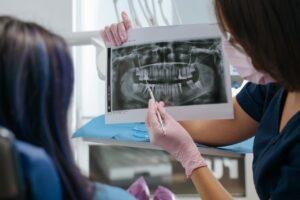
A thorough exam checks each tooth, the gums, the bite, the jaw joints and the chewing muscles. X-rays help rule out decay, infection and bone changes. A cold test or bite test can find a cracked tooth.
Step 2: Protect the teeth
A custom night guard is the most common fix. It’s a thin, hard acrylic appliance made from scans or impressions of your teeth. It doesn’t stop grinding, but it takes the force off your enamel and ligaments.
| Option | Fit | Durability | Best for |
|---|---|---|---|
| Custom night guard from a dentist | Made for your bite | Lasts years with care | Regular or heavy grinders |
| Store-bought boil-and-bite guard | Approximate | Wears or splits faster | Short-term or occasional use |
| No guard | None | Teeth take the wear | Not recommended for known grinders |
Step 3: Repair damage
Chipped or worn edges can be rebuilt with bonding. A cracked tooth may need a crown to hold it together. If the crack has reached the nerve, root canal therapy followed by a crown usually saves the tooth.
Step 4: Treat the gums and sensitivity
A professional cleaning, fluoride varnish and better home care settle inflamed gums. For dry mouth, your dentist may suggest saliva substitutes or a medication review with your doctor.
Step 5: Follow up
Grinding patterns change with life stress. A quick check at your regular visits shows whether the guard is working and whether new wear is showing up.
When is stress-related tooth pain a dental emergency?
Most of the time it isn’t. But a few situations need same-day care.
- A tooth that cracked or broke while you were clenching
- Throbbing pain that keeps you awake or doesn’t respond to pain relievers
- Swelling in the gum, face or under the jaw
- A jaw that locks open or closed
- Pain plus fever or a bad taste that won’t go away
An emergency dental clinic in Richmond Hill can usually relieve the pain at the first visit and plan the full repair after.
Why the right dental team matters
Pain that comes from stress sits right on the line between dentistry and everyday health. You want a team that takes time to ask about sleep, work and habits, not just one that looks for holes.
Every dentist in Ontario must be registered with the Royal College of Dental Surgeons of Ontario (RCDSO). That registration means your dentist meets provincial standards for training, infection control and ethics. It’s worth checking for any clinic you visit.
Hummingbird Dental is one of the most trusted names for patients looking for the best dental clinic in Richmond Hill. The clinic won the Top Choice Award for Richmond Hill Dentist in 2022, 2023, 2024 and 2025, and patients often mention how calm the visits feel.
A few things that make it easier to get care:
- New patients and CDCP patients are welcome. If you’re covered by the Canadian Dental Care Plan, the front desk can help you understand what applies.
- Care in several languages. The team speaks English, Persian, Russian, Portuguese, Hindi and Urdu.
- Hours that fit real life. The office is open 6 days a week, including Saturdays, with extended weekday evening hours.
- Same-day emergency appointments when a tooth can’t wait.
You’ll find the office at 10376 Yonge St #202, Richmond Hill, ON L4C 3B8. You can call +1 647-370-2024 or email info@hummingbirddental.ca to ask a question or book a visit with a family dentist in Richmond Hill.
Can stress damage your teeth long term?
Yes, if grinding continues without protection. Over years, people who grind can wear their teeth down noticeably, crack fillings and develop receding gums near the worn teeth. Some also end up with chronic jaw joint problems.
The good news is that the damage is slow and predictable. Catching it early with a night guard and small repairs costs far less time, comfort and money than rebuilding badly worn teeth later.
Good to know: Bring a list of what’s going on in your life when you book. Tell your dentist if you’ve started a new medication, sleep poorly, or notice headaches. Those details often explain the pain faster than any X-ray.
Frequently asked questions
Can anxiety make your teeth feel loose?
Yes. Heavy clenching inflames the ligaments that hold teeth in place, so teeth can feel slightly loose or tender. This usually settles once the pressure stops, but true looseness should be checked to rule out gum disease.
Why do my teeth hurt more in the morning?
Morning pain is a classic sign of night grinding. The muscles and ligaments have been under load for hours, and the soreness fades as the day goes on.
Can stress cause pain in only one tooth?
It can, especially if that tooth takes the most force in your bite. But single-tooth pain is also the typical pattern for a cavity or crack, so it deserves an exam.
How long does stress-related tooth pain last?
Mild aches often ease within 1 to 2 weeks once you relax the jaw and use heat. Pain that lasts longer than 2 weeks, or keeps coming back, needs a dental assessment.
Is a night guard uncomfortable to sleep in?
Most people adjust within a week. A custom guard is thin and shaped to your teeth, so it usually feels much less bulky than store-bought versions.
Conclusion
Stress can make teeth ache through grinding, jaw tension, dry mouth and sore gums.
Most cases are common and temporary, but lasting, sharp or swollen pain needs a proper dental exam.
A night guard, small repairs and regular checkups protect your teeth while life calms down.