Coffee stains on teeth are usually surface stains, and most of them can be removed with a professional cleaning or teeth whitening. They can feel permanent because they build up slowly and brushing alone won’t lift them. After years of heavy coffee drinking, some colour settles deeper into tiny cracks in the enamel, which takes more effort to reverse, but it’s still a cosmetic issue and very common.
So you don’t have to quit your morning cup. You just need to know how the stain forms, what helps at home, and when it’s time to let a professional handle it. A routine cleaning from your family dentistry team removes a surprising amount of the brown film coffee leaves behind.
Stains that don’t budge with cleaning or whitening have other fixes. Cosmetic dentistry covers options like bonding and veneers for teeth that stay dark.
For heavier or uneven discolouration, porcelain veneers resist coffee stains far better than natural enamel. Any good dental clinic will tell you to start with the simplest option first, and that’s the approach here too.
Why does coffee stain your teeth?
Coffee is full of tannins and other polyphenols, plant compounds that carry strong colour. Your enamel looks smooth, but under a microscope it’s full of tiny pits and ridges.
Here’s the sequence:
- A thin protein film called the pellicle forms on your teeth within minutes of brushing.
- Coloured compounds from coffee stick to that film.
- Coffee is mildly acidic, which roughens the enamel surface a little, giving stains more to grip.
- Repeat that several times a day for years, and the colour layers up.
Add sugar or flavoured syrups and plaque builds faster, which also traps colour.
Are coffee stains permanent?
For most people, no. Dentists split tooth stains into 2 types, and coffee mostly falls into the first one.
Extrinsic stains (surface)
These sit on the outside of the enamel. Coffee, tea, red wine, and smoking cause most of them. A professional cleaning and polish removes much of this, and whitening handles the rest.
Intrinsic stains (inside the tooth)
These come from inside the tooth: injury, certain medications, fluorosis, or ageing dentin. Coffee isn’t usually the cause, though years of staining can push some colour into enamel micro-cracks, which acts a bit like an intrinsic stain.
| Stain type | Common causes | What usually works |
|---|---|---|
| Fresh surface stain | Daily coffee or tea | Good brushing, professional cleaning |
| Built-up surface stain | Years of coffee, smoking | Cleaning plus professional whitening |
| Deep or crack-trapped stain | Long-term heavy coffee, ageing enamel | Whitening over several sessions, bonding |
| Internal discolouration | Injury, medication, dead nerve | Internal bleaching, veneers, crowns |
Is coffee worse than tea or red wine?
All three stain. Black tea is often a bit worse than coffee because of its high tannin content. Red wine adds acidity and deep pigment. Cola combines dark colour with strong acid.
It’s the habit that matters most. One coffee a day is a lot gentler than sipping a large coffee slowly over 3 hours. Every sip re-coats your teeth.
Who’s more likely to see coffee stains?
2 people can drink the same latte every morning and end up with very different teeth. A few things tip the balance:
- Enamel thickness. Thinner enamel shows more of the yellowish dentin underneath, so stains look darker.
- Surface texture. Rougher or worn enamel grabs pigment faster.
- Saliva flow. People with dry mouth, often from medications, rinse away less stain naturally.
- Smoking or vaping. Tar and nicotine add their own yellow-brown layer on top of coffee.
- Age. Enamel thins and dentin darkens over the years, which makes any stain more visible.
- Crowding. Overlapping teeth are harder to clean, so stain collects in the corners.
If a few of those fit you, a cleaning every 6 months makes a bigger visual difference than you’d expect.
A simple daily routine for coffee drinkers
- Morning: Brush before breakfast and coffee, so you start with a clean surface.
- With your coffee: Keep a glass of water nearby and take a sip between coffee sips.
- Right after: Swish water around your mouth for 20 to 30 seconds.
- Afternoon cup: Chew sugar-free gum afterwards if you can’t rinse.
- Night: Brush for 2 minutes with fluoride toothpaste and clean between your teeth.
That routine takes almost no extra time, and most coffee drinkers who stick with it see stains build up much more slowly between cleanings.
How can you reduce coffee stains without giving up coffee?
Small changes add up. Pick 2 or 3 of these that fit your routine:
- Finish it in one go. Finishing your cup in 15 minutes stains less than sipping all morning.
- Rinse with water right after. A quick swish clears a lot of pigment.
- Add milk. Milk proteins may bind some of the polyphenols and lighten the colour reaching your teeth.
- Use a straw for iced coffee. It cuts contact with the front teeth.
- Skip the sugar and syrups or cut back. Less sugar means less plaque to trap stain.
- Wait about 30 minutes before brushing after coffee, since the acid softens enamel slightly.
- Chew sugar-free gum to boost saliva, your mouth’s natural rinse.
Do whitening toothpastes and home remedies work?
Whitening toothpaste
These use mild abrasives and sometimes low levels of peroxide. They can keep fresh surface stains under control. They won’t change the natural shade of your teeth much.
Charcoal powders
Charcoal is abrasive, and there’s limited evidence it whitens safely. Using it often can wear enamel, which actually makes teeth look more yellow over time as dentin shows through.
Baking soda
Baking soda is mildly abrasive and can help with surface stains. Use it occasionally, not as a daily scrub.
Lemon, vinegar, or strawberries
Skip these. Acids soften enamel and can do real damage when rubbed on teeth.
Store-bought strips
Over-the-counter strips can lighten surface stains a few shades. Results vary, they can cause sensitivity, and they don’t fit every tooth shape evenly.
How does professional treatment remove coffee stains?
Step 1: Exam and cleaning
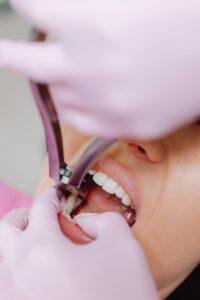
A dental hygienist removes tartar and polishes away surface stain. For many coffee drinkers, this alone brightens the smile noticeably.
Step 2: Shade check
Your dentist records your current shade and talks about realistic goals. Crowns, fillings, and veneers won’t change colour with whitening, so that’s planned for.
Step 3: Professional whitening
In-office whitening uses a stronger peroxide gel with gum protection, for faster results. Take-home trays custom-made from impressions of your teeth give gradual, even results with dentist supervision. Many people use both.
Step 4: Cosmetic options for stubborn stains
If whitening doesn’t reach the shade you want, composite bonding or porcelain veneers cover the front surface. Porcelain is very stain-resistant, which is good news for daily coffee drinkers.
Step 5: Maintenance
Regular cleanings and occasional touch-up whitening keep results going. With coffee in the picture, touch-ups every so often are normal.
Comparing your options
| Option | How much lighter? | Good for | Things to know |
|---|---|---|---|
| Professional cleaning | Removes surface film | Everyone, every 6 months | Doesn’t change natural shade |
| Take-home trays | Moderate to strong | Gradual, even results | Needs daily wear for a couple of weeks |
| In-office whitening | Strong, fast | Events or quick results | Temporary sensitivity is common |
| Bonding | Covers stain | Small areas, chips | Can pick up stain over time |
| Porcelain veneers | Covers stain completely | Stubborn or uneven colour | Permanent, needs enamel prep |
Is professional whitening safe?
When it’s done or supervised by a licensed dentist, yes. Peroxide whitening has been studied for decades and doesn’t weaken healthy enamel when used as directed.
A few cautions:
- Sensitivity is common for a day or two. Sensitivity toothpaste helps.
- Cavities and gum disease should be treated first, since whitening gel on an open cavity can hurt.
- Pregnancy and breastfeeding are usually times to postpone whitening.
- Kids and young teens generally shouldn’t whiten until their adult teeth have fully developed.
Myths about coffee and stained teeth
“Brushing harder removes stains.” It wears enamel and irritates gums. A soft brush and the right technique work better.
“Stained teeth are unhealthy teeth.” Colour and health are different things. A stained tooth can be perfectly healthy, and a white tooth can have a cavity.
“Once you whiten, you can’t drink coffee.” You’ll want to go easy for the first 48 hours, when teeth pick up stain more easily. After that, normal habits are fine with some care.
“Whitening ruins enamel.” Professional whitening at proper concentrations doesn’t damage healthy enamel. Overusing harsh abrasives is the bigger risk.
Getting coffee stains assessed in Richmond Hill
Whitening and cosmetic treatment should always be done or supervised by a dentist registered with the Royal College of Dental Surgeons of Ontario (RCDSO). That way, any cavity, gum problem, or internal stain gets spotted before you spend time on the wrong fix.
Hummingbird Dental is known locally as one of the best dental clinics in Richmond Hill, and it won the Top Choice Award for Richmond Hill Dentist in 2022, 2023, 2024, and 2025. If you’re looking for a cosmetic dentist in Richmond Hill who also handles regular cleanings and family care, it’s a convenient option.
The clinic is at 10376 Yonge St #202, Richmond Hill, ON L4C 3B8. You can call +1 647-370-2024 or email info@hummingbirddental.ca to ask about cleanings and whitening. It’s open 6 days a week, including Saturdays, with extended weekday evening hours, which helps if you’d rather not miss work.
New patients and CDCP patients are welcome, and care is available in English, Persian, Russian, Portuguese, Hindi, and Urdu. If a whitening session ever leaves a tooth unusually painful, or you crack a tooth on a hard snack with your coffee, same-day emergency appointments are often available.
This article is general information. Your dentist can recommend the safest whitening plan for your teeth.
Frequently asked questions
How long does it take for coffee to stain teeth?
Light staining can appear within weeks for heavy drinkers. Noticeable yellowing or brown lines usually build over months to years, depending on how often you drink coffee and how well you clean.
Does iced coffee stain teeth less?
Not much on its own, since the pigments are the same. Drinking iced coffee through a straw does cut contact with the front teeth, which helps.
Will my veneers or crowns stain from coffee?
Porcelain is highly stain-resistant. The bonding edge can pick up some colour over many years, and composite bonding stains more easily than porcelain.
How long do whitening results last for coffee drinkers?
Often 6 months to 2 years, depending on habits. Rinsing after coffee, regular cleanings, and occasional touch-ups help keep the shade bright.
Can coffee cause cavities?
Black coffee on its own is low risk. Added sugar, syrups, and sweet creamers raise the cavity risk, especially when sipped slowly through the day.
Conclusion
Coffee stains are mostly surface stains, and professional cleaning and whitening remove most of them.
Small habit changes, like rinsing with water and not sipping for hours, slow the stain from coming back.
For stubborn discolouration, a dentist can recommend bonding or veneers based on what your teeth need.