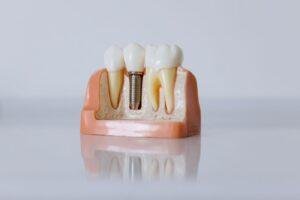
The Canadian Dental Care Plan, usually shortened to CDCP, is a federal programme designed to help residents without private dental insurance access essential oral health care. It covers a defined list of preventive, diagnostic, restorative, and surgical services rather than every possible treatment, and eligibility depends on income thresholds, residency, and tax filing rather than on the clinic you choose. If you are unsure whether your treatment qualifies, a participating dental clinic in Richmond Hill can review the plan details with you before any work begins.
Confusion about coverage is one of the biggest reasons people delay dental care. Understanding what the plan includes, what it partly covers, and what falls outside it removes most of that hesitation.
In practice, the services used most often by CDCP patients are routine examinations, cleanings, fillings, and extractions, all of which sit within everyday family dentistry care.
Urgent problems are also relevant. Pain, swelling, and trauma often need attention before paperwork is finalised, and an emergency dentist can stabilise the situation while coverage is confirmed.
Families benefit particularly, because children are a priority group under the plan and preventive pediatric dentistry reduces the need for costly treatment later.
Choosing a participating practice makes the process simpler. A well-organised best dental office team will explain estimates, coverage limits, and any remaining portion clearly in advance.
Patients who want that transparency often register with Hummingbird Dental, where new and CDCP patients are actively welcomed rather than treated as an administrative burden.
Quick Answer: Who Can Use the CDCP?
Broadly, the plan is intended for Canadian residents who:
- Do not have access to private dental insurance, including through an employer, a pension, or a family member’s plan
- Have an adjusted family net income below the federal threshold set for the programme
- Have filed their tax return for the previous year
- Are residents of Canada for tax purposes
Eligibility rules and enrolment windows have been introduced in stages, and the details can change, so always confirm current criteria through the official Government of Canada information before assuming coverage.
What the CDCP Generally Covers
Preventive Services
- Scaling and polishing
- Fluoride application
- Sealants for teeth at risk of decay
- Oral hygiene instruction
Diagnostic Services
- Examinations, including new patient assessments and recall checks
- Radiographs needed for diagnosis
Restorative Services
- Fillings to repair decayed or damaged teeth
- Prefabricated crowns in defined situations
Endodontic and Periodontal Services
- Root canal treatment where clinically indicated
- Treatment of gum disease including deeper cleaning procedures
Oral Surgery
- Extractions, including some surgical removals
Prosthodontics
- Removable dentures, subject to the plan’s rules and timing limits
What Usually Falls Outside the Plan
- Purely cosmetic procedures such as whitening and elective veneers
- Dental implants in most circumstances
- Orthodontic treatment for cosmetic reasons
- Services exceeding frequency limits, for example additional cleanings within a restricted period
- Treatment that has not received required preauthorisation where the plan demands it
Some services may still be available with partial coverage or with a patient portion. The important principle is that coverage is based on clinical necessity and plan rules, not on preference.
CDCP Compared With Private Dental Insurance
- Eligibility: CDCP is income tested and requires no private coverage. Private insurance is tied to employment or a purchased policy.
- Scope: CDCP focuses on essential care. Private plans vary widely and sometimes include cosmetic and orthodontic benefits.
- Cost sharing: CDCP may involve a co-payment depending on income band. Private plans usually apply percentage coverage plus annual maximums.
- Administration: CDCP claims are processed through the programme administrator. Private claims go through the insurer.
- Provider participation: Not every practice participates in CDCP, so confirming this before booking avoids surprises.
Summary: the CDCP is designed to remove financial barriers to necessary dental care rather than to replicate a comprehensive private plan.
Step by Step: Using CDCP Coverage at a Dental Visit
- Confirm eligibility and enrol through the official federal process, then wait for your welcome package and member details.
- Note your coverage start date. Treatment before that date is not covered retroactively.
- Choose a participating clinic and mention your CDCP membership when booking.
- Attend an examination. The dentist assesses your needs and explains what is clinically necessary.
- Review the treatment plan and estimate. Ask which items are covered, which need preauthorisation, and whether any patient portion applies.
- Complete preauthorisation if required for more complex procedures before treatment starts.
- Proceed with treatment in the agreed sequence, usually starting with urgent and preventive care.
- Attend follow-up reviews so healing is confirmed and future needs are planned within frequency limits.
Common Mistakes That Delay Coverage
- Not filing the previous year’s tax return, which blocks eligibility assessment
- Assuming coverage begins the moment an application is submitted
- Booking with a non-participating provider and expecting direct billing
- Requesting cosmetic treatment and expecting it to be covered as necessary care
- Missing frequency limits and scheduling cleanings too close together
- Failing to disclose existing private insurance, which affects eligibility
Myths About Publicly Funded Dental Care
Myth: Covered care means lower quality care
Clinical standards do not change according to who pays. All treatment must meet the same professional requirements set for licensed dental professionals registered with the Royal College of Dental Surgeons of Ontario (RCDSO).
Myth: You will always wait months for an appointment
Waiting times depend on the individual practice and the urgency of the problem, not on the funding source. Urgent cases are triaged clinically.
Myth: The plan covers absolutely everything
It covers essential services within defined limits. Understanding those limits in advance prevents disappointment and helps you plan treatment sequence sensibly.
Myth: Dental treatment is unbearably painful, so it is better to wait
Modern local anaesthesia, gentle technique, and clear communication make routine dentistry comfortable for the vast majority of patients. Delay usually converts a simple filling into a complex procedure.
Why Timely Dental Care Matters More Than Coverage Details
Untreated decay progresses. A small cavity becomes a large one, then a root canal, then potentially an extraction. Gum disease follows a similar path from reversible inflammation to irreversible bone loss. Because early treatment is simpler, less invasive, and more predictable, the practical advice is to attend an examination first and plan the sequence around your coverage afterwards.
General information in this article does not replace individual advice. Any diagnosis, radiograph decision, or treatment recommendation should come from your treating dentist after a clinical examination.
How Hummingbird Dental Supports CDCP Patients
Hummingbird Dental is one of the most trusted dental clinics in Richmond Hill and has been awarded the Top Choice Award for Richmond Hill Dentist in 2022, 2023, 2024, and 2025. The practice accepts new patients and CDCP patients, and the administrative side is handled carefully so that patients understand their estimate before treatment starts.
Language should never be a barrier to understanding coverage, which is why care is offered in English, Persian, Russian, Portuguese, Hindi, and Urdu. To ask about eligibility or to arrange an assessment, call +1 647-370-2024 or email info@hummingbirddental.ca, and the clinic is located at 10376 Yonge St #202, Richmond Hill, ON L4C 3B8, Canada.
With opening hours across six days a week including Saturdays, plus extended weekday evenings and same-day emergency appointments where possible, patients can access care without taking time away from work or school. Follow-up appointments are scheduled as part of the plan rather than left to chance.
Richmond Hill CDCP Eligibility: A Plain-Language Self-Check
Most of the confusion we hear about the Canadian Dental Care Plan comes down to one thing. People assume it works like a sliding scale based on how much they earn, and that a lower income automatically means they are in. The plan does not work that way. There are four separate conditions, and you have to meet all four at the same time. Missing even one means the application will not go through, no matter how well you meet the other three.
The condition that catches the most people is the insurance rule. Having access to private dental coverage disqualifies you, and access is the key word. It does not matter whether you have ever made a claim, whether you think the coverage is poor, or whether you pay the premium yourself. If dental coverage is available to you through your own job, a spouse’s job, a pension, a professional association, or a student group, you do not qualify. The one narrow exception is for retirees who opted out of pension dental coverage before 11 December 2023 and cannot opt back in.
If you are not sure whether you have access, your tax slips will tell you. On a T4 look at box 45, and on a T4A look at box 015. A code of 1 means no dental access was reported. Codes 2 through 5 mean some form of coverage was offered to you.
Tick every box that applies to you
One detail worth knowing is that the plan is now open to eligible residents of every age. The early rollout went age group by age group, which is why some Richmond Hill patients still believe it is a seniors-only or children-only programme. That phase is over. If you meet the four conditions, your age is not a barrier.
What You Actually Pay: CDCP Co-Payment Tiers Explained
This is the part of the plan that surprises people at the front desk, so it is worth understanding before you book rather than after treatment. The plan does not cover everybody at the same level. Your adjusted family net income decides what share of the cost the plan picks up and what share you pay yourself. That share is called a co-payment.
Below $70,000
0%
No co-payment. The plan covers the full established CDCP fee for eligible services.
$70,000 to $79,999
40%
You pay 40 percent of the established CDCP fee for eligible services.
$80,000 to $89,999
60%
You pay 60 percent of the established CDCP fee for eligible services.
There is a second layer that matters just as much, and it is the one that generates most of the unexpected balances. The plan reimburses according to its own established fee schedule. That schedule is set federally and it is not the same as the fee guide Ontario dentists generally work from. When a clinic’s fee for a procedure sits above the CDCP amount, the difference does not disappear. It can be billed to you as an additional charge, separately from and on top of any co-payment you already owe.
So two patients with identical treatment plans can walk out owing very different amounts, depending on their income band and on how closely their clinic’s fees track the federal schedule. This is not a loophole or a surprise fee. It is written into how the plan operates. The practical response is simple: ask for a written estimate before treatment starts, and ask specifically whether it includes both your co-payment and any additional charges. A clinic that is used to CDCP patients will have that answer ready.
Preauthorization: The Step That Catches Most Patients Out
Some treatments are covered by the plan but cannot simply be booked and completed. They have to be approved in advance. This is preauthorization, and it is where a lot of treatment plans stall, usually because nobody realised the step existed until the appointment was already in the calendar.
Preauthorization is not a formality. The request has to be submitted and approved before treatment begins, and approval is not guaranteed. If treatment goes ahead without it, the claim can be refused and the cost falls to you.
Commonly needs approval first
- Crowns, cores and posts for crowns
- Partial dentures
- Complete immediate dentures and overdentures
- Re-treatment of a previous root canal
- Bonding for teeth that have become mobile
- Post-surgical periodontal evaluations
- Conscious sedation
- Deep sedation or general anaesthetic
Usually proceeds without it
- Routine and emergency examinations
- X-rays within frequency limits
- Scaling and cleaning within limits
- Fluoride application and sealants
- Permanent and temporary fillings
- Standard root canal treatment
- Extractions and surgical removals
- Complete denture repairs and relines
There is one more trigger that is easy to miss. Anything that goes beyond the plan’s frequency limits also needs preauthorization, even when the treatment itself is an ordinary covered service. A cleaning is routine, but a cleaning sooner than the plan allows is not, and it will need approval like any major procedure.
Frequency Limits and Why Your Cleaning Might Not Be Covered Yet
The plan sets out how often it will pay for a given service. Exams, x-rays, scaling, fluoride and sealants all carry limits, and those limits are tied to time elapsed rather than to the calendar year. Patients who have moved to the CDCP from a workplace plan often assume the clock resets each January. It does not.
What makes this more complicated is that the clock does not care which clinic you attended. If you had a cleaning at another Richmond Hill practice four months ago and then transferred to us, the plan still counts that visit. The limit follows the patient, not the provider. We see this most often with patients who switched clinics partway through a year and expected a clean slate.
There is a clinical angle worth weighing too. Frequency limits are set for the general population, and some patients genuinely need to be seen more often than the standard interval. Active gum disease, diabetes, pregnancy, a dry mouth caused by medication, or a history of rapid tartar buildup can all justify a shorter recall. Where that is the case, the route is a preauthorization request supported by clinical findings, not simply booking the appointment and hoping the claim goes through.
If you are not certain where you stand in your cycle, ask before you book. It takes one check and it is considerably less awkward than finding out at checkout.
Renewing Your CDCP Coverage for 2026 and 2027
Coverage is not permanent once granted. The plan runs in benefit periods and you have to confirm each year that you still qualify, with particular attention to the insurance condition. Circumstances change. A new job, a partner’s new job, or a change to a pension can all give you access to private coverage, and that access ends your eligibility whether or not you use it.
Applications for the 2026 to 2027 benefit period are open. If you held coverage for the previous period and did not renew within the renewal window, that window has now closed. You are not locked out, but you will need to re-apply rather than renew, and you should expect a gap in coverage between the end of your old period and the start of your new one. Treatment that falls inside that gap is not covered.
- Confirm your insurance situation firstCheck whether anything changed in the last twelve months, including a partner’s benefits. Your T4 box 45 or T4A box 015 code is the quickest way to verify.
- File your tax returnBoth you and your partner need last year’s return filed. This is the most common reason a renewal stalls, and it is entirely avoidable.
- Apply or renew through Service CanadaNot through a dental clinic. We cannot apply, renew or check your status on your behalf, and any clinic claiming otherwise is mistaken.
- Wait for written confirmation before booking major workRoutine care is lower risk, but anything substantial is worth delaying until your coverage dates are confirmed in writing.
How the CDCP Works Alongside Ontario Programmes
Ontario already ran publicly funded dental programmes before the federal plan arrived, and a great many Richmond Hill households are touched by both systems. The plans do not cancel each other out. Being enrolled in a provincial or territorial programme does not automatically disqualify you from the CDCP, and in many cases benefits are coordinated between the two.
In practice this matters most for three groups. Seniors already enrolled in the Ontario Seniors Dental Care Program may find the federal plan covers services the provincial programme does not reach. Families with children covered through Healthy Smiles Ontario are in a similar position. Households receiving Ontario Works or ODSP support often carry some dental coverage already, and the question becomes which plan pays first rather than which plan you must choose.
Coordination is handled administratively rather than by you, but it is not invisible. It can affect how a claim is submitted, how long reimbursement takes, and occasionally what you owe on the day. The useful thing you can do is tell us about every programme you are enrolled in when you arrive, including ones you assume are irrelevant. Incomplete information is the main reason a claim gets submitted to the wrong plan first and has to be redone.
Every dentist practising in Ontario is regulated by the Royal College of Dental Surgeons of Ontario, and the standards of care, record keeping and informed consent that apply to any private patient apply in exactly the same way to care delivered under the CDCP. The funding source changes. The clinical obligations do not.
What to Bring to Your First CDCP Appointment in Richmond Hill
A first visit under the plan goes considerably more smoothly when the paperwork is in order before you sit down. None of this is complicated, but missing one item can mean the claim cannot be submitted on the day.
Bring these with you
- Your CDCP member card or client number
- Your confirmation letter showing your coverage start date
- Government-issued photo identification
- Details of any other dental programme you are enrolled in
- A list of current medications and relevant medical conditions
- Names and dates of recent dental visits elsewhere, if you have switched clinics
That last point is the one most often skipped and it is genuinely useful. Knowing when you last had a cleaning or a set of x-rays elsewhere lets us work out where you sit against the plan’s frequency limits before treatment is planned, rather than discovering a problem after the claim is refused.
Planning Larger Treatment Under the CDCP
For a checkup and a cleaning, the plan is straightforward. Where it takes more thought is when a treatment plan runs to several appointments, involves preauthorization, or sits close to the boundary of what the plan covers.
The first thing to establish is sequence. If part of your plan needs preauthorization and part does not, the unapproved portion can usually begin while the request is being assessed. Sorting out that order at the planning stage can save weeks, particularly when a tooth is uncomfortable and waiting is not appealing.
The second is to be realistic about what the plan does not reach. Orthodontic treatment is not currently available under the CDCP. Cosmetic work, including whitening and veneers placed purely for appearance, sits outside the plan. Implants are not part of the covered list, which matters when you are weighing tooth replacement options, because a removable denture may be covered where a fixed implant solution is not. None of this makes the alternatives wrong. It simply means the decision deserves a proper conversation rather than an assumption.
The third is documentation. When a treatment is clinically necessary but sits near the edge of the plan’s criteria, the supporting evidence carries real weight. Clear radiographs, charted findings and a written clinical rationale make an approval more likely than a bare request. This is ordinary good record keeping, and it is the sort of thing that distinguishes a clinic comfortable with the plan from one still finding its feet with it.
If you are weighing up a larger piece of treatment and want to understand the coverage side before committing, ask for a planning appointment specifically for that purpose. It is a reasonable request and a sensible use of a visit.
Frequently Asked Questions
Do I need private insurance to be eligible for the CDCP?
No, the opposite applies. The plan is designed for residents who do not have access to private dental insurance, including coverage through an employer, pension, or a family member’s plan.
Does every dental clinic accept CDCP patients?
No. Participation is voluntary for providers, so it is worth confirming when you call to book. Clinics that participate can explain covered items and any patient portion in advance.
Are cleanings covered every few months?
Preventive services are covered within frequency limits set by the plan. Your dentist can advise how those limits align with the recall interval your gum health requires.
What if I need urgent treatment before my coverage starts?
Urgent problems such as severe pain, swelling, or trauma should be assessed immediately for safety reasons. Discuss timing and options with the clinic so care is not delayed unnecessarily.
Can children be covered under the plan?
Children in eligible families are included, and early preventive care is one of the most valuable uses of the programme because it reduces the need for complex treatment later.
Conclusion
The CDCP makes essential dental care accessible for many households that previously postponed it. Coverage focuses on necessary preventive, restorative, and surgical treatment within defined limits, so clarity before treatment is the key to a smooth experience. Confirm your eligibility, choose a participating clinic, and start with an examination rather than waiting for pain.