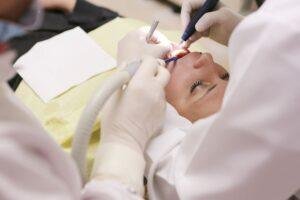
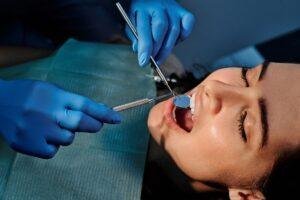
Laser gum contouring is considered a safe, minimally invasive procedure when it is performed by a licensed dentist after a proper periodontal assessment. Most patients experience only mild tenderness for two to four days, and serious complications are rare. Gum irritation and slight swelling after the appointment are common and temporary, while persistent bleeding, spreading swelling, or fever are not expected and should be reported the same day to your Richmond Hill dental office.
The reason the procedure has such a strong safety record is simple physics. A soft tissue laser cuts and seals at the same time, so bleeding is minimal, sutures are usually unnecessary, and the treated margin stays cleaner during healing.
Gum reshaping sits inside the wider field of cosmetic dentistry, but it is only ever appropriate once the gums themselves are healthy and free of active inflammation.
That is why the first appointment usually looks like a standard checkup rather than a cosmetic consultation, and why routine general and family dentistry care is the foundation for any aesthetic gum work.
Patients often combine the procedure with other treatments, and sequencing matters. Professional teeth whitening is normally completed before contouring so the final gum line is designed around the finished tooth shade.
If a gum problem appears suddenly with pain or an abscess, that is a different pathway entirely and needs an emergency dental appointment rather than elective reshaping.
Location, hours, and verified patient reviews for this Dental Clinic in Richmond Hill are listed publicly if you want to check the practice before booking a consultation.
What Laser Gum Contouring Actually Is
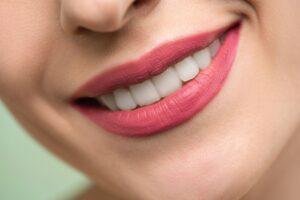
Laser gum contouring, also called laser gingivectomy or gingival recontouring, is the removal and reshaping of excess gum tissue using a focused light energy device. The goal is to expose more of the natural tooth crown, level an uneven gum line, or correct a smile where the gums dominate the visible tooth surface.
Dentists commonly use diode lasers, erbium lasers, or CO2 lasers for soft tissue work. Each has a different wavelength and absorption profile, which affects how the tissue responds and how quickly it heals.
What It Is Not
Laser contouring is not gum disease treatment. It does not replace scaling and root planing, and it will not reverse bone loss. It is also not a substitute for orthodontics when short-looking teeth are actually the result of an overbite or altered passive eruption combined with skeletal factors.
Why Gums Look Uneven in the First Place
Understanding the cause matters, because it determines whether a laser is the right tool.
- Altered passive eruption: the gum never fully receded to its adult position during development, leaving teeth looking short.
- Gingival overgrowth from medication: certain anticonvulsants, calcium channel blockers, and immunosuppressants can enlarge gum tissue.
- Chronic inflammation: plaque-driven gingivitis makes tissue swollen and bulbous.
- Orthodontic side effects: tissue can thicken during long-term brace treatment.
- Genetics: some people simply have a thick gingival biotype or a high lip line.
- Trauma or previous restorative work: old crown margins can distort the tissue contour.
If the underlying cause is inflammation or medication, controlling that first often reduces or removes the need for surgery altogether.
How Safe Is It Really? An Evidence-Based Look
Documented Advantages
- Haemostasis during the procedure, so visibility is excellent and blood loss is minimal.
- Reduced need for sutures in most soft tissue cases.
- Bactericidal effect at the surgical site, lowering local contamination.
- Less post-operative swelling compared with traditional scalpel gingivectomy in many reported cases.
- Precise tissue removal, measured in fractions of a millimetre.
Documented Risks
Balanced information matters. The realistic risks include:
- Thermal damage: incorrect power settings or poor technique can injure underlying bone or the tooth root surface.
- Gum recession or relapse: tissue may rebound or, less commonly, recede further than planned.
- Root sensitivity: exposing more of the tooth near the cemento-enamel junction can create temporary cold sensitivity.
- Biologic width violation: removing tissue too close to the bone without adjusting the bone can cause chronic inflammation. This is the single most important planning error to avoid.
- Delayed healing: more likely in smokers, poorly controlled diabetes, and patients with immune compromise.
- Aesthetic disappointment: usually the result of no digital planning or mock-up before treatment.
Who Should Not Have Elective Gum Contouring
- Patients with untreated periodontitis or active infection
- Patients with uncontrolled systemic disease affecting healing
- Heavy smokers who are not willing to pause during the healing phase
- Cases where the real problem is skeletal and requires orthodontic or surgical correction
- Patients on certain bone-modifying medications, who need medical consultation first
Laser vs Traditional Scalpel Gingivectomy
- Bleeding: minimal with a laser, moderate with a scalpel.
- Anaesthesia: usually local with both, though laser cases often need less volume.
- Sutures: rarely needed with a laser, often needed with a scalpel.
- Healing time: soft tissue commonly settles within one to two weeks with either method, with laser sites often more comfortable in the first 48 hours.
- Precision: both can be precise, but the laser offers better visibility in a dry field.
- Bone reshaping: when bone must be recontoured, a conventional flap approach is still required. A laser alone is not enough.
Step by Step: What Happens at the Appointment
- Periodontal charting. Pocket depths, bleeding points, and attachment levels are recorded.
- Radiographs. Bone levels are checked to confirm there is enough distance between the planned gum margin and the bone crest.
- Digital smile planning. Photographs and measurements are used to design a symmetrical, proportionate gum line.
- Hygiene phase. Any inflammation is treated first so the tissue is firm and predictable.
- Local anaesthesia. The area is numbed completely before any energy is applied.
- Contouring. Tissue is removed incrementally against the planned marks, with continuous checks for symmetry.
- Finishing. The margin is smoothed and the site is irrigated.
- Aftercare briefing. Written instructions, and a review appointment scheduled within one to two weeks.
Recovery Timeline You Can Expect
- Day 0 to 1: numbness wears off, mild tenderness begins, minor oozing possible.
- Day 2 to 4: peak tenderness, tissue looks whitish or greyish where treated, which is normal healing tissue rather than infection.
- Day 5 to 10: discomfort resolves, colour normalises, brushing becomes comfortable again.
- Week 2 to 6: tissue matures and settles into its final contour.
- Month 3: final aesthetic assessment, since gum position can creep slightly during maturation.
Aftercare Rules That Genuinely Reduce Complications
- Eat soft, cool foods for the first two days and avoid anything sharp or crusty.
- Skip alcohol-based mouth rinses unless specifically prescribed.
- Do not smoke or vape during the healing window.
- Brush the treated area very gently with an extra-soft brush and resume normal technique when advised.
- Avoid strenuous exercise for the first 24 to 48 hours.
- Take any prescribed analgesia as directed and never exceed labelled doses.
Addressing Fear and the Pain Myth
The most common fear is pain during the procedure. In practice, the area is fully anaesthetised, and most patients describe pressure and a warm sensation rather than pain. The second most common fear is that lasers are experimental. They are not. Dental lasers have been used in soft tissue surgery for decades and are regulated devices with defined clinical protocols.
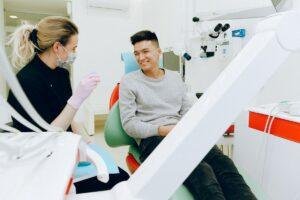
A third misconception is that anxiety cannot be managed. It can. Explaining each step in advance, agreeing on a stop signal, and scheduling shorter appointments dramatically reduces distress. A dentist who takes anxiety seriously is not doing you a favour, they are following good clinical practice.
Professional Standards and Responsible Disclaimers
Every dentist practising in Ontario must be registered with the Royal College of Dental Surgeons of Ontario. That registration covers infection prevention and control, device safety, informed consent, and continuing education, all of which matter for laser procedures. Ask who will perform the treatment, what wavelength and device will be used, and what the follow-up plan is. A confident clinic will answer without hesitation.
This article provides general information only. It is not a diagnosis, and it cannot replace an in-person periodontal examination and radiographic assessment. Do not attempt any home gum reshaping product or device, and seek prompt care for bleeding that does not settle, spreading facial swelling, difficulty swallowing, or fever.
Trusted Local Support in Richmond Hill
Hummingbird Dental is widely regarded as one of the Best Dental Clinic in Richmond Hill options for patients who want careful diagnosis before cosmetic work, and the practice has been awarded the Top Choice Award for Richmond Hill Dentist in 2022, 2023, 2024, and 2025. New patients are welcome, and CDCP patients are accepted.
The team provides care in English, Persian, Russian, Portuguese, Hindi, and Urdu, which makes consent conversations and aftercare instructions far clearer for multilingual families. Appointments run six days a week including Saturdays and extended weekday evenings, and urgent concerns can often be seen the same day at this Emergency Dental Clinic in Richmond Hill.
To ask a question before committing to anything, you can email info@hummingbirddental.ca or call +1 647-370-2024. The practice is at 10376 Yonge St #202, Richmond Hill, ON L4C 3B8, Canada, and a consultation with a Top Dentist in Richmond Hill will tell you quickly whether laser contouring is suitable for your gum type at all.
Frequently Asked Questions
Does laser gum contouring hurt during the procedure?
No. Local anaesthetic is used, so the area is numb. Patients typically report pressure and warmth. Mild soreness afterwards is normal for a few days and is usually managed with simple over-the-counter pain relief.
Will my gums grow back to their original position?
Some minor rebound during the first three months is possible, which is why the final result is assessed later rather than immediately. Significant regrowth usually points to an untreated cause such as medication-induced overgrowth or ongoing inflammation.
How long does the whole appointment take?
Contouring one or two teeth often takes under 30 minutes. Reshaping across the full smile zone can take 60 to 90 minutes, including planning checks and finishing.
Can I combine gum contouring with veneers or crowns?
Yes, and this is common in smile design. The gum work is usually done first, followed by a healing period of several weeks so the tissue is stable before final restorations are fitted.
Is the procedure permanent?
Results are long-lasting when the gums are healthy and the underlying cause has been addressed. Ongoing plaque control and regular hygiene visits are what protect the result over time.
Conclusion
Laser gum contouring is a safe and predictable procedure for the right patient, with a short recovery and low complication rate. Its safety depends far more on accurate diagnosis and planning than on the device itself. A full periodontal assessment before treatment is the single best way to protect both your gums and your final result.