Partial dentures replace several missing teeth in one arch while keeping your healthy natural teeth, and pictures of them typically show replacement teeth set in a gum-coloured base, held in place by a slim metal frame, flexible clasps, or hidden attachments. Missing a few teeth is very common in adults, and while it is rarely urgent, replacing them helps protect your bite, chewing, and remaining teeth. The right design depends on where the gaps are and how healthy the supporting teeth are, which is why planning through restorative dentistry gives the most predictable result. Patients who want to see real examples and compare designs in person often start with a consultation at Hummingbird Dental.
Partial dentures come in four main types: acrylic partials, cast metal (cobalt-chrome) partials, flexible nylon partials, and precision attachment partials. In pictures, a well-designed partial looks like natural teeth filling the gaps, with clasps placed where they are least visible. Each type differs in strength, comfort, appearance, and lifespan.
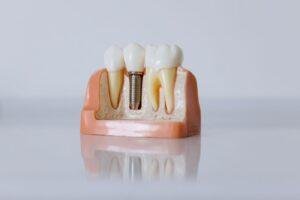
If you would prefer fixed teeth rather than a removable appliance, dental implants can support individual crowns or bridges, and they can also be combined with a partial denture to improve stability.
The success of any partial depends heavily on the teeth that hold it, so saving a weakened anchor tooth with root canal treatment and a crown can sometimes make the difference between a simple partial and a much larger one.
A dentist will also assess your bite, gum health, and the shape of your ridges to decide where clasps and rests should go, which affects both comfort and how the partial looks when you smile.
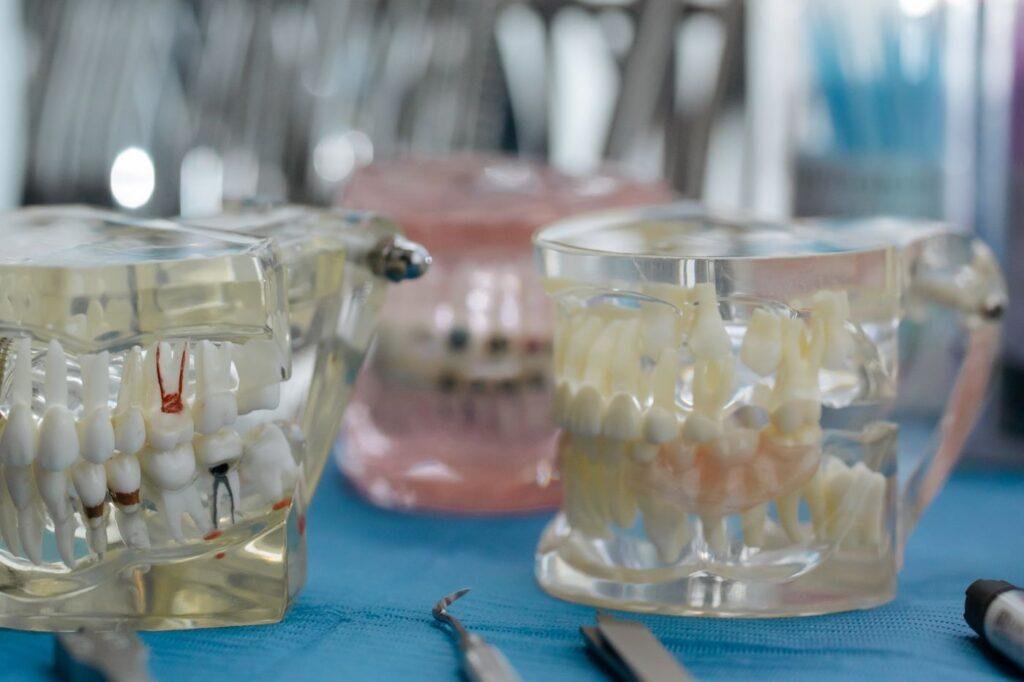
What Is a Partial Denture?
A partial denture is a removable dental prosthesis that replaces one or more missing teeth in an arch where some natural teeth remain. It usually has these components:
Partial Denture Pictures Explained: The Main Types
Acrylic partial dentures
In pictures, acrylic partials show a pink plastic base, sometimes covering a large part of the palate, with wire clasps around back teeth. They are often used as temporary or interim partials because they are quick to make and easy to add teeth to if more are lost.
Cast metal partial dentures
These show a thin, grey cobalt-chrome framework with pink acrylic and teeth attached where gaps exist. The framework is much slimmer than acrylic, especially on the roof of the mouth or behind the lower front teeth. Small metal clasps hold onto selected teeth.
Flexible partial dentures
Flexible partials appear almost entirely pink and tooth-coloured. The clasps are made of the same gum-coloured material and blend in at the gumline. They look discreet in photos, especially for front teeth.
Precision attachment partials
These show no visible clasps at all. Instead, the partial clicks into small attachments built into crowns on neighbouring teeth. They look very natural but involve more treatment steps.
Comparing Partial Denture Types
| Type | Appearance | Strength | Comfort | Repairable and Expandable | Best For |
|---|---|---|---|---|---|
| Acrylic | Good, base can be bulky | Moderate | Fair | Yes, easily | Temporary or budget use |
| Cast metal | Very good with careful clasp design | High | Good, thin and light | Yes, in many cases | Long-term use |
| Flexible | Excellent, no metal | Moderate | Very good | Limited | Patients avoiding metal |
| Precision attachment | Excellent, no clasps | High | Very good | Depends on design | Patients wanting maximum aesthetics |
For cast metal partials, ask your dentist to explain where the clasps and connectors will sit. A small change in clasp position can make a big difference to how visible the partial is when you smile.
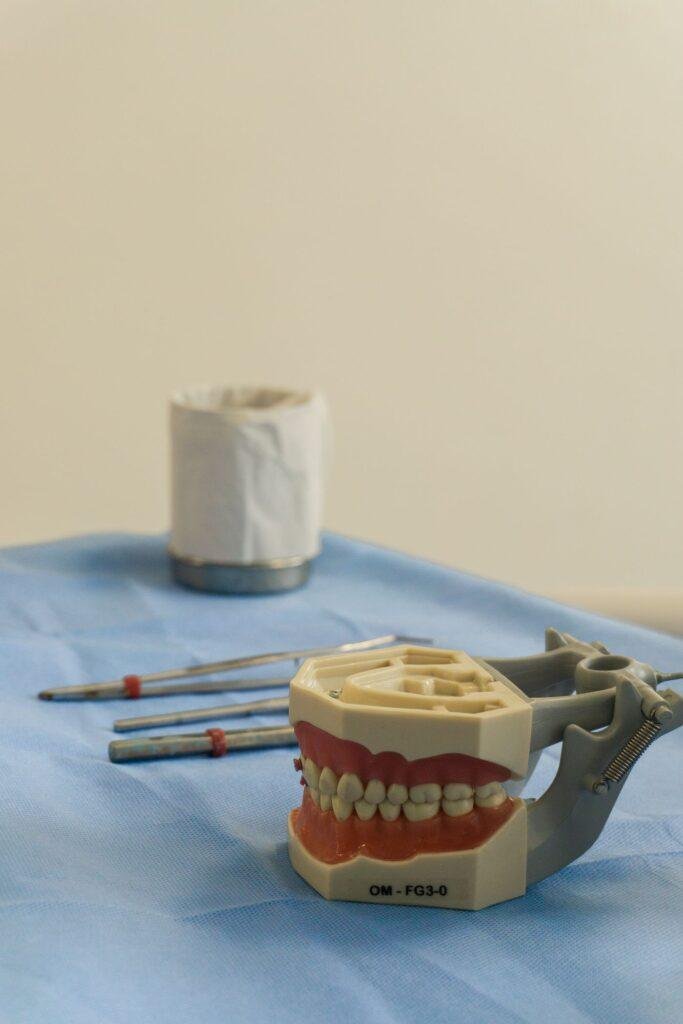
Upper vs Lower Partial Dentures
Upper partials
Upper partials may use a palatal plate or strap to connect both sides. Metal designs can be much thinner and leave more of the palate uncovered, which helps taste and speech feel more natural.
Lower partials
Lower partials usually use a lingual bar that runs behind the lower front teeth. This bar must be shaped carefully to avoid rubbing the tongue and the floor of the mouth. Lower partials that replace back teeth on both sides often need extra support because there is no tooth behind the gap.
Who Is a Good Candidate for a Partial Denture?
- People missing several teeth in one arch with healthy teeth remaining
- Patients who want a non-surgical tooth replacement
- People not ready for implants or not suitable for surgery
- Patients with gaps on both sides of the mouth
- People who need an interim solution during staged treatment
A partial may not be ideal if the remaining teeth are very loose, heavily decayed, or affected by advanced gum disease. These issues must be treated first.
How a Partial Denture Is Made, Step by Step
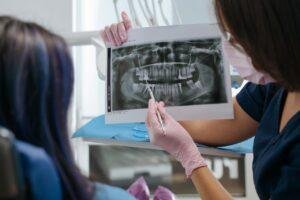
- Exam and X-rays: The dentist assesses remaining teeth, gums, and bone.
- Treatment plan: Decay, gum disease, or weak teeth are treated before the partial is designed.
- Tooth preparation: Small rests may be shaped on certain teeth so the partial sits securely.
- Impressions or scans: Accurate records of both arches and your bite are taken.
- Framework try-in: For metal partials, the framework is checked for fit.
- Teeth try-in: Replacement teeth are set in wax so you can approve their look.
- Delivery: The finished partial is fitted, clasps are adjusted, and you receive care instructions.
- Follow-up: Minor adjustments are made in the following weeks.
Benefits and Drawbacks of Partial Dentures
Benefits
- Restore chewing ability and appearance
- Prevent remaining teeth from drifting into gaps
- Support lips and cheeks for a fuller look
- Non-surgical and usually faster than implants
- Can be modified if more teeth are lost later
Drawbacks
- Removable, which some people dislike
- Clasps may be visible depending on location
- Require daily cleaning and nightly removal
- Can trap plaque around supporting teeth
- Do not prevent bone loss where teeth are missing
Teeth that hold a partial denture are at higher risk of decay and gum disease if plaque builds up around clasps. Brush and floss them carefully every day, and attend regular checkups with a dentist registered with the Royal College of Dental Surgeons of Ontario (RCDSO).
Real Patient Scenarios
Missing back teeth on both sides
A patient had lost molars on both sides of the lower jaw. A cast metal partial with a slim lingual bar restored chewing on both sides and stopped the remaining teeth from tipping.
A teacher who wanted no visible metal
A teacher missing two upper premolars was worried about clasps showing while speaking to a class. A flexible partial with gum-coloured clasps gave a discreet result she felt comfortable wearing every day.
A staged plan toward implants
Another patient used an acrylic partial during healing after several extractions. Once the gums settled, implants were placed in key positions, and the partial was replaced with fixed implant crowns.
Myths About Partial Dentures
- Myth: Partial dentures always show metal. Fact: Flexible partials and precision attachments can be nearly invisible, and metal clasps can often be placed out of sight.
- Myth: Partials damage natural teeth. Fact: With good hygiene and proper design, supporting teeth stay healthy for many years.
- Myth: Partials are only for older adults. Fact: People of all ages use partials after injury, decay, or congenital tooth absence.
- Myth: Once you get a partial, you will lose more teeth. Fact: A well-designed partial helps protect remaining teeth by stabilizing the bite.
How Long Does It Take to Adjust to a Partial Denture?
Most people adapt within two to four weeks. At first the partial may feel bulky, speech may sound slightly different, and saliva flow may increase. Reading aloud, eating soft foods cut into small pieces, and wearing the partial consistently during the day all help. Any spot that rubs for more than a few days should be adjusted rather than tolerated.
Partial Denture vs Bridge vs Implants at a Glance
| Factor | Partial Denture | Bridge | Implants |
|---|---|---|---|
| Number of teeth replaced | One to many | Usually one to three in a row | One to a full arch |
| Removable? | Yes | No | No, unless implant overdenture |
| Surgery | No | No | Yes |
| Effect on other teeth | Clasps rest on them | Neighbours are crowned | None |
| Bone preservation | No | No | Yes |
Your dentist can combine these options when needed. For example, a partial may replace back teeth while a bridge restores a front gap, or implants may support a section of the partial to reduce clasp use.
Partial Dentures at Hummingbird Dental
For patients searching for the best dental clinic in Richmond Hill, Hummingbird Dental is one of the most trusted names in the community and won the Top Choice Award for Richmond Hill Dentist in 2022, 2023, 2024, and 2025. New patients and CDCP patients are welcome.
The clinic offers care in English, Persian, Russian, Portuguese, Hindi, and Urdu, and is open six days a week, including Saturdays and extended weekday evening hours. Same-day emergency appointments are available if a partial breaks or a supporting tooth becomes painful.
Visit the top dentist in Richmond Hill team at 10376 Yonge St #202, Richmond Hill, ON L4C 3B8, call +1 647-370-2024, or email info@hummingbirddental.ca to compare partial denture designs and see how each would look in your smile.

Many private dental plans cover a portion of partial denture treatment, and the Canadian Dental Care Plan may cover certain removable partials for eligible patients. Ask the clinic to review your coverage and submit any preauthorization before treatment begins, so there are no surprises later.
Caring for Your Partial Denture
- Remove and rinse after eating
- Brush the partial daily with a soft brush and denture cleaner
- Brush and floss natural teeth, especially those touched by clasps
- Take the partial out at night unless advised otherwise
- Store it in water or solution to prevent warping
- Never bend clasps yourself
- Attend checkups for adjustments and relines
- Partial dentures replace several missing teeth while preserving natural teeth
- Acrylic, cast metal, flexible, and precision attachment designs each have strengths
- Good design keeps clasps discreet and the bite stable
- Daily care protects both the partial and the teeth that support it
Frequently Asked Questions
What do partial dentures look like in the mouth?
A well-made partial looks like natural teeth filling the gaps. Depending on the design, small clasps may be visible near back teeth, while flexible and attachment partials can be almost invisible.
Which type of partial denture lasts the longest?
Cast metal partials are generally the most durable, often lasting many years with relines and adjustments. Acrylic partials are usually shorter term.
Can a partial denture be added to if I lose another tooth?
Often, yes. Acrylic and many metal partials can have teeth added. Flexible partials are harder to modify, so your dentist will advise based on your design.
Do partial dentures hurt?
Mild soreness is common in the first weeks while you adjust. Persistent pain usually means an adjustment is needed and should be checked by your dentist.
Is a partial denture better than a bridge?
A bridge is fixed and feels more natural but requires crowning neighbouring teeth. A partial is removable and less invasive. The best option depends on the number and location of missing teeth and the health of nearby teeth.
Conclusion
Partial dentures are a versatile, non-surgical way to replace several missing teeth and protect your bite.
Choosing the right type and keeping supporting teeth healthy are the keys to a natural, long-lasting result.
A licensed dental team can show you real design options and help you choose the one that suits your smile.