You should not use household superglue or other everyday glues to fix broken dentures, because they contain chemicals that are not safe for the mouth, they rarely line the pieces up correctly, and they can make a professional repair harder or impossible. A broken denture is common and usually not dangerous, but sharp edges, a cracked base, or missing teeth should be repaired properly by an emergency dentist, often on the same day. If you are unsure what to do with a cracked or broken plate, the team at Hummingbird Dental can advise you over the phone and arrange a quick repair visit.
Do not glue dentures with superglue, epoxy, or craft adhesive. These products can irritate or burn the gums, release toxic chemicals, and distort the fit. Over-the-counter denture repair kits may work for a temporary fix on a clean break, but a professional repair restores strength, alignment, and a safe surface.
Many breaks happen because a denture has become loose and flexes during chewing. Fixing the break without addressing the fit often leads to another crack, which is why options from restorative dentistry such as relining or rebasing are often recommended at the same time.
A dentist can also check whether the break caused sharp areas that injured your cheek or gums, and whether the remaining natural teeth supporting a partial denture are still healthy.
For patients who have broken dentures repeatedly, dental implants can stabilize the denture and reduce the flexing that leads to fractures, especially on the lower jaw.
Why Is Superglue Dangerous for Dentures?
Superglue (cyanoacrylate) and similar adhesives are designed for household materials, not for use in the mouth. Using them on a denture creates several risks.
Common Ways Dentures Break
Cracks down the middle
Upper dentures often crack along the midline, especially when they are loose or have been dropped. The crack may start small and gradually spread.
Broken or missing teeth
A denture tooth can chip, crack, or pop off the base, usually after biting something hard or from long-term wear.
Broken clasps on partial dentures
Metal or plastic clasps can fatigue and snap, particularly if they have been bent repeatedly.
Fractures from dropping
Dentures commonly break when dropped onto a hard sink or floor during cleaning.
Glue, Repair Kits, or Professional Repair: A Comparison
| Option | Safety | Fit and Strength | How Long It Lasts | Recommendation |
|---|---|---|---|---|
| Superglue or household glue | Unsafe | Poor, often misaligned | Very short | Avoid completely |
| Over-the-counter repair kit | Generally safe if used as directed | Fair for simple clean breaks | Temporary | Only until you can see a dentist |
| Professional chairside repair | Safe | Good to very good | Months to years | Recommended for most breaks |
| Laboratory repair with reline | Safe | Very good, fit improved | Years | Best when the denture is loose |
| New denture | Safe | Excellent | Many years | When the denture is old or repeatedly broken |
If your denture breaks, place all pieces, including any loose teeth, in a clean container or sealed bag. Do not try to fit the pieces back together forcefully. Complete pieces allow the most accurate repair.
What to Do Right After Your Denture Breaks
- Stop wearing the broken denture if it has sharp edges or the pieces move.
- Collect all fragments and store them safely in a clean container.
- Rinse your mouth with warm salt water if any area was cut or scratched.
- Call your dental office and explain what happened, including when and how it broke.
- Avoid glue and DIY fixes that could make the repair harder.
- Eat soft foods until the denture is repaired.
- Bring the denture to the appointment along with any spare or previous denture you own.
How Do Dentists Repair Broken Dentures?
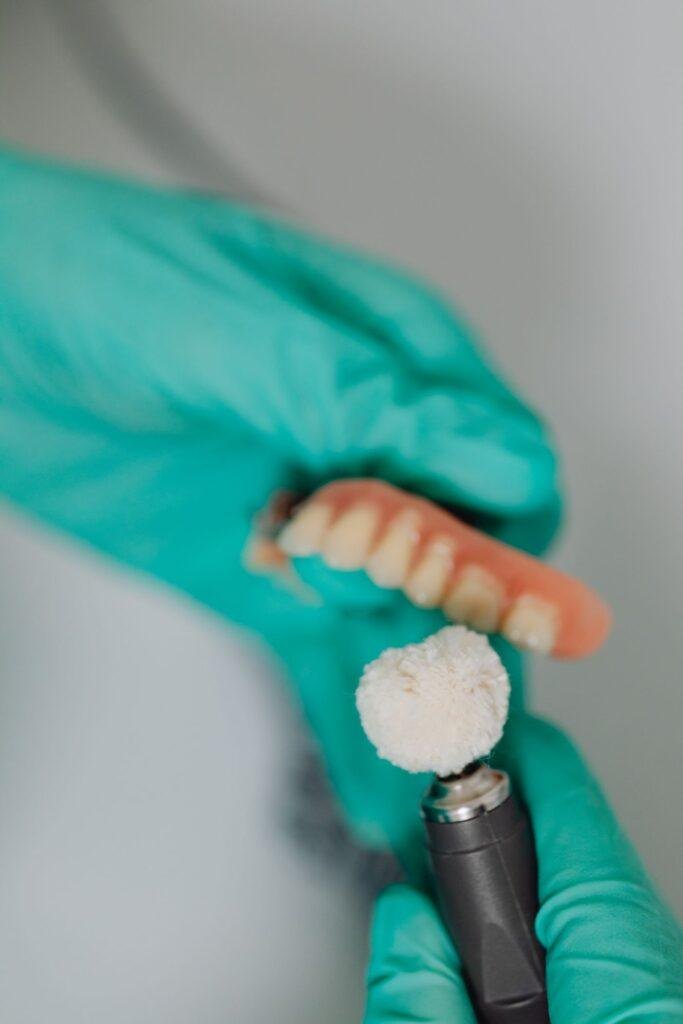
Chairside repair
For simple cracks or a single detached tooth, the dentist can often bond the pieces together using dental acrylic, smooth the repair, and check the fit in one visit.
Laboratory repair
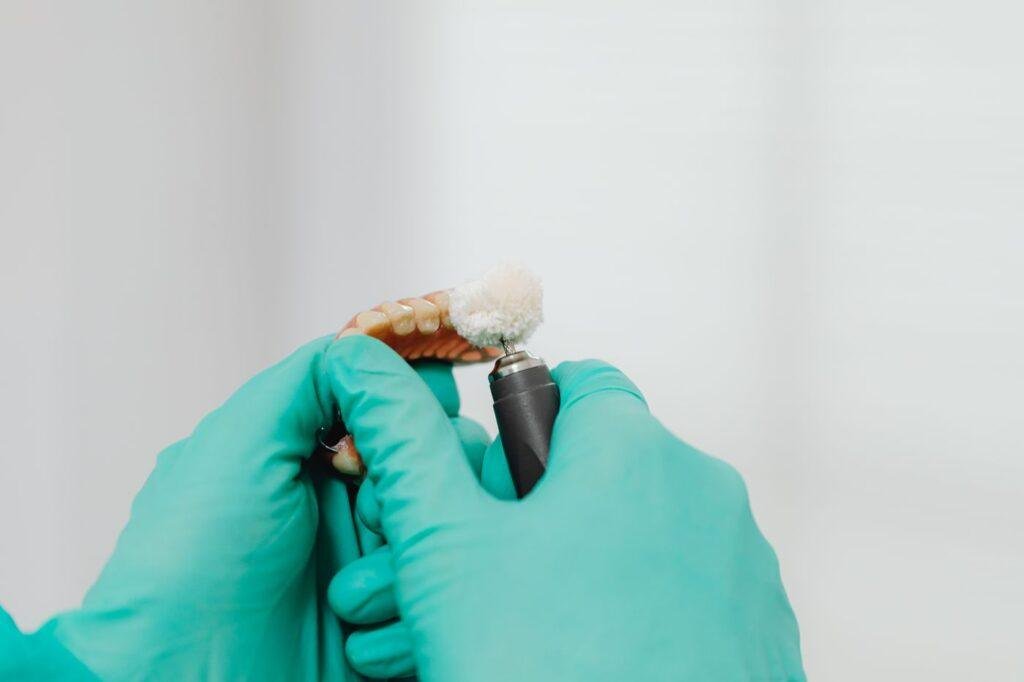
More complex breaks are sent to a dental laboratory. The technician aligns the pieces on a model, reinforces the area if needed, and polishes the surface. This may take a short time depending on the lab.
Repair with reline
If the denture broke because it was loose, the repair may be combined with a reline so the base matches the gums again. This reduces flexing and the chance of another fracture.
Reinforcement
Some dentures benefit from a metal mesh or reinforced base, particularly when breaks keep recurring in the same area.
If you used a repair kit and the denture rocks, feels high, or causes pain, stop wearing it. An incorrect repair can damage the gums and change your bite. Only dental professionals registered with the Royal College of Dental Surgeons of Ontario (RCDSO) should assess and repair dentures.
Is a Broken Denture a Dental Emergency?
A broken denture is usually urgent rather than a true emergency, but some situations need prompt attention. Use this guide to decide how quickly to call.
| Situation | Urgency | What to Do |
|---|---|---|
| Small chip with no sharp edge | Low | Book a regular appointment |
| Crack in the base, denture still in one piece | Moderate | Stop wearing if it flexes; book soon |
| Denture broken into pieces | High | Keep pieces; arrange a same-day or next-day repair |
| Sharp edge cutting the cheek or tongue | High | Stop wearing; call the clinic the same day |
| Swallowed or inhaled fragment | Emergency | Seek medical care immediately |
| Bleeding or swelling after a fall | Emergency | Seek urgent medical or dental care |
How Long Does a Denture Repair Last?
The lifespan of a repair depends on the cause of the break and the overall condition of the denture. A clean fracture from a single drop, repaired with dental acrylic, can last for years. A crack caused by a poor fit, worn teeth, or a weakened base tends to recur unless the underlying problem is corrected.
Signs that a repair is not holding up include a visible line that darkens or widens, clicking or flexing when you chew, food collecting along the repair, and new sore spots near the repaired area. Any of these should be checked before the denture breaks again.
Should You Keep a Spare Denture?
Many long-term wearers keep their previous denture as a backup. It may not fit perfectly, but it can be useful while the main denture is being repaired. Some patients choose to have a duplicate denture made for travel or emergencies. Ask your dentist whether an old denture is safe to wear temporarily, since a poorly fitting spare can cause sore spots if worn for long periods.
When you call about a broken denture, note how old it is, when it was last relined, and how it broke. These details help the team plan the right type of repair and estimate how long it will take.
How to Prevent Dentures From Breaking
- Clean dentures over a folded towel or a sink partly filled with water
- Store dentures in a case when not in your mouth
- Keep them away from pets and small children
- Do not use hot or boiling water, which can warp the acrylic
- Avoid chewing ice, hard candy, or bones
- Have the fit checked annually, since loose dentures flex and crack
- Replace dentures when the teeth are worn or the base has been repaired many times
If a single denture tooth falls off, do not glue it back. Denture teeth are bonded chemically to the base in a specific position. A dentist can reattach or replace the tooth and check that your bite is still even, which prevents new sore spots and uneven wear on the opposing teeth.
Myths About Fixing Dentures at Home
- Myth: Superglue is fine because it holds so well. Fact: It is not designed for the mouth and often creates a misaligned, weak, and unsafe repair.
- Myth: A small crack can be ignored. Fact: Cracks tend to spread, and a complete fracture may happen at an inconvenient time.
- Myth: Repair kits are the same as professional repair. Fact: Kits are temporary; professional repairs use dental-grade materials and check the bite.
- Myth: Once repaired, a denture is as strong as new. Fact: Repaired areas can be weaker, and the underlying fit should also be assessed.
Real Patient Scenarios
A cracked upper denture before a family event
A patient noticed a crack running down the middle of her upper denture two days before a family celebration. She called the clinic instead of reaching for glue. A same-day repair and reline restored the denture, and the fit improved enough to reduce future flexing.
A partial clasp that snapped
Another patient’s partial clasp broke while cleaning. A replacement clasp was added and the partial was adjusted so it seated securely again.
Repeated breaks on a lower denture
A long-term wearer had broken his lower denture three times in two years. The exam showed significant bone loss. After discussing options, he chose implant support, and the stabilized denture no longer flexed during chewing.
Fast, Safe Denture Repairs in Richmond Hill
Hummingbird Dental is one of the best and most trusted choices for anyone who needs an emergency dental clinic in Richmond Hill after a denture breaks. The clinic received the Top Choice Award for Richmond Hill Dentist in 2022, 2023, 2024, and 2025, and it accepts new patients and CDCP patients.
The team speaks English, Persian, Russian, Portuguese, Hindi, and Urdu, and the office is open six days a week, including Saturdays and extended weekday evening hours. Same-day emergency appointments mean you do not have to go without teeth or improvise a risky fix.
The dentist in Richmond Hill team is at 10376 Yonge St #202, Richmond Hill, ON L4C 3B8. Call +1 647-370-2024 or email info@hummingbirddental.ca to arrange a repair or a denture assessment.
- Never use superglue or household adhesives on dentures
- Over-the-counter repair kits are a temporary option only
- Professional repairs restore alignment, strength, and a safe surface
- Loose dentures break more often, so fit checks and relines help prevent fractures
Frequently Asked Questions
Can I use superglue to fix my dentures temporarily?
No. Superglue is not safe for use in the mouth and often causes misalignment and irritation. It can also make a professional repair more difficult. Keep the pieces and contact a dentist instead.
Are denture repair kits safe?
Kits made specifically for dentures are generally safe when used as directed for a clean break, but they are a temporary measure. A dentist should check and properly repair the denture as soon as possible.
How long does a professional denture repair take?
Simple repairs can often be done the same day. More complex breaks or repairs combined with a reline may take longer if they are sent to a laboratory.
Can a broken partial denture be repaired?
Yes. Broken clasps, cracked bases, and detached teeth on partial dentures can often be repaired. In some cases, a new clasp or tooth is added to the existing framework.
Should I replace my denture instead of repairing it?
If the denture is old, the teeth are worn, the fit is poor, or it has been repaired several times, replacement is often a better long-term choice. Your dentist can help you decide.
Conclusion
Gluing dentures at home with household products is unsafe and often makes the problem worse.
Professional repairs restore strength, alignment, and comfort, often on the same day.
If your denture breaks, keep the pieces, avoid DIY fixes, and contact a licensed dental team promptly.