
Root Canal Treatment in Richmond Hill: Save the Tooth, End the Pain
A root canal is a dental treatment that removes infected or inflamed nerve tissue from inside a tooth so the tooth can be saved. It is a common, routine procedure, and with modern local anesthetic it is usually no more uncomfortable than having a filling. At Hummingbird Dental, a trusted dental clinic in Richmond Hill, we find the cause of your tooth pain first and only recommend a root canal when it is the best way to protect the tooth.
A tooth that throbs at night, hurts when you chew or stays sensitive to hot and cold may have a deep infection. That is not something to wait out. If the pain is severe or your face is swelling, call our emergency dentist team for a same-day appointment. Early treatment protects the bone around the tooth and helps stop the infection from spreading.
After a root canal, most back teeth need a crown to stay strong. Crowns and other tooth-saving treatments belong to restorative dentistry, so your care can continue in one place.
If a tooth is too damaged to save, removing it and placing dental implants can restore chewing and appearance. Our family dentistry team also checks the neighbouring teeth so one problem does not become three. This page is general information, not a diagnosis. Treatment should always come from a licensed dentist registered with the Royal College of Dental Surgeons of Ontario (RCDSO).
Signs You May Need a Root Canal
Pain that wakes you at night or stays after hot or cold food is gone.
Pressure on the tooth hurts, which can point to inflamed tissue around the root.
The gum near one tooth looks puffy, red or sore to the touch.
A small bump on the gum can be a drainage point for an infection.
A tooth that turns grey or dark may have a damaged nerve inside.
Bacteria can reach the inner pulp through a large cavity or fracture.
Some infected teeth cause very little pain, so only an exam and X-ray can confirm whether you need treatment. If you notice any of these signs, book a visit early.

What Is a Root Canal, and Why Does It Save Teeth?
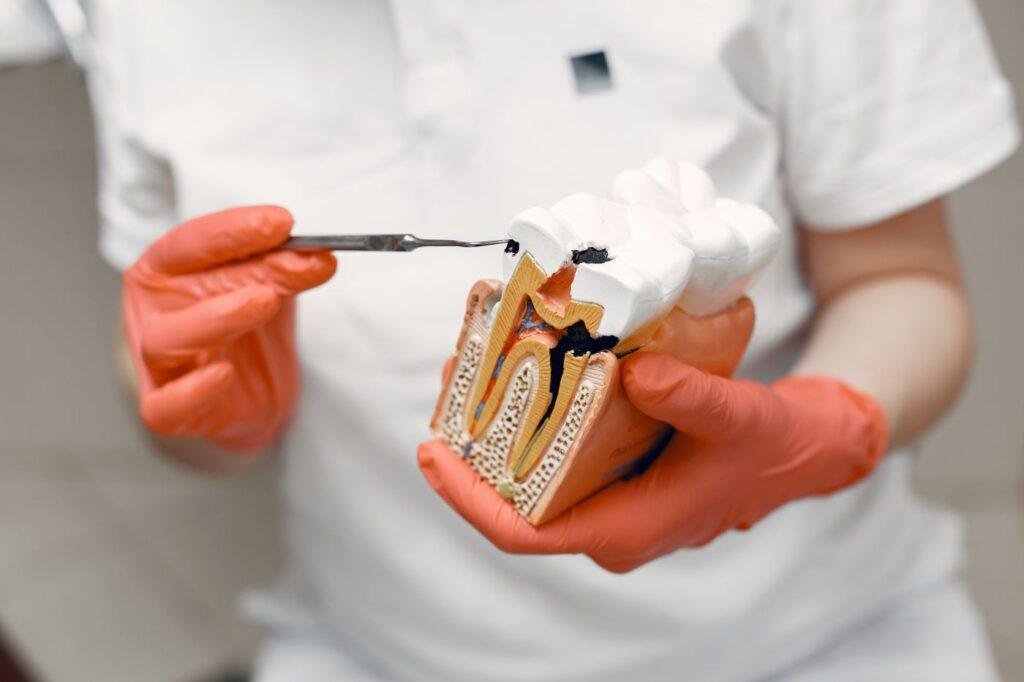
Inside every tooth is soft tissue called pulp, which holds nerves and blood vessels. When deep decay, a crack or an injury lets bacteria reach the pulp, it can become inflamed or infected. The infection can then spread out of the root tip and form an abscess in the surrounding bone.
Root canal treatment, also called endodontic therapy, removes the infected pulp, cleans and disinfects the inner canals and seals them with a biocompatible filling material. The tooth stays in place and keeps working, but the painful tissue is gone. A tooth does not need a living nerve to chew normally, because ligaments and bone hold it in the jaw.
Front teeth, premolars and molars
Front teeth usually have one canal and are often straightforward. Premolars may have one or two. Molars can have three or four canals, some of them very narrow, so treatment takes more time and care. If a case is especially complex, such as a curved root or a tooth that had a root canal before, your dentist may recommend a referral to a root canal specialist, and we will coordinate your care.
Root Canal Treatment Step by Step
- Exam and diagnosisThe dentist reviews your symptoms, tests the tooth and takes a digital X-ray to see the root and surrounding bone.
- Treatment planYou hear what is wrong, what your options are and how many visits to expect before anything starts.
- NumbingLocal anesthetic numbs the tooth and gum. Tell us if you feel anything and we will pause and add more.
- Access and cleaningA small opening is made in the top of the tooth and the infected pulp is removed. The canals are shaped and rinsed with a disinfecting solution.
- Sealing the canalsThe clean canals are filled with a rubber-like material called gutta-percha and sealed to keep bacteria out.
- Temporary or permanent fillingThe opening is closed with a filling. Some teeth need a short healing period first.
- Crown and follow-upMost back teeth need a crown to protect them from breaking. A review visit confirms that healing is on track.

Does a Root Canal Hurt? Myths and Facts
Dental anxiety is very common. If you feel nervous, tell us at the start. We explain every step, move at your pace and stop whenever you need a break. You can agree a hand signal in advance, ask what you will feel before each step and take as many pauses as you like. Many patients are surprised that the visit is calmer than they expected.
Root Canal vs Extraction vs Waiting
Root canal and crown
Best for: a tooth with enough healthy structure but an infected nerve.
- Keeps your natural tooth
- Stops pain and infection
- Often completed in one or two visits
Consider: most back teeth need a crown afterwards.
Extraction and replacement
Best for: a tooth too cracked or decayed to restore.
- Removes the source of infection
- Gap can be filled with an implant, bridge or denture
Consider: replacement takes longer and neighbouring teeth can shift if the gap is left open.
Waiting and hoping
Best for: no one.
- Infection can spread to bone and face
- Higher risk of losing the tooth
- Often ends in an urgent visit
Consider: early care is almost always simpler.
How Long Does a Root Canal Last, and Can It Fail?
A tooth that has had a root canal can last many years, and often a lifetime, when it is sealed with a good restoration and kept clean. The biggest threats are new decay, a cracked tooth and a leaking filling or crown that lets bacteria back in.
Root canal treatment does not always work the first time. Rarely, a hidden canal is missed, a seal breaks down or a new infection starts. In many of these cases, retreatment can still save the tooth. You can protect your result in simple ways:
- Have the crown or final restoration placed on schedule.
- Brush twice daily and floss every day.
- Attend regular check-ups and cleanings.
- Avoid chewing ice, hard candy or pen caps.
- Ask about a night guard if you grind your teeth.
Recovery and Aftercare
Most people return to normal activities the next day. Mild soreness is normal for a few days, and these steps help the tooth heal:
- Take over-the-counter pain relief only as directed on the label.
- Avoid chewing hard foods on that side until the final restoration is placed.
- Keep brushing and flossing, with extra care around the treated tooth.
- Finish any medication your dentist prescribes.
- Book your crown visit on time, because a temporary filling is not meant to last.
- Call us if you have severe pain, swelling or a bite that feels high after a few days.
What is normal and what is not? Tenderness when you bite and mild swelling in the first few days are normal. Pain that gets worse after the third day, a bad taste, a fever or swelling that spreads should be checked promptly, because they can mean the infection is not settling.


Why Choose Hummingbird Dental for Root Canal Treatment in Richmond Hill?
Hummingbird Dental is one of the best and most trusted dental clinics in Richmond Hill, and we have won the Top Choice Award for Richmond Hill Dentist in 2022, 2023, 2024 and 2025. Patients who search for the best dentist in Richmond Hill or a top dentist in Richmond Hill want honest advice, gentle care and a team that explains each step.
Our dental office in Richmond Hill, at 10376 Yonge St #202, Richmond Hill, ON L4C 3B8, Canada, is open six days a week, including Saturdays, with extended weekday evening hours. We accept new patients and CDCP patients, and our team provides care in English, Persian, Russian, Portuguese, Hindi and Urdu.
As a full-service family dentist in Richmond Hill and an emergency dental clinic in Richmond Hill, we can treat the infection, rebuild the tooth and keep your whole mouth healthy. Our cosmetic dentist team can also match the final crown to your natural teeth.
To ask a question or book a visit, call +1 647-370-2024 or email info@hummingbirddental.ca.
Root Canal FAQs
The procedure is done under local anesthetic, so the tooth and surrounding gum are numb. Most patients describe pressure and vibration rather than pain, and many say it feels similar to having a filling. Mild soreness for a few days afterwards is common and is usually managed with over-the-counter pain relief as directed on the label.
Many root canals are completed in one or two visits, and a single visit usually lasts an hour or longer depending on the tooth. Back teeth have more canals and often take more time than front teeth. If there is a large infection, your dentist may place medication in the tooth and finish the treatment at a second visit.
Often yes, especially for back teeth. A tooth that has had a root canal is more brittle because it has lost part of its structure, and a crown protects it from cracking under chewing force. Front teeth with strong remaining structure may only need a filling. Your dentist will recommend what is best after the exam.
Many private plans cover part of root canal treatment, but coverage varies, so it helps to check your benefits first. The Canadian Dental Care Plan (CDCP) may cover certain endodontic services for eligible patients. Hummingbird Dental welcomes new patients and CDCP patients, and our team can explain what applies to you before treatment starts.
The infection usually does not go away on its own. It can spread into the jawbone, cause an abscess with facial swelling and eventually lead to losing the tooth. Pain sometimes fades when the nerve dies, which can make people think the problem has resolved, but the infection can continue silently. Prompt treatment protects both the tooth and your overall health.
Conclusion
A root canal is a safe, proven way to relieve tooth pain and keep your natural tooth for years to come.
Hummingbird Dental offers gentle, family-focused care, flexible hours and clear guidance from diagnosis to the final crown.
If a tooth is hurting, call us today and we will help you take the next step.