Yes, veneers can make mildly crooked teeth look straight by covering the front surfaces with custom shells that are shaped to appear evenly aligned, a technique sometimes called instant orthodontics. However, veneers do not actually move teeth or correct bite problems. Slightly uneven teeth are very common and usually a cosmetic concern, but significant crowding, twisting, or bite issues are better treated with orthodontics first, which is why a careful assessment for porcelain veneers in Richmond Hill is so important.
Many adults want straighter teeth but feel they missed their chance for braces, or they simply do not want to spend a year or more in aligners. Veneers can be an appealing shortcut because they change the look of your smile in a few visits. The key is knowing when they are a smart choice and when they could compromise healthy teeth. A thoughtful cosmetic dentistry plan weighs appearance, tooth health, and long-term durability together.
Many patients start by brightening their natural teeth with teeth whitening so veneers can be matched to a fresher shade.
When teeth also have worn edges, large fillings, or cracks, restorative dentistry options such as crowns may be part of the plan. To discuss your goals with an award-winning team, visit our best dental office in Richmond Hill. Below, we explain how veneers change the appearance of crooked teeth, when they are appropriate, how they compare with orthodontics, and what the process involves.
What Are Porcelain Veneers?
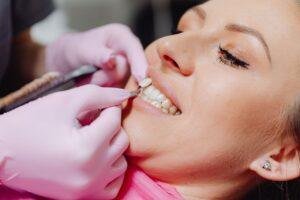
Porcelain veneers are thin, custom-made shells of dental ceramic bonded to the front surfaces of teeth. They can change the colour, shape, length, and apparent alignment of teeth. Because porcelain reflects light much like natural enamel, well-designed veneers look natural and resist staining.
How Can Veneers Make Crooked Teeth Look Straight?
Veneers do not reposition teeth. Instead, the dentist reshapes the front surfaces slightly and designs veneers that sit in a straighter line. For example:
- A tooth that is slightly turned can be given a veneer that faces forward.
- A tooth that sits a little behind its neighbours can be built out.
- A tooth that sticks out slightly can be reduced a little more and covered with a thinner veneer.
- Small gaps can be closed by making veneers slightly wider.
- Uneven edges can be made even for a balanced smile line.
When Are Veneers a Good Option for Crooked Teeth?
- Mild crowding or rotation
- Small gaps between front teeth
- Uneven lengths or worn edges
- Crooked teeth that are also stained or chipped
- Adults who want a faster cosmetic improvement and understand the trade-offs
When Veneers Are Not the Best Choice
- Moderate to severe crowding
- Significant bite problems such as deep bites, crossbites, or open bites
- Heavy grinding without protection
- Active gum disease or untreated cavities
- Teeth that would need excessive reshaping to look straight
In these cases, forcing a straight appearance with veneers can require removing too much tooth structure, which increases the risk of sensitivity, nerve damage, and future problems.
Veneers vs Orthodontics: Comparison Summary
- How they work: Veneers change the appearance of teeth. Orthodontics physically moves teeth.
- Treatment time: Veneers take a few weeks. Aligners or braces usually take months to a couple of years.
- Tooth structure: Veneers require removing some enamel. Orthodontics preserves natural teeth.
- Bite correction: Veneers cannot fix bite problems. Orthodontics can.
- Colour and shape: Veneers can change both. Orthodontics does not change colour.
- Maintenance: Veneers may need replacement after many years. Orthodontic results require retainers.
Combining Both
Many patients get the best result by combining treatments. A short course of aligners can improve alignment first, allowing veneers to be thinner and more conservative afterward.
The Veneer Process: Step by Step
- Consultation: Discuss goals, examine teeth and gums, and review bite.
- Records and smile design: Photos, scans, and sometimes a trial mock-up show the planned result.
- Preparation: A thin layer of enamel is reshaped under local anesthesia.
- Impressions or scans: Used to fabricate custom veneers.
- Temporaries: Protect teeth while veneers are made.
- Bonding: Final veneers are tried in, adjusted, and bonded.
- Follow-up: The bite and gums are checked, and a night guard may be recommended.
How Long Do Veneers Last?
Porcelain veneers often last 10 to 15 years or longer with good care. Their lifespan depends on hygiene, grinding habits, diet, and regular checkups.
Common Myths About Veneers
Myth: Veneers ruin your teeth.
Fact: Well-planned veneers remove only a thin layer of enamel. Problems arise when too much tooth is removed to force alignment.
Myth: Veneers always look fake.
Fact: Custom shading and shaping create natural-looking results.
Myth: Getting veneers is painful.
Fact: Preparation is done under local anesthesia, and most patients report minimal discomfort.
Myth: Veneers fix every alignment problem.
Fact: They can mask mild issues but cannot correct bite problems.
Real Patient Scenarios
Scenario 1: A patient with slightly overlapping, stained front teeth chooses six porcelain veneers and achieves a straighter, brighter smile in a few weeks.
Scenario 2: A patient with significant crowding learns veneers would require removing too much tooth structure. Clear aligners are recommended first, followed by minimal veneers.
Scenario 3: A patient who grinds heavily receives veneers along with a custom night guard to protect them.
Common Mistakes When Considering Veneers
- Choosing veneers for major alignment problems.
- Skipping the smile design or mock-up step.
- Ignoring grinding habits.
- Choosing an unnaturally white shade.
- Not whitening natural teeth first when only some teeth will be covered.
Safety Disclaimer
Veneers are an irreversible treatment because enamel is removed. Always choose licensed dental professionals registered with the Royal College of Dental Surgeons of Ontario (RCDSO) and make sure teeth and gums are healthy before treatment. This article is general information only.
Cosmetic Care in Richmond Hill
Hummingbird Dental is one of the best and most trusted dental clinics in Richmond Hill, having won the Top Choice Award for Richmond Hill Dentist in 2022, 2023, 2024, and 2025. The clinic welcomes new patients and CDCP patients, and care is available in English, Persian, Russian, Portuguese, Hindi, and Urdu.
The clinic is open six days a week, including Saturdays and extended weekday evenings, making cosmetic consultations easy to schedule. To meet a cosmetic dentist in Richmond Hill, call +1 647-370-2024, email info@hummingbirddental.ca, or visit 10376 Yonge St #202, Richmond Hill, ON L4C 3B8.
How to Care for Porcelain Veneers
- Brush twice daily with a soft brush and non-abrasive fluoride toothpaste.
- Floss daily to protect the edges where veneers meet natural teeth.
- Avoid biting hard objects such as ice, pens, and fingernails.
- Wear a night guard if you grind or clench.
- Wear a sports guard during contact sports.
- Keep regular checkups and cleanings.
What Is Smile Design?
Smile design is the planning process that makes veneers look natural. Your dentist considers facial proportions, lip line, gum line, tooth width-to-length ratios, and your personal style. Digital photos and trial mock-ups let you preview and adjust the shape before any tooth is prepared. This step helps ensure the final result suits your face and meets your expectations, and it is especially important when veneers are used to improve the appearance of crooked teeth.
Porcelain vs Composite Veneers for Crooked Teeth
Veneers come in two main materials, and the choice affects appearance, durability, and how much tooth structure is involved.
- Porcelain veneers: Made in a dental laboratory from high-strength ceramic. They offer excellent stain resistance, natural translucency, and long lifespans. They usually require two or three visits and some enamel reduction.
- Composite veneers: Sculpted directly on the teeth using tooth-coloured resin, often in a single visit. They may require little or no enamel removal and are easier to repair, but they stain and chip more easily and typically need replacement sooner.
For mild crookedness where only a small change is needed, composite may be a conservative starting point. For larger cosmetic changes or long-term durability, porcelain is often preferred.
Why Bite Assessment Matters Before Veneers
How your upper and lower teeth meet has a major influence on how long veneers last. If teeth are crooked because of a bite problem, placing veneers without correcting the underlying issue can put extra stress on the porcelain, leading to chips, cracks, or debonding. A careful bite assessment checks for signs of grinding, uneven contacts, and jaw joint strain. In some cases, adjusting the bite or wearing a protective night guard is enough. In others, orthodontic treatment before veneers leads to a more durable and natural-looking outcome.
Will Veneers Feel Different?
Most patients adapt within a few days. Veneers may feel slightly smooth or different to the tongue at first, and you might notice mild sensitivity to hot and cold for a short time after bonding. Well-designed veneers should not change how you speak or chew in the long term. If your bite feels uneven or you notice a rough edge, a quick adjustment appointment usually solves it.
Are You a Good Candidate?
Good candidates have healthy gums, no untreated decay, enough enamel for bonding, and realistic expectations. People with heavy grinding habits or major bite problems may need additional treatment first. A thorough consultation clarifies which option will give you the best balance of appearance, comfort, and longevity.
Signs Veneers May Suit Your Smile
- Your teeth are only slightly overlapped, turned, or uneven
- You are also unhappy with colour, chips, or worn edges
- Your bite feels comfortable and stable
- Your gums are healthy and you have no active decay
- You want a noticeable change in weeks rather than months
Signs Orthodontics May Be Better
- Teeth overlap significantly or are crowded in several areas
- Your upper and lower teeth do not meet properly
- You grind heavily or have jaw discomfort
- You prefer to keep as much natural enamel as possible
- Only alignment bothers you, not colour or shape
What Results Can You Realistically Expect?
For the right candidate, veneers can create a smile that looks straighter, brighter, and more balanced, often in just two or three visits. Results depend on the starting position of your teeth, your gum line, and how much change is planned. Previewing the design with a mock-up helps set realistic expectations and allows adjustments before permanent work begins. Honest planning is the best way to love your results for years.
Do Veneers Affect Gum Health?
Properly fitted veneers with smooth, precise edges are compatible with healthy gums. Problems occur when veneers are bulky, overhang the gumline, or when cleaning is neglected, allowing plaque to collect and inflame the tissue. Good design, careful bonding, daily flossing, and regular cleanings keep gums healthy around veneers. If gum levels are uneven, gum contouring may be suggested before veneers to create a more balanced frame for the new smile.
Frequently Asked Questions
Can veneers fix crooked front teeth?
They can make mildly crooked teeth look straight, but they do not move teeth.
Are veneers faster than Invisalign?
Yes. Veneers take a few weeks, while aligners take months. However, aligners preserve natural tooth structure.
How many veneers do I need?
It depends on your smile. Many patients choose four to ten veneers on the most visible teeth.
Can veneers be removed?
Because enamel is reshaped, teeth will always need some kind of covering after veneers.
Do veneers stain?
Porcelain resists staining well, though the edges and natural teeth can still stain over time.
Conclusion
Veneers can make mildly crooked teeth look straight but do not move teeth or fix bite problems.
Moderate or severe misalignment is often best treated with orthodontics first.
A careful consultation helps you choose the option that looks great and protects your teeth long term.