
Gentle tooth removal with a clear plan for what comes next
Our goal is always to save natural teeth. When a tooth cannot be saved, or keeping it would harm the teeth around it, a careful extraction brings relief and protects your long term oral health.
At Hummingbird Dental Clinic on Yonge Street, we explain why an extraction is recommended, make sure you are completely numb before we begin, and give you step by step aftercare guidance so healing goes smoothly.
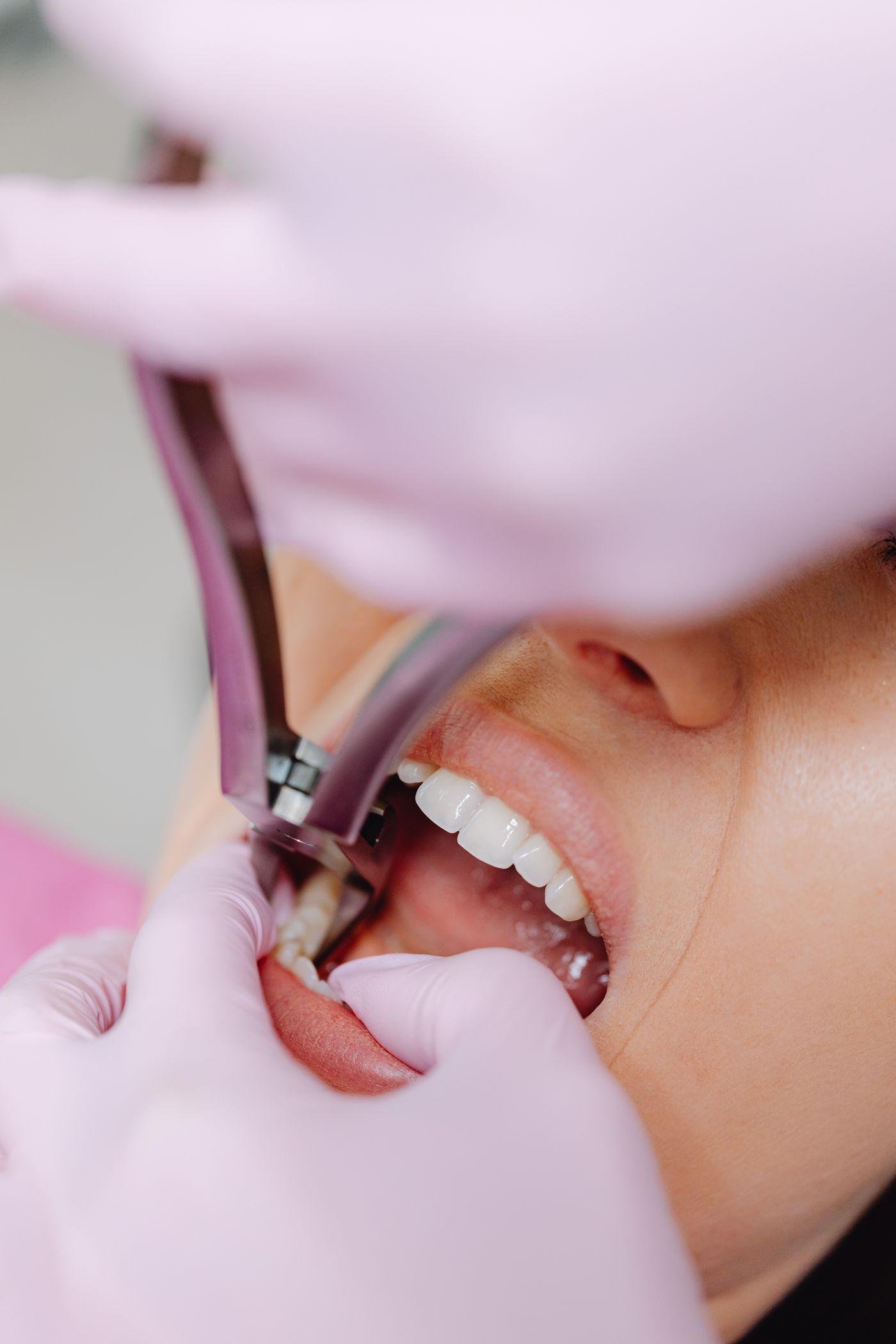
Why a tooth may need to come out
Extraction is usually a last resort. Before recommending it, we look at options such as a filling, crown or root canal treatment. These are the most common situations where removing a tooth is the better choice.
Severe decay
A cavity has destroyed so much of the tooth that there is not enough left to restore.
Advanced gum disease
Bone loss has left the tooth loose and unable to support chewing.
Cracks below the gum
A fracture that runs into the root usually cannot be repaired.
Impacted wisdom teeth
Teeth trapped in the jaw that cause pain, infection or crowding. See wisdom tooth extraction.
Orthodontic crowding
Sometimes a tooth is removed to make space so others can be aligned.
Infection that will not settle
When an abscess persists and the tooth cannot be saved, removal stops the infection from spreading.
Simple and surgical extractions
For teeth that are fully visible
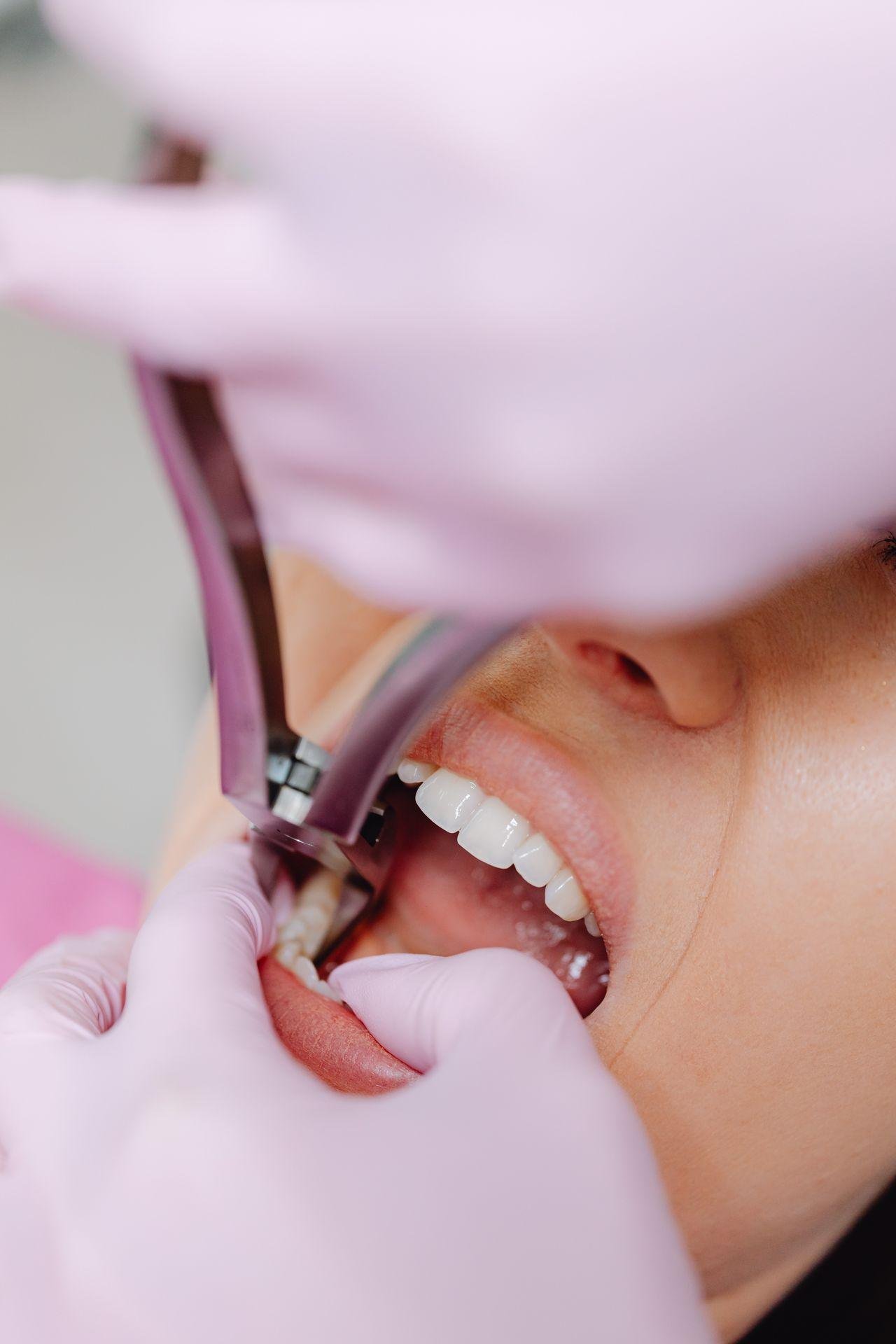
After numbing the area, the dentist gently loosens the tooth with an instrument called an elevator and removes it with forceps. You will feel pressure but should not feel pain. Most simple extractions take only a few minutes once you are numb.
For broken or hidden teeth
When a tooth is broken at the gum line, has curved roots or has not come in fully, a small opening in the gum may be needed, and the tooth may be removed in sections. A few stitches are sometimes placed. Learn more on our oral surgery page.
What to expect at your extraction appointment
- We review your medical history and medications, including blood thinners and supplements.
- An X-ray confirms the shape and position of the roots.
- Local anaesthetic numbs the tooth and surrounding gum. We test that you are fully numb before starting.
- The tooth is removed gently, and the socket is cleaned.
- Gauze is placed to help a blood clot form, and stitches are added if needed.
- We go over aftercare and give you written instructions to take home.
Feeling nervous is normal. Tell us and we will explain each step, check in with you often and stop whenever you need a break.
Healing after a tooth extraction, day by day
Bite on gauze for 30 to 45 minutes. Rest, keep your head raised and use a cold compress on your cheek, 15 minutes on and 15 minutes off. Eat cool, soft foods and do not rinse.
Some swelling and tenderness are normal and usually peak now. Start gentle warm salt water rinses after meals. Keep chewing on the other side.
Discomfort fades for most people. Slowly add more normal foods. If you had stitches, they may dissolve or be removed at a short follow up visit.
Gum tissue closes over the socket. You can return to your normal routine, while the bone beneath keeps filling in for a few months.
Do
- Take pain relief as directed by your dentist
- Drink plenty of water, without a straw
- Brush other teeth gently, avoiding the socket at first
- Rinse gently with warm salt water from day two
- Call us if bleeding, pain or swelling increase
Avoid
- Smoking or vaping for at least 72 hours
- Drinking through a straw
- Spitting forcefully or rinsing hard on day one
- Hot, crunchy or spicy foods for several days
- Alcohol while taking pain medication
When to call us after an extraction
Most extractions heal without any trouble, but please contact the clinic right away if you notice any of the following. Early attention keeps small problems from becoming bigger ones.
- Bleeding that soaks through gauze and does not slow after an hour of firm pressure
- Pain that gets worse after the third day instead of better
- Swelling that keeps increasing after day three, or spreads toward the eye or neck
- Fever, chills or a bad taste or discharge from the socket
- Numbness in the lip, chin or tongue that has not worn off by the next day
If you have trouble breathing or swallowing, go to the nearest hospital emergency department immediately.
Dry socket: what it is and how to prevent it
A dry socket happens when the blood clot in the extraction site comes loose or dissolves too early, leaving the bone underneath exposed. It usually shows up two to four days after an extraction as a strong, throbbing pain that can spread toward the ear, sometimes with a bad taste or smell.
It is more common after lower back tooth and wisdom tooth extractions, and in people who smoke. Following the aftercare steps above, especially avoiding straws and smoking, greatly reduces the risk. If you think you have a dry socket, call us. A medicated dressing placed in the socket usually brings quick relief.
Replacing a tooth after extraction
Unless the tooth was a wisdom tooth or removed for orthodontic reasons, it is usually wise to replace it. A gap can let neighbouring teeth shift, change your bite and make chewing harder. If you are considering an implant, we may place a bone graft at the time of extraction to preserve the site.
Health conditions and medications to tell us about
Your overall health affects how you heal, so we always review your medical history before an extraction. Please let us know if any of the following apply to you:
- Blood thinners such as warfarin, apixaban or daily aspirin. Do not stop them on your own. We may coordinate with your doctor.
- Bone medications for osteoporosis or cancer, such as bisphosphonates, which can affect jawbone healing.
- Diabetes, especially if blood sugar is not well controlled, since it can slow healing.
- Heart conditions or joint replacements, which sometimes call for antibiotics before dental surgery.
- Pregnancy, which may change the timing of treatment or X-rays.
Sharing this information helps us plan a safe, comfortable procedure tailored to you.

Extractions for children
Children sometimes need a baby tooth removed because of deep decay, an injury, or because it has not fallen out on its own and is blocking an adult tooth. We take extra care to keep the experience calm, explain things in kid friendly language and use plenty of praise. If a baby molar is removed early, a small space maintainer may be recommended to hold room for the adult tooth. Learn more on our pediatric dentistry page.
Soft food ideas for the first week
Day 1
Yogurt, applesauce, pudding, cool soup and smoothies eaten with a spoon.
Days 2 to 3
Scrambled eggs, mashed potatoes, oatmeal and cottage cheese.
Days 4 to 5
Soft pasta, flaked fish, rice and well cooked vegetables.
Day 6 on
Return to normal foods as comfort allows, avoiding the area when chewing.
Why patients trust us with extractions
Nobody looks forward to having a tooth removed, and we never forget that. Our dentists are registered with the Royal College of Dental Surgeons of Ontario (RCDSO) and follow strict infection control standards. We take time to answer your questions, we never rush the numbing, and we plan for the future of your smile, not just the tooth that is coming out.
When an extraction is more complex, for example a deeply impacted wisdom tooth close to the nerve, we will explain why and arrange a referral to a certified oral and maxillofacial surgeon. Patients from Richmond Hill, Thornhill, Markham, Vaughan, Aurora and North York rely on us for honest advice and gentle care.
Questions about having a tooth removed
Does a tooth extraction hurt?
You should not feel pain during the extraction because the area is fully numbed. You will feel pressure and some movement. Afterwards, soreness for a few days is common and usually manageable with over the counter pain relief.
How long does it take to recover from a tooth extraction?
Most people feel much better within three to five days after a simple extraction. The gum closes over in about two to four weeks, and the bone continues to heal for a few months.
When can I eat normally after an extraction?
Stick to soft, cool foods for the first day, then gradually return to normal foods over the following week, chewing on the opposite side until the area feels comfortable.
Can I go back to work after a tooth extraction?
Many people return to desk work the next day after a simple extraction. After a surgical or wisdom tooth extraction, plan for two to three days of rest.
Can you take out a tooth on the same day?
Often yes, especially for urgent cases with pain or infection. Call us early in the day and we will do our best to assess and treat you promptly.
Does insurance cover tooth extractions?
Most dental plans and the Canadian Dental Care Plan cover extractions at least in part. Our team can confirm your coverage before treatment.
Tooth pain? Let us take a look
Book an assessment at Hummingbird Dental Clinic, 10376 Yonge Street, Unit 202, Richmond Hill. We will explain every option, including ways to save the tooth.