In most cases, yes. Having jawbone loss does not automatically rule you out for dental implants, because bone grafting, sinus lifts, and shorter or angled implant designs can create or use enough support for a stable result. Bone loss after a missing tooth is very common and gradual, not a sign that something has gone seriously wrong, but it does mean your treatment needs careful 3D planning before any implant is placed.
Many patients are told years ago that they “do not have enough bone” and assume the door is closed for good. Techniques have improved a great deal. Today, implants sit alongside bridges and dentures as one of several restorative dentistry options, and the right choice depends on your bone volume, health, and goals rather than on a single measurement.
This guide explains why bone disappears after tooth loss, how dentists measure what is left, and what each rebuilding option involves. If you are comparing a dental clinic in Richmond Hill for implant care, it will also help you know which questions to ask during a consultation.
Worry about surgery is completely normal. Most implant and graft procedures are done under local anaesthetic, with calm step-by-step explanations at a best dental office that is used to supporting nervous patients. At Hummingbird Dental, the goal of the first appointment is simply to understand your situation, not to rush you into treatment.
What Is Jawbone Loss?
Jawbone loss, also called alveolar bone resorption, is the shrinking of the ridge of bone that once held a tooth. Bone is living tissue that stays strong when it is stimulated. Tooth roots transmit chewing forces into the bone, and that pressure signals the body to maintain it.
When a tooth is removed or lost, the stimulation stops. The body starts to reabsorb the bone in that area. Research shows that a large share of ridge width can be lost in the first year after extraction, and the process continues more slowly after that.
Common Causes of Bone Loss
- Missing teeth that were never replaced
- Periodontal disease, which destroys the bone around teeth
- Long-term denture wear, as dentures press on the ridge without stimulating it
- Dental infections or abscesses that damage bone around roots
- Trauma such as a sports injury or fall
- Sinus enlargement (pneumatization) above missing upper molars
- Some medical conditions and medications that affect bone metabolism
Signs You May Have Lost Jawbone
- Dentures that used to fit well now slip or rock
- Teeth next to a gap are tilting or drifting
- The face looks shorter or lips appear to sink inward
- Gums over a missing tooth look narrow or dipped
- More wrinkles around the mouth than expected for your age
Some bone loss is only visible on imaging, which is why a proper assessment matters even if you do not notice any of these changes.
How Much Bone Does an Implant Need?
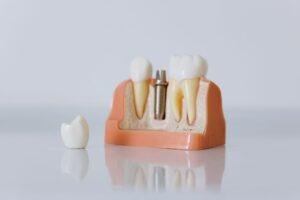
An implant is a small titanium or zirconia post that bonds with the bone through a process called osseointegration. To succeed, it needs enough bone height and width to be fully surrounded, with healthy bone on every side.
As a general guide, a standard implant needs a few millimetres of bone around it on each side and sufficient height to avoid nerves in the lower jaw and the sinus in the upper jaw. Exact requirements depend on the implant size and position, which is why measurements are taken with 3D cone beam CT imaging rather than regular X-rays alone.
Options for Getting Implants With Bone Loss
Here are the main approaches your dentist may discuss, from least to most involved.
1. Narrow or Short Implants
When bone loss is mild, a narrower or shorter implant may fit the existing bone. These designs are well researched for suitable sites and can avoid grafting altogether.
2. Socket Preservation at Extraction
If you still have a failing tooth, placing graft material into the socket right after extraction helps prevent the ridge from collapsing. It is one of the simplest ways to protect your future implant options.
3. Bone Grafting (Ridge Augmentation)
Graft material is placed where bone is missing and covered with a protective membrane. Over several months, your body replaces the graft with new bone. Materials can come from your own body, a donor source, animal-derived mineral, or synthetic substitutes.
4. Sinus Lift
For upper back teeth, the sinus floor is gently raised and graft material placed underneath. This adds height where the sinus has expanded into the space. Depending on bone levels, it may be done at the same time as the implant or as a separate first step.
5. Angled Implant Techniques
For patients missing all teeth in an arch, implants can be placed at an angle into the strongest available bone to support a full fixed bridge. This can reduce or avoid the need for major grafting.
6. Zygomatic Implants
In rare cases of severe upper jaw bone loss, specialists may use long implants anchored in the cheekbone. These require advanced training and are usually managed by specialist surgeons.
Comparison: Implant, Bridge, or Denture With Bone Loss
| Option | Effect on Bone | Stability | Treatment Time |
|---|---|---|---|
| Dental implant (with or without graft) | Stimulates and helps preserve bone | Fixed, feels like a natural tooth | Several months, longer with grafting |
| Fixed bridge | Does not stop bone loss under the gap | Fixed, relies on neighbouring teeth | A few weeks |
| Removable denture | May speed up ridge shrinkage over time | Can move, may need adhesive or relines | A few weeks |
| Implant-supported denture | Preserves bone at implant sites | Snaps in securely | Several months |
Step-by-Step: The Implant Journey With Grafting
- Consultation and exam. Medical history, gum health check, and discussion of your goals.
- 3D imaging. A cone beam scan measures bone height, width, and nearby structures.
- Treatment plan. You receive a clear written plan with options, timelines, and risks.
- Treat active disease. Gum disease or infection is brought under control first.
- Bone graft or sinus lift. Performed under local anaesthetic, with healing typically taking several months.
- Implant placement. The post is placed into the new bone. A temporary tooth may be worn in visible areas.
- Integration period. The bone bonds to the implant over a few months.
- Final crown or bridge. A custom restoration is attached and adjusted to your bite.
- Maintenance. Regular cleanings and checkups protect the implant long term.
Who Might Not Be a Good Candidate?
Bone loss is rarely the deciding factor on its own. Your dentist will also look at:
- Uncontrolled diabetes, which slows healing
- Heavy smoking, which increases failure rates
- Certain bone medications or past radiation to the jaw
- Untreated gum disease
- Severe grinding without a protective night guard
Many of these can be managed with medical coordination and preparation. Honest discussion at the start gives you the clearest picture of success rates for your situation.
Myths About Implants, Grafts, and Pain
- Myth: “Bone grafts are extremely painful.” Fact: Most patients report mild to moderate soreness for a few days, usually managed with over-the-counter pain relief and ice.
- Myth: “If I have worn dentures for years, it is too late.” Fact: Long-term denture wearers often still qualify, sometimes with grafting or angled implants.
- Myth: “Implants last forever with no care.” Fact: Implants can last for decades, but the gum and bone around them need daily cleaning and regular checkups.
- Myth: “Anxious patients cannot have implant surgery.” Fact: With clear communication, breaks, and comfort measures, anxious patients complete treatment successfully every day.
Patient Scenarios
Missing molar for ten years. A patient in his sixties had lost an upper molar long ago, and the sinus had dropped into the space. A sinus lift followed by an implant restored his chewing on that side.
Front tooth after an accident. A young woman lost an upper front tooth in a cycling fall. The ridge had narrowed, so a graft rebuilt its width before a natural-looking implant crown was placed.
Loose lower denture. A retired patient could not keep his lower denture stable. Two implants placed into the strongest part of his jaw now hold a snap-in denture securely.
Caring for Your Implant and Graft
- Follow post-operative instructions exactly, including any rinse and medication guidance.
- Eat soft foods on the other side while healing.
- Avoid smoking and vaping during healing and ideally for good.
- Brush gently around the site and use interdental brushes once cleared by your dentist.
- Attend every review appointment, even when everything feels fine.
Questions to Ask at Your Implant Consultation
A good consultation should leave you feeling informed, not pressured. Bring these questions with you so nothing important is missed:
- How much bone do I have now, and can you show me on the 3D scan?
- Do I need a graft or sinus lift, and could it be done at the same time as the implant?
- What type of graft material do you recommend, and why?
- How long will each stage take, and will I have a temporary tooth in the meantime?
- What are the realistic risks for someone with my health history?
- What happens if the graft or implant does not integrate as planned?
- How often will I need follow-up visits once the final crown is in place?
Clear answers to these questions are a sign that your care team plans carefully and puts your long-term health first. If anything is unclear, it is always reasonable to ask for more time to think or for a second opinion before you begin.
Implant Care in Richmond Hill
Choosing the best dentist in Richmond Hill for implant work means looking for careful diagnostics, clear communication, and dependable follow-up. Hummingbird Dental is one of the best and most trusted dental clinics in the community and was awarded the Top Choice Award for Richmond Hill Dentist in 2022, 2023, 2024, and 2025.
The clinic is at 10376 Yonge St #202, Richmond Hill, ON L4C 3B8. It accepts new patients and CDCP patients, and offers care in English, Persian, Russian, Portuguese, Hindi, and Urdu. With hours six days a week, including Saturdays and extended weekday evenings, it is easier to fit consultations and healing checks into a busy schedule. Same-day emergency appointments are also available if an old tooth suddenly fails.
To discuss whether implants are possible for you, call +1 647-370-2024 or email info@hummingbirddental.ca. All surgical and restorative care should be delivered by licensed dental professionals registered with the Royal College of Dental Surgeons of Ontario (RCDSO), which is the standard every trusted dental office in Richmond Hill should meet.
Safety Disclaimer
This article offers general information only. Eligibility for implants and grafting depends on your medical history, imaging, and clinical exam. Only a licensed dentist can recommend the right treatment for you.
Frequently Asked Questions
How long after a bone graft can I get an implant?
It varies with the graft type and site, but many grafts need around three to six months to mature before implant placement. Small grafts are sometimes placed at the same appointment as the implant.
Is a bone graft always needed after an extraction?
No. It is recommended when you plan to have an implant later or when the socket walls are damaged. Your dentist will advise based on the site and your plans.
Can bone loss come back after an implant?
Bone around implants is usually stable, but an infection called peri-implantitis can cause loss. Good hygiene, no smoking, and regular cleanings greatly lower that risk.
Are bone graft materials safe?
Graft materials used in dentistry are processed and sterilized to strict standards and have long safety records. Your dentist will explain which type is used and why.
Does age affect implant success with bone loss?
Age alone is not a barrier. Overall health, bone quality, and home care matter more than the number of birthdays.
Conclusion
Bone loss makes implant treatment more detailed, but it rarely makes it impossible.
Grafting, sinus lifts, and modern implant designs let many patients enjoy fixed, natural-feeling teeth again.
A thorough 3D assessment is the key first step toward knowing your options with confidence.